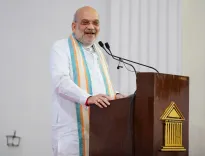
Amit Shah Credits Modi Era for Empowering India's Middle Class
Synopsis
Home Minister Amit Shah has credited the Modi government's 12-year record — spanning GST reform, over 1 crore homes under PMAY, Vande Bharat trains, Namo Bharat Corridors, and UDAN — with forging a stronger, more aspirational Indian middle class under the hashtag #12YearsOfSakshamMiddleClass.
Key Takeaways
Amit Shah posted on June 15, 2026 under #12YearsOfSakshamMiddleClass , marking over a decade of BJP-led governance at the Centre.
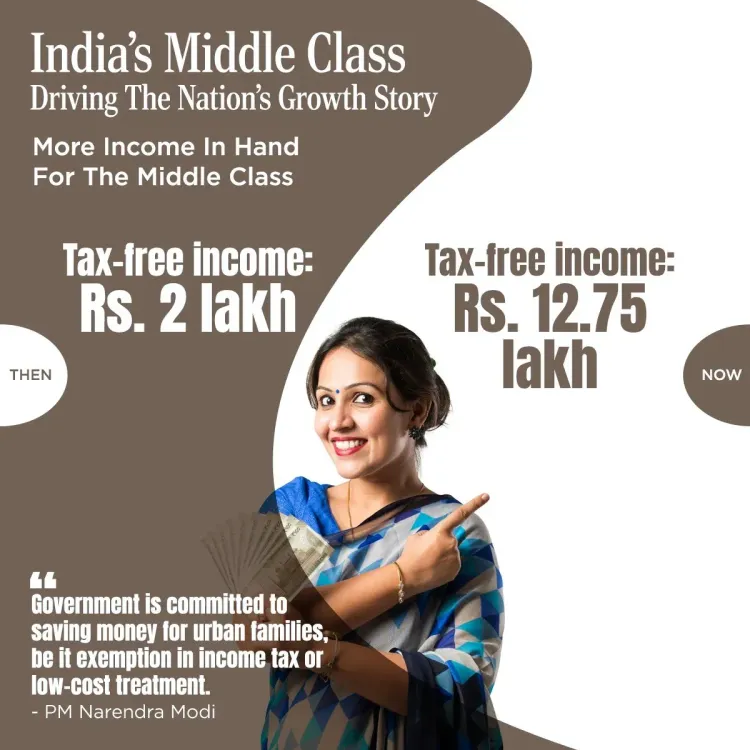
The post credits tax burden reductions and GST compliance simplification as key drivers of middle-class financial relief.
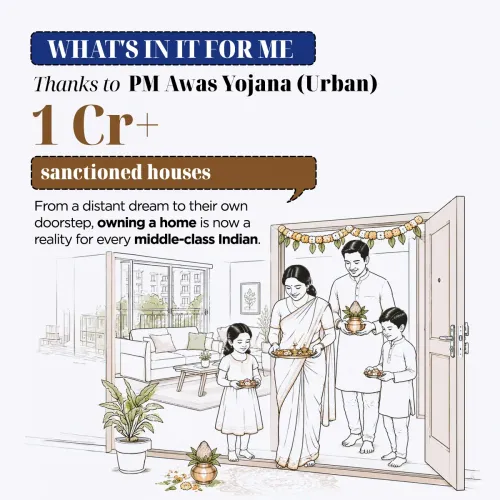
Over 1 crore homes built under government housing initiatives, primarily Pradhan Mantri Awas Yojana , are cited as a pillar of middle-class uplift.
Vande Bharat Express (launched 2019 ), Namo Bharat Corridors , and the UDAN scheme ( 2017 ) are named as modern transport frameworks expanding aspirational access.
Metro rail network expansion is highlighted as an urban infrastructure achievement benefiting middle-income households.
The messaging is part of a broader BJP communication campaign linking governance outcomes directly to aspirational voter segments.
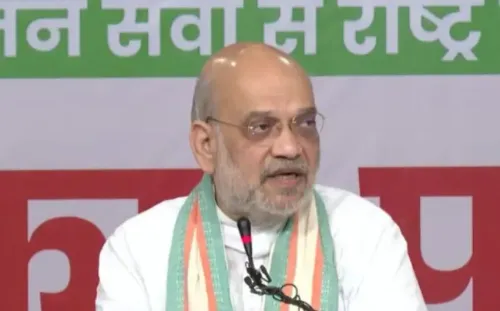
Union Home Minister Amit Shah on Monday, June 15, 2026, credited the Modi government's 12-year tenure with creating a 'new, fortified and confident middle class' in India, citing tax relief, housing, metro expansion, and modern transport frameworks as the pillars of this transformation. The statement was made via a post on X under the hashtag #12YearsOfSakshamMiddleClass, signalling a coordinated campaign to mark over a decade of BJP-led governance at the Centre.
Context
Shah's post frames the Modi era as a period of deliberate policy design aimed at upward mobility for urban and aspirational households. He specifically cited the cutting down of tax burdens, reduction in GST compliance requirements, construction of over 1 crore homes, expansion of metro rail networks, and the rollout of modern transport systems as evidence of this shift. The post names three flagship programmes — Vande Bharat trains, Namo Bharat Corridors, and the UDAN scheme — as instruments that have given 'a new flight' to middle-class aspirations.
The hashtag and the language of the post suggest a broader communication exercise by the BJP to consolidate its governance record ahead of any forthcoming electoral or legislative cycle, directly targeting aspirational voter segments who identify with the middle class.
Policy Backdrop
Several of the schemes Shah referenced have well-documented policy histories. The Goods and Services Tax (GST) was rolled out across India in July 2017, replacing a web of central and state levies with a unified indirect tax structure intended to reduce compliance friction for businesses and households alike. The Pradhan Mantri Awas Yojana (PMAY), launched in 2015, set out to construct affordable housing for lower- and middle-income families, with the 'over 1 crore homes' figure referenced in Shah's post.
The UDAN (Ude Desh ka Aam Naagrik) scheme, introduced in 2017, subsidised regional air connectivity to bring smaller cities into the aviation network. The first Vande Bharat Express entered service in 2019 as a semi-high-speed rail offering, and has since been expanded to multiple corridors. Namo Bharat Corridors refer to rapid rail transit projects further extending urban and inter-city connectivity.
Successive Union Budgets under Prime Minister Narendra Modi have consistently framed infrastructure spending and tax rationalisation as tools of middle-class empowerment rather than standalone projects — a narrative that has been repeated across multiple election cycles.
Stakeholders and Impact
The primary beneficiaries invoked in Shah's messaging are urban households and aspirational middle-income families who have accessed new housing stock, cheaper air travel, faster rail services, and metro connectivity over the past decade. The GST simplification argument resonates particularly with small business owners and salaried professionals who previously navigated multiple indirect tax regimes.
Critics and opposition parties have historically contested the scale and reach of these claims, particularly on housing delivery timelines and the affordability of Vande Bharat fares for lower-middle-income commuters. However, Shah's post does not engage with those critiques; it presents the record as one of unambiguous expansion of middle-class capability.
What's Next
Parliamentary deliberations on the next Union Budget will be closely watched for any fresh rounds of GST rate rationalisation or new metro project allocations — both of which would extend the policy arc Shah described. Progress updates on ongoing Namo Bharat Corridor completions and new UDAN route additions in 2026-27 are also expected to feature in the government's communications as it continues to build this middle-class empowerment narrative. The #12YearsOfSakshamMiddleClass campaign itself may see further amplification from other senior BJP leaders in the coming days.
Point of View
Voter-legible narrative of middle-class ascent. By anchoring the message in tangible touchpoints like GST, housing, and rail rather than abstract growth figures, the BJP is signalling that its electoral pitch to aspirational India will remain infrastructure- and relief-centric. The hashtag format and the coordinated timing suggest this is the opening salvo of a wider campaign, likely to be amplified by party leadership ahead of budget season or electoral events. The framing also pre-empts opposition critiques by shifting the debate from inequality metrics to lived-experience improvements in mobility, housing, and taxation.
NationPress
14 Sept 2026
Frequently Asked Questions
What is the #12YearsOfSakshamMiddleClass hashtag about?
The hashtag #12YearsOfSakshamMiddleClass is a BJP campaign launched around June 2026 to mark over 12 years of the Modi government, highlighting policies said to have strengthened India's middle class through tax relief, housing, and modern transport infrastructure.
Which schemes did Amit Shah mention in his post about the middle class?
Amit Shah referenced GST compliance reduction, construction of over 1 crore homes (linked to Pradhan Mantri Awas Yojana), metro rail expansion, Vande Bharat Express trains, Namo Bharat Corridors, and the UDAN regional aviation scheme.
What is the UDAN scheme and how does it help the middle class?
UDAN (Ude Desh ka Aam Naagrik), launched in 2017, subsidises regional air travel to make flying affordable for ordinary citizens and connects smaller cities to the aviation network, directly benefiting middle-income travellers.
When did the Vande Bharat Express start running in India?
The first Vande Bharat Express entered service in 2019 as part of the Modi government's push to modernise Indian Railways with semi-high-speed connectivity between major cities.
How many homes has the Modi government built for the middle class?
Amit Shah's post cites over 1 crore homes built through government housing initiatives, primarily under the Pradhan Mantri Awas Yojana launched in 2015 to provide affordable housing to lower- and middle-income families.