Amit Shah Highlights 12 Years of Modi Govt's Youth & Education Push
Synopsis
Union Home Minister Amit Shah on 13 June 2026 cited 2 lakh startups, 12 crore Mudra loans, 6 crore skilled youth, and 1,213 universities to argue that twelve years of Modi government policy have transformed Indian youth from job seekers into job creators.
Key Takeaways
Home Minister Amit Shah posted on 13 June 2026 under #12YearsOfYuvaShakti , marking twelve years of the Modi government .
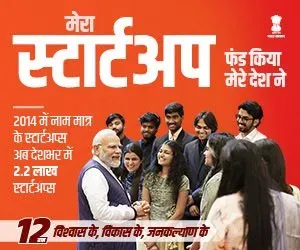
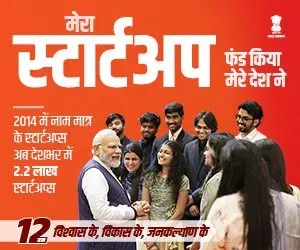
India is claimed to have become the world's second-largest higher-education network and the third-largest startup ecosystem with over 2 lakh startups .
More than 6 crore youth have received skill development training and over 12 crore Mudra loans have been disbursed under PMMY .
India now has 1,213 universities including new IITs and AIIMS campuses opened since 2014 .
The Khelo India programme has established 1,045 centres and 34 State Centres of Excellence for sports talent development.
Over 300 space startups have emerged, signalling growth in frontier technology entrepreneurship.
Union Home Minister Amit Shah on Saturday, 13 June 2026, credited the Narendra Modi government's twelve years in office with building a new culture of education, skill development, innovation, and entrepreneurship among Indian youth, citing a string of figures to argue that the country's young population is now creating jobs rather than seeking them.
Context
Posting under the hashtag #12YearsOfYuvaShakti (12 Years of Youth Power), Shah said that over the past twelve years, Prime Minister Modi has developed a new culture of education, skill, innovation, and startups. He pointed to India becoming the world's second-largest higher-education network, its standing as a major AI talent pool, and the emergence of a 2-lakh-startup ecosystem that he described as the third largest in the world. The post was accompanied by four images, suggesting a curated campaign communication marking the anniversary of the BJP-led government's return to power in 2014.
Policy Backdrop
The claims in Shah's post draw on a decade-long policy push that includes the Startup India initiative launched in 2016, which offered tax benefits and simplified compliance for new ventures, and the Pradhan Mantri Mudra Yojana (PMMY), introduced in 2015 to extend collateral-free micro-credit to small businesses and first-time entrepreneurs. Shah cited more than 12 crore Mudra loans as evidence of financial access for aspiring entrepreneurs.
On skills, Shah noted that more than 6 crore youth have undergone skill development training — a figure linked to the Skill India Mission and its associated programmes. The National Education Policy (NEP) 2020 added a structural layer by mandating integration of vocational training into higher education curricula. Shah also highlighted more than 300 space startups as a marker of India's ambitions in frontier technology sectors.
For sports, the Khelo India programme, launched in 2017, has created 1,045 Khelo India Centres and 34 State Centres of Excellence to identify and train grassroots talent. Shah said Indian youth are setting new records in sports alongside academic and entrepreneurial achievements.
Institutions and Scale
Shah specifically referenced the expansion of premier institutions, noting that India now has 1,213 universities including IITs and AIIMS. New IIT campuses and more than 20 new AIIMS have been established since 2014, significantly widening access to elite technical and medical education beyond traditional metros. This quantitative expansion underpins the government's argument that higher education is no longer limited to a small, geographically concentrated elite.
The broader pattern is one of simultaneous supply-side investment — new institutions, laboratories, and sports centres — and demand-side enablement through credit access, skill certification, and regulatory ease for startups. Together, these are presented as pillars of the Atmanirbhar Bharat (self-reliant India) strategy.
What's Next
Implementation of the NEP 2020 across university curricula remains a work in progress, and forthcoming parliamentary discussions on AI regulation and skill-development funding in the next Union Budget will test whether the ecosystem gains of the past twelve years can be sustained and deepened. The government's ability to translate headline startup numbers into durable employment and export revenue will be the metric that analysts and opposition parties are likely to scrutinise most closely in the months ahead.
Point of View
Using aggregated metrics to construct a narrative of systemic transformation rather than isolated policy wins. By linking education expansion, micro-credit, skill certification, sports infrastructure, and space startups into a single frame, the BJP is signalling that its pitch to youth ahead of future electoral cycles will rest on an 'opportunity economy' argument. The emphasis on job creation over job seeking is a direct counter to opposition criticism on unemployment, making the data points as much political as administrative. How much of the startup and skill numbers translate into sustained income gains for first-generation entrepreneurs will determine whether the narrative holds beyond the anniversary cycle.
NationPress
25 Sept 2026
Frequently Asked Questions
What is India's rank in the global startup ecosystem according to Amit Shah?
According to Amit Shah's post on 13 June 2026, India is the third-largest startup ecosystem in the world, with over 2 lakh (200,000) startups.
How many Mudra loans have been given under the Modi government?
Shah cited more than 12 crore (120 million) Mudra loans disbursed under the Pradhan Mantri Mudra Yojana since its launch in 2015, aimed at micro-entrepreneurs without collateral.
How many universities does India have in 2026 according to Amit Shah?
Shah stated that India now has 1,213 universities, including IITs and AIIMS campuses, making it the world's second-largest higher-education network.
What is the Khelo India programme and how many centres does it have?
Khelo India is a government sports development programme launched in 2017. Shah noted it has created 1,045 Khelo India Centres and 34 State Centres of Excellence for grassroots talent identification and training.
How many youth have been skill-trained under the Modi government?
Shah's post claims that more than 6 crore (60 million) young people have undergone skill development training under government programmes over the past twelve years.