CM Dhami Hails 12 Years of Modi's Youth Empowerment Drive

Synopsis
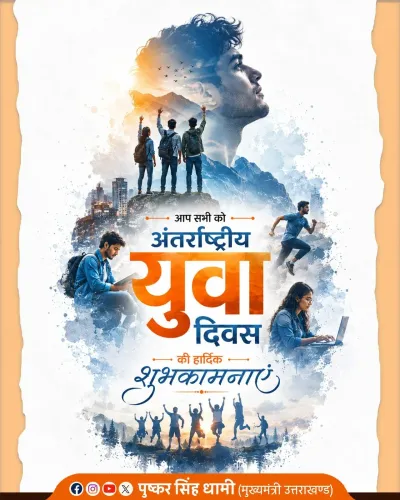
Uttarakhand Chief Minister Pushkar Singh Dhami on 13 June 2026 credited Prime Minister Narendra Modi's twelve years in office with creating unprecedented opportunities for Indian youth through Startup India, Skill India, Digital India and Khelo India, citing over 2.2 lakh startups as evidence of progress.
Key Takeaways
CM Pushkar Singh Dhami posted on 13 June 2026 praising PM Modi 's twelve-year youth empowerment record under the hashtag #12YearsOfYuvaShakti .
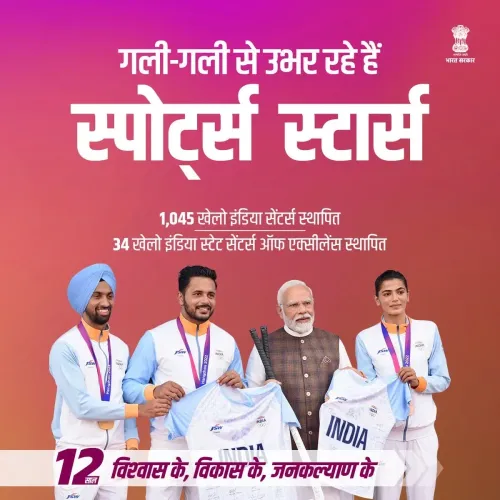
He cited five flagship schemes — Startup India, Skill India, PMKVY, Digital India and Khelo India — as drivers of positive change for crores of young Indians.
The post claims more than 2.2 lakh startups are currently advancing innovation and entrepreneurship across the country.
Dhami framed youth empowerment as the 'strongest foundation' for achieving the Viksit Bharat 2047 vision of a developed India.
Startup India was launched in January 2016, Skill India and PMKVY in 2015, Digital India in July 2015, and Khelo India in 2017.
The statement reflects a consistent BJP pattern of linking state-level governance with central youth-focused scheme delivery.
Uttarakhand Chief Minister Pushkar Singh Dhami on Saturday, 13 June 2026, credited Prime Minister Narendra Modi's twelve years of governance with delivering 'unprecedented opportunities' to India's youth, citing flagship schemes spanning entrepreneurship, skills, digital access and sports as transformative forces for crores of young Indians.
Context
Posting under the hashtag #12YearsOfYuvaShakti ('12 Years of Youth Power'), CM Dhami wrote that under Modi's 'visionary leadership', initiatives such as Startup India, Skill India, the Pradhan Mantri Kaushal Vikas Yojana (PMKVY), Digital India, Khelo India and employment fairs have brought 'positive transformation' to millions of young lives. He further stated that more than 2.2 lakh startups are now driving innovation and entrepreneurship to new heights, while crores of youth are becoming self-reliant through skill development programmes.
The post, written in Hindi, closed with a call to action: 'Yuva shakti ke saamarthya ko pahchankar use sashakt banana ka yeh sankalp hi Viksit Bharat ke nirmaan ki sabse mazboot aadharshila hai' — 'Recognising the potential of youth power and resolving to empower it is the strongest foundation for building a Developed India.'
Policy Backdrop
Startup India was launched in January 2016 to simplify regulations, extend tax benefits and channel funding support to new ventures. Within a decade, the programme has been credited with building one of the world's largest startup ecosystems. Skill India and the PMKVY, both rolled out in 2015, were designed to provide industry-relevant training and formal certification to millions of young Indians who lacked vocational credentials.
Digital India, inaugurated in July 2015, expanded broadband infrastructure and e-governance services, creating a pipeline of technology-enabled jobs. Khelo India, introduced in 2017, redirected grassroots sporting talent toward competitive athletic careers, broadening the definition of youth empowerment beyond the classroom and the job market. Together, these schemes form the policy spine of the government's Atmanirbhar Bharat self-reliance agenda.
Stakeholders and Impact
The primary beneficiaries of these programmes are India's estimated 60 crore-plus youth population — a demographic dividend the government has consistently positioned as the engine of the Viksit Bharat 2047 vision, which aims to transform India into a developed nation by the centenary of its independence. Aspiring entrepreneurs, first-generation skilled workers and sports talent from smaller towns and rural areas have been among the most directly targeted groups.
At the state level, Uttarakhand — a hill state with high out-migration among youth — has particular stakes in schemes that create local employment and entrepreneurship pathways. CM Dhami's public endorsement signals continued state-level alignment with central youth policy priorities, and reflects the broader BJP pattern of linking state governance outcomes to national scheme delivery.
What's Next
Attention will turn to periodic updates from the Department for Promotion of Industry and Internal Trade (DPIIT) on startup registration numbers, as well as the Ministry of Skill Development and Entrepreneurship's certification and placement data. For Uttarakhand specifically, the integration of these schemes into the state's annual budget and youth policy documents will indicate how far the chief minister's stated commitment translates into on-ground resource allocation.
As India's demographic window remains open for another two decades, the political salience of youth empowerment messaging is unlikely to diminish — making the delivery record of schemes like PMKVY and Startup India an increasingly scrutinised benchmark for both central and state governments.
Point of View
The twelve-year mark of Modi's tenure. By anchoring the narrative around measurable outputs such as 2.2 lakh startups and crores of skill-certified youth, the communication attempts to shift discourse from intent to impact. The invocation of Viksit Bharat 2047 also serves a longer-term framing purpose: tying current scheme delivery to a generational promise that extends well beyond any single electoral cycle. For Uttarakhand, a state with chronic youth out-migration, the subtext is that central schemes can substitute for the structural economic diversification the hill state still needs.
NationPress
13 Sept 2026
Frequently Asked Questions
What is the #12YearsOfYuvaShakti campaign about?
#12YearsOfYuvaShakti marks twelve years of PM Modi's government and highlights youth-focused schemes such as Startup India, Skill India, PMKVY, Digital India and Khelo India that were launched between 2015 and 2017 to boost employment, entrepreneurship and sports among Indian youth.
How many startups does India have according to CM Dhami's post?
CM Dhami's post states that more than 2.2 lakh startups are currently operating in India, driving innovation and entrepreneurship to new heights under the Startup India initiative.
What is Viksit Bharat and how does it relate to youth policy?
Viksit Bharat is the government's long-term vision to make India a developed nation by 2047, the centenary of independence. Youth empowerment through skills, entrepreneurship and sports is positioned as the core foundation of this goal.
What is the Pradhan Mantri Kaushal Vikas Yojana (PMKVY)?
PMKVY is a flagship skill training scheme launched in 2015 under the Skill India Mission. It provides industry-relevant vocational training and formal certification to young Indians, helping them become self-reliant and employable.
Why did Uttarakhand CM Dhami comment on national youth schemes?
BJP chief ministers routinely endorse central government schemes to signal policy alignment and highlight their state's participation in national programmes. For Uttarakhand, where youth out-migration is a persistent challenge, schemes promoting local entrepreneurship and skills are especially relevant.