Jal Shakti Minister Paatil hails youth as backbone of Viksit Bharat

Synopsis
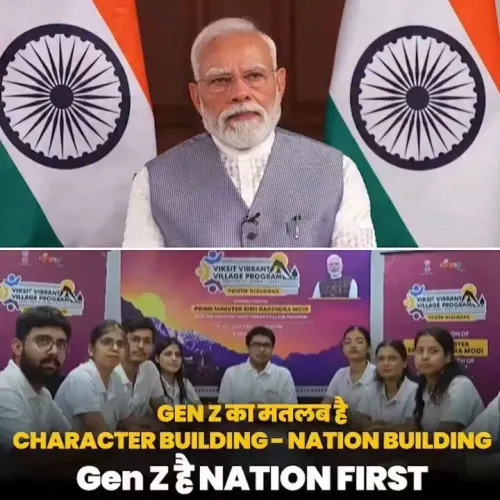
Union Jal Shakti Minister C. R. Paatil on 13 June 2026 hailed India's youth as the cornerstone of the Viksit Bharat vision, citing twelve years of startup, digital, skill, and self-reliance initiatives under Prime Minister Modi as transforming young Indians from job-seekers into job-creators and innovators.
Key Takeaways
Union Jal Shakti Minister C.
Paatil posted on 13 June 2026 calling youth 'the biggest capital of Viksit Bharat.' The post is part of the #12YearsOfYuvaShakti campaign marking twelve years of BJP-led governance since May 2014 .
Startup India (launched January 2016 ) and Skill India Mission (launched July 2015 ) are the flagship schemes cited in the policy backdrop.
Atmanirbhar Bharat Abhiyan (announced May 2020 ) and Digital India (rolled out from 2015 ) form the broader self-reliance and digital pillar of the government's youth strategy.
The Viksit Bharat goal targets a fully developed Indian economy by 2047 , the centenary of Independence.
Upcoming Union Budget discussions are expected to signal fresh allocations for skill and startup programmes.
Union Jal Shakti Minister C. R. Paatil on Saturday, 13 June 2026, took to X to describe India's youth as 'the biggest capital of Viksit Bharat,' crediting Prime Minister Narendra Modi's twelve-year tenure with giving fresh momentum to startups, digital innovation, skill development, and self-reliance.
Context
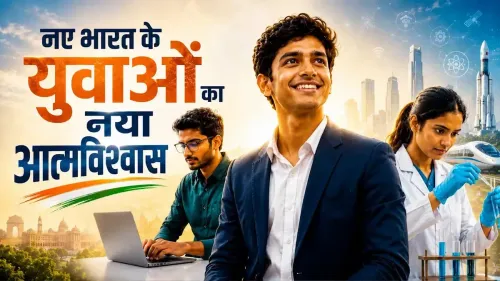
Paatil's post, shared under the hashtag #12YearsOfYuvaShakti, was part of a broader social-media campaign marking what the ruling Bharatiya Janata Party frames as twelve years of youth-centric governance since May 2014. Writing in Hindi, the minister declared: 'युवा शक्ति विकसित भारत की सबसे बड़ी पूंजी है' ('Youth power is the greatest capital of Viksit Bharat'). He added that today's young Indian is no longer merely a job-seeker but a job-creator, an innovator, and a leader of India's development journey.
The post carries the hashtags #ViksitBharat, #NewIndia, and #YuvaShakti, all of which have been recurring markers in the government's communication strategy around its 2047 developed-India vision.
Policy Backdrop
The minister's remarks draw on a cluster of flagship programmes launched over the past decade. Startup India, unveiled in January 2016, introduced tax benefits and a funding ecosystem to encourage first-generation entrepreneurs. Skill India Mission, announced in July 2015, set an ambitious target of skilling hundreds of millions of workers to make them industry-ready.
The Atmanirbhar Bharat Abhiyan, launched in May 2020, added a self-reliance dimension through production-linked incentives and a push for domestic manufacturing. Alongside these, the Digital India programme, rolled out from 2015, expanded broadband reach and digital public infrastructure, giving young Indians the tools to participate in the new economy. Together, these schemes form the policy scaffolding Paatil referenced in his post.
The overarching Viksit Bharat goal — a developed Indian economy by 2047, the centenary of Independence — has become the government's long-horizon frame into which all youth-centric messaging is now slotted.
Stakeholders and Impact
The primary beneficiaries of the programmes cited are young entrepreneurs, startup founders, and skill-training graduates. India's demographic dividend — a large working-age population relative to dependents — has been central to the government's argument that investing in youth yields outsized economic returns.
The shift in framing, from youth as job-seekers to youth as job-creators, reflects a deliberate policy narrative aimed at reducing pressure on public-sector hiring and channelling ambition toward private enterprise and innovation. Stakeholders in the startup ecosystem and vocational training sector have consistently been among the most vocal supporters of this approach, while critics have periodically questioned whether scheme outcomes match the scale of the stated ambitions.
What's Next
Parliamentary discussions around the next Union Budget are expected to reveal whether fresh allocations will be directed toward skill development and startup support. State-level youth employment missions and any new rounds of production-linked incentive expansions will also be closely watched as indicators of how the Viksit Bharat framework translates into ground-level spending. Paatil's post signals that the #12YearsOfYuvaShakti campaign is likely to intensify ahead of key political and legislative milestones, keeping youth empowerment at the centre of the BJP's governance narrative.
Point of View
The party is building a cumulative legitimacy argument rather than relying on any single scheme's outcomes. The Viksit Bharat frame serves as a long-term electoral and ideological anchor, positioning the 2047 horizon as a promise that transcends any single election cycle. Whether the messaging translates into demonstrable youth employment and entrepreneurship data will increasingly become the battleground for opposition scrutiny.
NationPress
21 Sept 2026
Frequently Asked Questions
What is Viksit Bharat and when is its target year?
Viksit Bharat is the Indian government's vision for a fully developed economy by 2047 , the centenary of India's Independence. It has been the central frame for government policy communications since 2022.
What did C. R. Paatil say about India's youth on 13 June 2026?
Paatil said that youth power is 'the greatest capital of Viksit Bharat' and that under PM Modi's leadership over twelve years, young Indians have transformed from job-seekers into job-creators and innovators driving India's development.
What is the Startup India scheme?
Startup India is a flagship government programme launched in January 2016 to promote entrepreneurship through tax benefits, easier compliance, and a funding ecosystem for new ventures.
What is the Skill India Mission?
Skill India Mission was announced in July 2015 with the goal of providing vocational and industry-relevant training to hundreds of millions of young Indians to make them employment-ready.
What is Atmanirbhar Bharat and how does it relate to youth?
Atmanirbhar Bharat Abhiyan , unveiled in May 2020 , is a self-reliance campaign that uses production-linked incentives and domestic manufacturing support. It complements youth-centric schemes by creating domestic industry opportunities for young entrepreneurs and workers.