Dr. Jitendra Singh marks 12 years of youth empowerment push

Synopsis
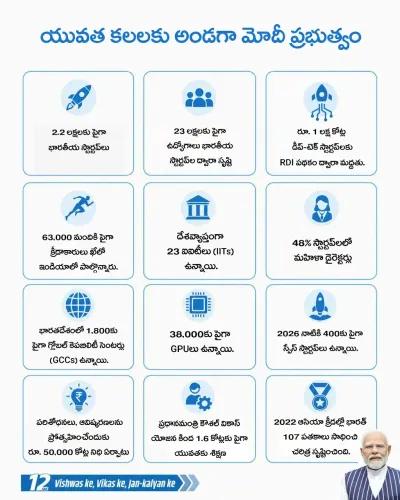
Union Minister Dr. Jitendra Singh marked twelve years of the Modi government's youth-focused policy drive on 13 June 2026, celebrating the shift from job-seeking to job-creation under the Skill India, Startup India and Stand-Up India programmes, and framing today's youth as the Amrit Peedhi powering the Viksit Bharat @2047 vision.
Key Takeaways
Jitendra Singh posted on 13 June 2026 under #12YearsOfYuvaShakti , marking twelve years of the Modi government's youth empowerment agenda.
The minister described the core shift as moving from 'seeking jobs to giving jobs' — a reframing of India's employment discourse since 2014 .
Skill India Mission (2015) targeted training 400 million people; Startup India (2016) created a Rs 10,000 crore fund of funds for young founders.
Stand-Up India (2016) opened bank-loan access for SC/ST and women entrepreneurs, broadening participation in the startup economy.
The Amrit Peedhi framing links current youth policy directly to the Viksit Bharat @2047 developed-nation vision.
Future Union Budget allocations and employment-unemployment survey data will test whether the policy narrative is matched by measurable outcomes.
Union Science and Technology Minister Dr. Jitendra Singh on Saturday, 13 June 2026 invoked the hashtag #12YearsOfYuvaShakti to mark twelve years of the Narendra Modi government's youth-focused policy drive, framing the period as a generational shift from young Indians seeking jobs to creating them.
Context
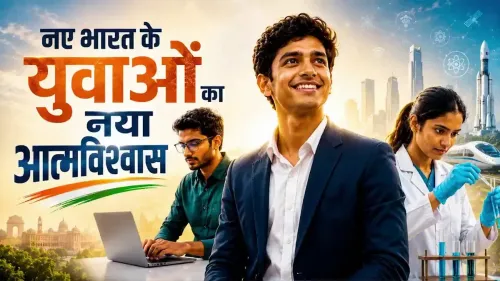
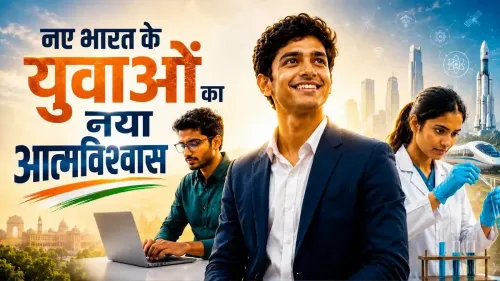
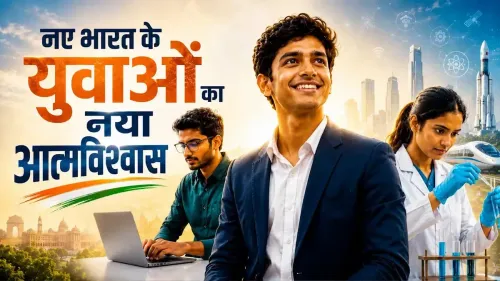
Posting in Hindi, Dr. Singh wrote: 'नौकरी मांगने से लेकर नौकरी देने तक' ('From seeking jobs to giving jobs'), describing the transformation as 'not merely a change of 12 years, but the story of a new flight of the dreams, confidence and opportunities of crores of youth.' He identified this generation as the Amrit Peedhi — the defining force of a 'new India' and the 'real strength of Viksit Bharat.'
The post was accompanied by a video and was shared on the morning of 13 June 2026, coinciding with the twelfth anniversary of the Modi government taking office in May 2014.
Policy Backdrop
The twelve-year arc the minister references is anchored in a series of flagship programmes. The Skill India Mission, launched in 2015, set an ambition to train 400 million people in industry-relevant skills and nudge youth toward self-employment rather than dependence on government jobs. The following year, Startup India — rolled out in 2016 — offered tax exemptions, simplified compliance and a Rs 10,000 crore fund of funds to back young founders.
Simultaneously, Stand-Up India (2016) opened bank-loan pathways specifically for SC/ST and women entrepreneurs, broadening the base of who could participate in the startup economy. Together, these schemes represent a deliberate reframing of the employment conversation — from the state as employer to the citizen as creator.
Stakeholders and Impact
The primary beneficiaries of this policy arc are India's young entrepreneurs, startup founders and skill-trained workers — a cohort the government has consistently positioned as the demographic dividend that will power the Viksit Bharat @2047 vision. That official roadmap targets developed-nation status by the centenary of independence, with youth at its centre.
The #12YearsOfYuvaShakti framing situates individual ministerial communication within a coordinated government-wide narrative, signalling that multiple ministries are aligning messaging around the Amrit Kaal timeline leading to 2047. For young Indians in tier-2 and tier-3 cities — historically underserved by formal employment markets — the convergence of digital infrastructure, easier business registration and skill training has materially expanded access to entrepreneurial pathways.
What's Next
Attention will now turn to upcoming Union Budget allocations for the skill-development and startup verticals, which will indicate whether the rhetorical momentum translates into fresh fiscal commitments. The release of periodic employment-unemployment survey data tracking self-employment and startup formation trends will serve as an independent benchmark against the government's narrative of transformation.
As India approaches the 2047 milestone, the pressure on policymakers to demonstrate measurable outcomes — in job quality, startup survival rates and income levels — will only intensify, making the Amrit Peedhi framing both a political asset and an accountability yardstick.
Point of View
Using the twelve-year milestone to consolidate a single, resonant narrative around the Modi government's youth record ahead of what promises to be an intensely contested policy debate on employment. The 'job-seeker to job-giver' formulation is not incidental — it directly counters opposition arguments that government hiring has stagnated, repositioning the metric of success from public-sector recruitment rolls to entrepreneurship and self-employment. By invoking the Amrit Peedhi and Viksit Bharat @2047 in the same breath, the minister ties short-term political messaging to a long-horizon national project, making any critique of the present appear to be an attack on the country's future. The durability of this framing will depend on whether hard data on startup survival, income quality and youth unemployment corroborate the aspirational tone.
NationPress
20 Sept 2026
Frequently Asked Questions
What is #12YearsOfYuvaShakti?
#12YearsOfYuvaShakti is a hashtag used by ministers and the BJP to mark twelve years of the Narendra Modi government's youth-focused policy initiatives, including Skill India, Startup India and Stand-Up India, since May 2014.
What did Dr. Jitendra Singh say about youth employment?
Dr. Jitendra Singh said India has moved 'from seeking jobs to giving jobs' over the past twelve years, crediting government schemes with shifting youth toward entrepreneurship and self-employment.
What is the Amrit Peedhi concept?
Amrit Peedhi, or 'Nectar Generation,' is a government framing that describes today's Indian youth as the generation that will carry the country to developed-nation status by 2047 under the Viksit Bharat vision.
What is the Skill India Mission?
Skill India Mission is a national programme launched in 2015 with a target of training 400 million people in industry-relevant skills, aiming to promote self-employment and reduce dependence on government jobs.
What is Startup India and how does it help youth?
Startup India, launched in 2016, offers young founders tax exemptions, simplified regulatory compliance and access to a Rs 10,000 crore fund of funds, making it easier to start and scale businesses in India.