Pradhan Marks 12 Years of Youth-Led Nation-Building
Synopsis
Union Education Minister Dharmendra Pradhan marked twelve years of 'Yuva Shakti' on June 13, 2026, crediting India's youth with driving national progress in innovation, entrepreneurship, sports, and technology, and reaffirming the government's Viksit Bharat 2047 vision.
Key Takeaways
Union Education Minister Dharmendra Pradhan marked 12 years of 'Yuva Shakti' in a post on June 13, 2026 .
The anniversary corresponds to the BJP-led government's twelve-year tenure since 2014 .
The minister credited India's youth with achievements in innovation, entrepreneurship, sports, and technology.
Key government programmes underpinning this narrative include Skill India (2015) , Startup India (2016) , and the National Education Policy 2020 .
The post explicitly links youth progress to the Viksit Bharat 2047 goal of a fully developed India.
Upcoming NEP 2020 rollout in higher education and next Union Budget youth allocations are the immediate policy markers to watch.
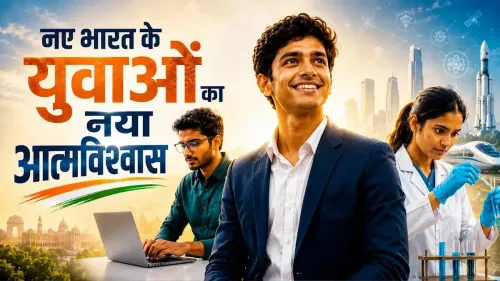
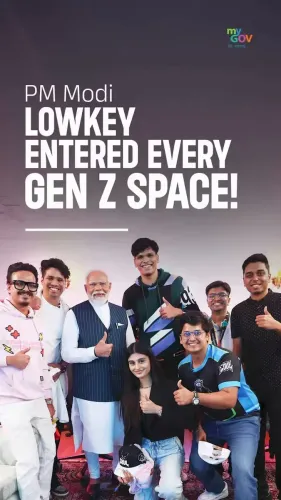
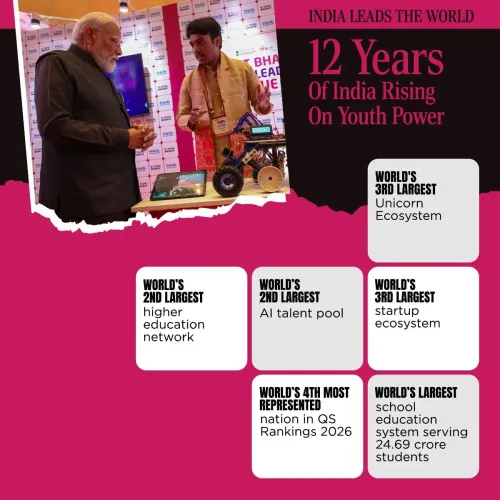
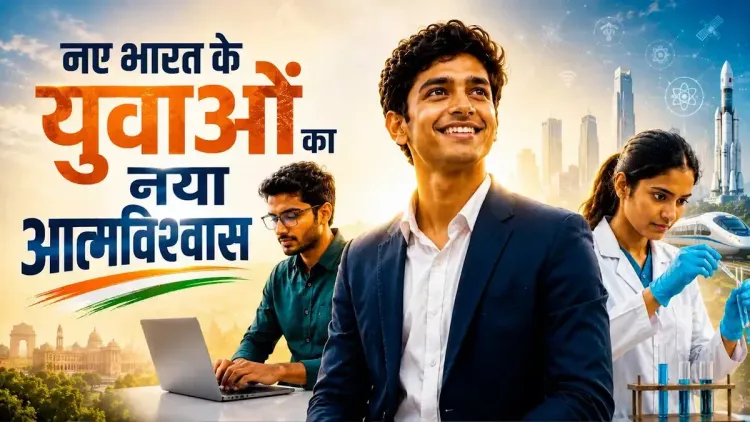
Union Education Minister Dharmendra Pradhan on Saturday, June 13, 2026, marked twelve years of what he described as 'Yuva Shakti' — youth power — driving India's transformation, citing gains across innovation, entrepreneurship, sports, and technology as evidence of a generation reshaping the country's future.
Context
Posting on X, the minister wrote: 'Twelve years of Yuva Shakti. Twelve years of aspirations turning into achievements.' He framed India's youth as 'the driving force behind a confident and future-ready Bharat,' invoking the government's long-standing Viksit Bharat (Developed India) vision. The post carries the hashtags #12YearsOfSeva, #YuvaShakti, and #ViksitBharat, signalling a deliberate anniversary moment tied to the BJP-led government's twelve-year record since 2014.
The reference to twelve years aligns with the Narendra Modi government completing over a decade in office, a period the ruling party has consistently framed around youth participation in economic and technological self-reliance. Pradhan, who also previously served as Union Petroleum Minister, has been one of the cabinet's most prominent voices on education reform and youth empowerment.
Policy Backdrop
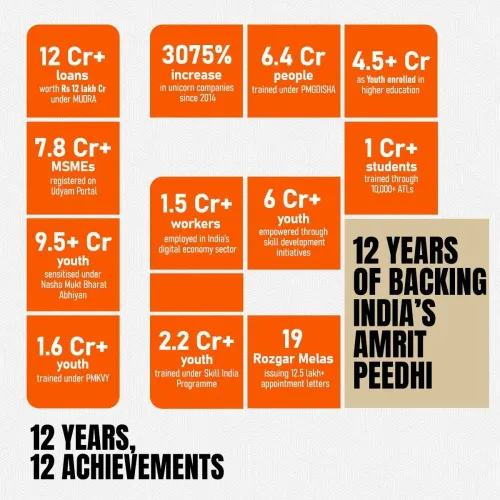
The government has built a layered architecture of youth-facing programmes since 2014. The Skill India Mission, launched in 2015, targeted large-scale vocational training for employment and self-employment. A year later, Startup India created a formal ecosystem — including tax benefits and funding support — to channel young entrepreneurial energy into the formal economy.
The National Education Policy 2020 added a structural dimension, overhauling school and higher education with emphasis on multidisciplinary learning, vocational integration, and research. The Atmanirbhar Bharat package, also unveiled in 2020, explicitly tied self-reliance goals to youth entrepreneurship and technology adoption, reinforcing the pattern of treating young citizens as both beneficiaries and active agents of governance outcomes.
Stakeholders and Impact
India's youth — the country's largest demographic cohort — sit at the centre of this policy narrative. Young entrepreneurs, students in reformed institutions, athletes, and technology professionals have all been positioned under the 'Yuva Shakti' umbrella, reflecting a deliberate effort to aggregate diverse youth outcomes under a single political and developmental brand.
The minister's post specifically names innovation, entrepreneurship, sports, and technology as domains of achievement, pointing to a broad conception of youth contribution that extends well beyond classroom metrics. This framing is consistent with the government's push to link the demographic dividend to the Viksit Bharat 2047 target — the ambition of a fully developed India by the centenary of independence.
What's Next
Attention will now turn to the rollout of remaining NEP 2020 provisions in higher education institutions and any new youth entrepreneurship allocations expected in the next Union Budget. Ministerial and parliamentary statements setting measurable targets for the youth components of Viksit Bharat are anticipated ahead of the 2029 general elections, as the government seeks to convert the anniversary narrative into concrete, quantifiable milestones.
Point of View
Using the twelve-year mark to consolidate the BJP's youth-centric governance narrative ahead of a politically sensitive electoral cycle. By bundling entrepreneurship, sports, technology, and education under a single 'Yuva Shakti' frame, the government is attempting to make the demographic dividend a measurable political asset rather than an abstract promise. The invocation of Viksit Bharat 2047 keeps the long-term vision alive while the twelve-year retrospective anchors it in claimed near-term delivery. The real test will be whether upcoming budget allocations and NEP implementation benchmarks can substantiate the celebratory tone with verifiable outcomes.
NationPress
22 Sept 2026
Frequently Asked Questions
What is Yuva Shakti in the context of Indian government policy?
'Yuva Shakti' translates to 'youth power' and is a phrase the BJP-led government has used since 2014 to describe its effort to channel India's young population into innovation, entrepreneurship, sports, and technology as part of the broader Viksit Bharat vision.
Why did Dharmendra Pradhan post about 12 years of Yuva Shakti?
The reference marks twelve years since the BJP-led government came to power in 2014, framing the anniversary as a milestone in youth-led national development under programmes such as Skill India, Startup India, and NEP 2020.
What is the Viksit Bharat goal mentioned by Pradhan?
Viksit Bharat, meaning 'Developed India,' is the government's long-term vision to achieve full development by 2047 — the centenary of Indian independence — with youth participation cited as a central driver.
What government schemes support youth empowerment in India?
Key schemes include the Skill India Mission (2015) for vocational training, Startup India (2016) for entrepreneurship support, the National Education Policy 2020 for education reform, and the Atmanirbhar Bharat package (2020) linking self-reliance to youth-led technology adoption.
What should we watch for next on India's youth policy?
The rollout of remaining NEP 2020 provisions in higher education and new youth entrepreneurship allocations in the next Union Budget are the immediate markers, alongside any measurable Viksit Bharat targets announced ahead of the 2029 general elections.