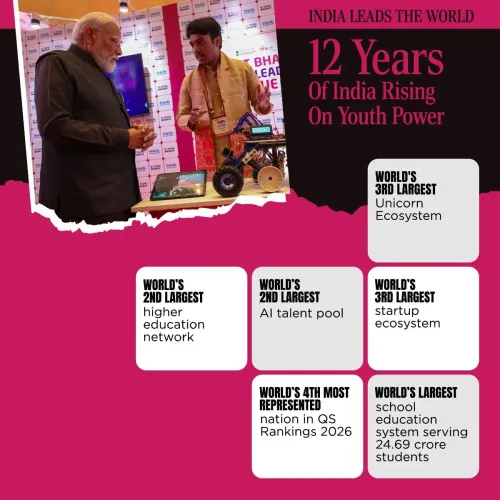
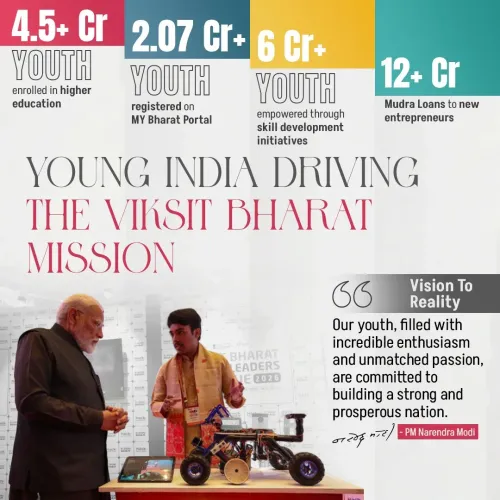
Sitharaman Marks 12 Years of Youth Empowerment Push
Synopsis
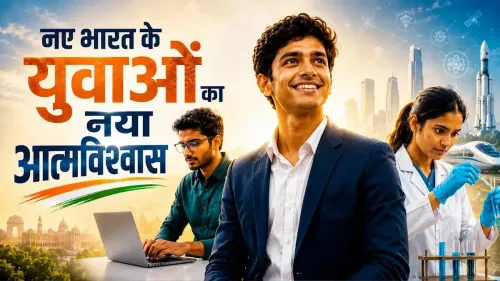
Union Finance Minister Nirmala Sitharaman on 13 June 2026 marked 12 years of the government's youth empowerment agenda, invoking the Viksit Bharat 2047 vision and linking skilling milestones to India's long-term development goals under the #12YearsOfYuvaShakti hashtag.
Key Takeaways
Finance Minister Nirmala Sitharaman posted on 13 June 2026 marking 12 years of the government's youth empowerment push under #12YearsOfYuvaShakti .
The post directly links youth skilling achievements to the Viksit Bharat @2047 national development vision.
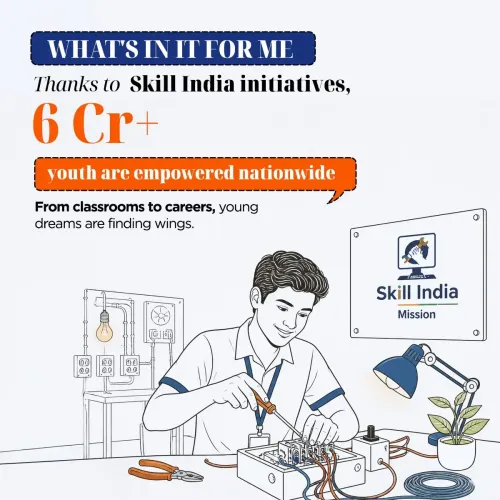
The Skill India Mission , launched in July 2015 , has been a flagship vehicle for vocational training across sectors.
The National Education Policy 2020 extended skilling into mainstream schooling from Class 6 onward.
India's demographic dividend — a large working-age population — is the structural context underpinning 12 years of continuous youth-focused policy.
Future budget allocations and employment-outcome data will be key indicators of whether the policy arc is delivering measurable results.
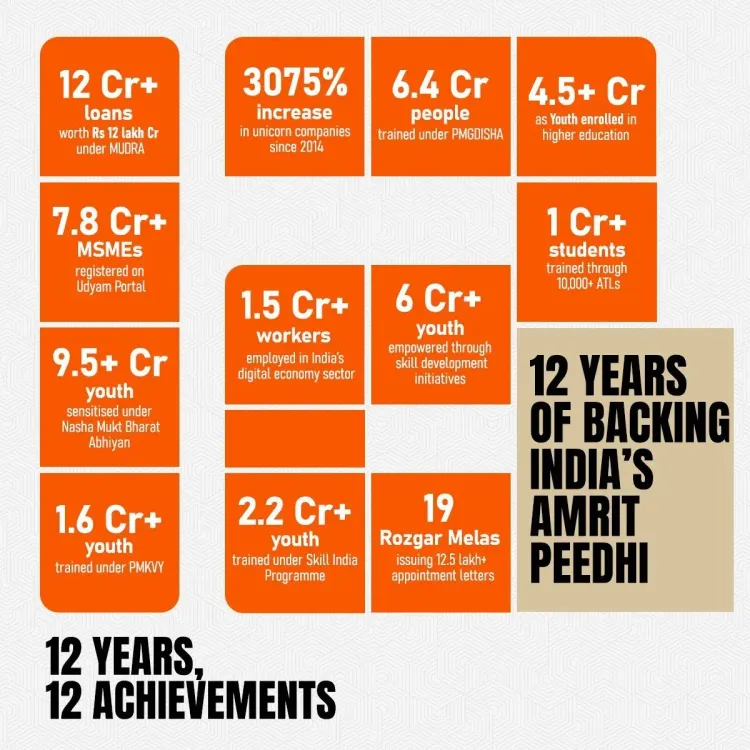
Union Finance Minister Nirmala Sitharaman on Saturday, 13 June 2026, invoked the theme of youth empowerment and skill-building as she marked 12 years of what the ruling dispensation calls its 'Yuva Shakti' journey, linking successive achievements to the overarching Viksit Bharat vision for 2047.
Context
Sitharaman's post, carrying the hashtag #12YearsOfYuvaShakti, frames the anniversary as a milestone in a continuous policy arc that began when the Narendra Modi-led government assumed office in May 2014. The message — 'Empowering aspirations, building skills and opening doors for young India' — is a direct articulation of the government's stated priority of harnessing India's demographic dividend before it peaks. 'Every achievement strengthens the journey towards a Viksit Bharat,' she wrote, tying individual skilling outcomes to the national development goal.
Policy Backdrop
The 12-year period referenced spans a sequence of landmark interventions. The Skill India Mission, launched in July 2015, set out to provide vocational training and certification to hundreds of millions of young people across sectors, aiming to bridge the gap between educational attainment and industry requirements. The National Education Policy 2020 deepened this thrust by mandating vocational exposure from Class 6 onward and aligning curricula with evolving industry skill needs.
The Viksit Bharat @2047 framework, which has appeared in official documents and successive Union Budgets from 2021 onward, positions youth capability-building as a structural pillar alongside manufacturing growth, digital economy expansion, and reduced import dependence. As Finance Minister, Sitharaman has been a central figure in channelling budgetary resources toward these skilling and education priorities.
Stakeholders and Impact
The primary beneficiaries of the policies referenced are India's youth — vocational trainees, school students entering a reformed curriculum, and first-generation learners seeking formal certification. For this cohort, the convergence of skilling infrastructure, apprenticeship programmes, and education reform represents both expanded opportunity and a pathway into the formal economy.
Broader stakeholders include industry bodies dependent on a trained domestic workforce, state governments that co-implement skilling schemes, and international investors watching India's labour-force quality as a factor in manufacturing relocation decisions. The government's consistent framing of youth as the engine of a developed India by 2047 also carries electoral salience, given that a significant share of the electorate is under 35.
What's Next
Attention will now turn to the next Economic Survey and Union Budget for measurable employment-outcome data and any fresh allocations toward skilling infrastructure or apprenticeship expansion. The #12YearsOfYuvaShakti marker is likely to be followed by further government communication cataloguing scheme-level achievements. Whether the anniversary messaging translates into new policy announcements or budget commitments will be closely watched by youth-welfare advocates and economic analysts alike.
Point of View
The government attempts to project continuity and long-horizon thinking rather than short-term scheme launches. The 12-year marker also implicitly invites a comparative reading: how measurably have skilling and education outcomes shifted since 2014? That question, largely unanswered in the post itself, is precisely what independent analysts and opposition voices are likely to press. The communication is most significant as a signal that youth empowerment will remain a central budget and policy priority in the near term.
NationPress
23 Sept 2026
Frequently Asked Questions
What is #12YearsOfYuvaShakti about?
#12YearsOfYuvaShakti marks 12 years of the Modi government's focus on youth empowerment, skilling, and education reform since taking office in May 2014. Finance Minister Nirmala Sitharaman used the hashtag on 13 June 2026 to highlight the journey toward a developed India by 2047.
What is Viksit Bharat and how does it relate to youth policy?
Viksit Bharat, or 'Developed India,' is the government's vision to transform India into a developed economy by 2047, the centenary of independence. Youth skilling and education reform are positioned as core drivers of this goal, with schemes like Skill India Mission and the National Education Policy 2020 serving as key instruments.
What is the Skill India Mission?
The Skill India Mission is a flagship government programme launched in July 2015 to provide vocational training and formal certification to hundreds of millions of young Indians across sectors. It aims to reduce the skill gap between educational attainment and industry requirements.
How does the National Education Policy 2020 support skilling?
The National Education Policy 2020 integrates vocational education into mainstream schooling from Class 6 onward and aligns curricula with industry skill needs. It represents a structural shift from purely academic learning to a multidisciplinary, skills-inclusive model.
Why is India's demographic dividend important for economic growth?
India has one of the world's largest and youngest populations, with a significant share of its workforce under 35. Harnessing this demographic dividend through skilling and education is seen as critical to driving manufacturing growth, digital economy expansion, and long-term GDP gains before the working-age population share begins to decline.