Sitharaman Hails Youth as Engine of India's Global Rise
Synopsis
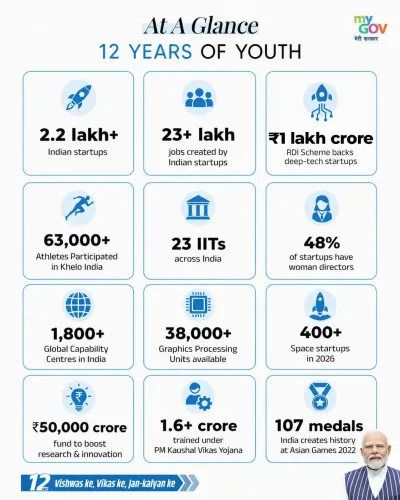
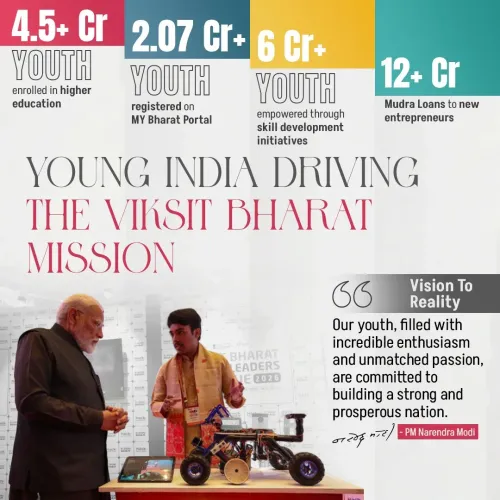
Finance Minister Nirmala Sitharaman on 13 June 2026 celebrated twelve years of the Modi government's youth-focused governance under #12YearsOfYuvaShakti, crediting India's students and startup founders with powering the country's rise on the world stage.
Key Takeaways
Union Finance Minister Nirmala Sitharaman posted on 13 June 2026 under #12YearsOfYuvaShakti , marking twelve years of the Modi government's youth agenda.
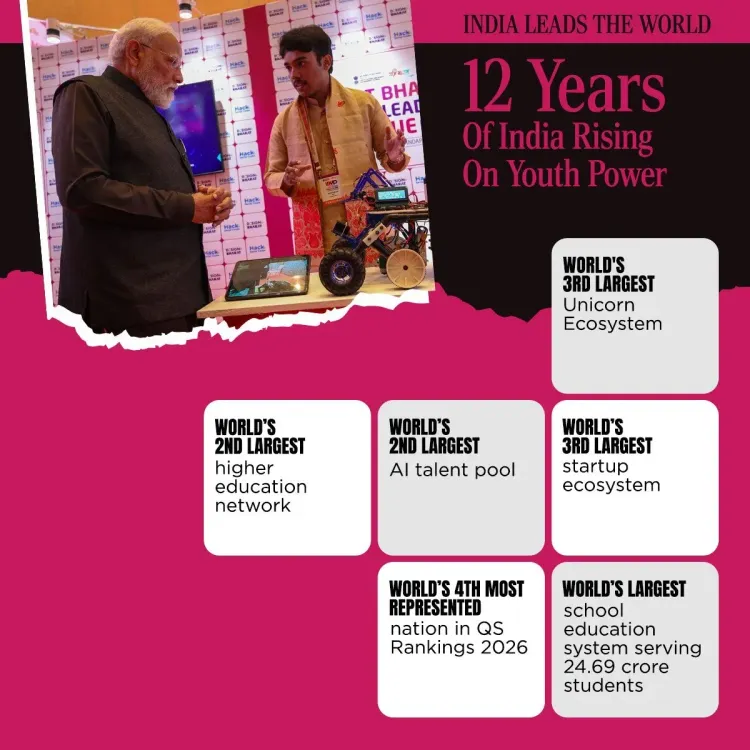
The message highlighted both classroom education and the startup ecosystem as engines of India's global ascent.
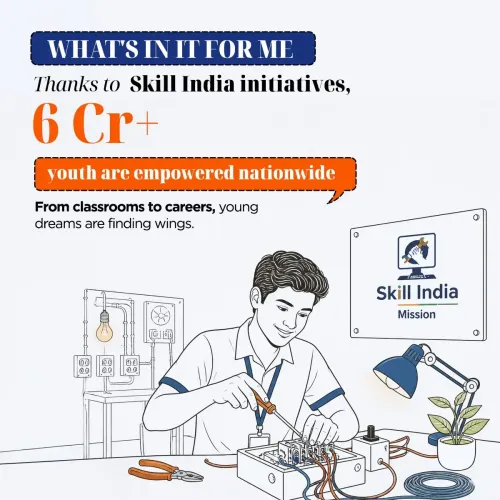
Startup India (launched January 2016 ) and the Skill India Mission (launched 2015 ) form the policy backbone of the government's youth empowerment narrative.
The National Education Policy 2020 reinforced the link between multidisciplinary learning and entrepreneurship.
Successive Union Budgets have directed funds toward digital infrastructure, innovation hubs and vocational training for young Indians.
Analysts will watch the next Union Budget for fresh allocations in education, skilling and startup support as a measure of the government's commitment.
Union Finance Minister Nirmala Sitharaman on Saturday, 13 June 2026 invoked India's young population as the driving force behind the country's growing global stature, posting a message on X under the hashtag #12YearsOfYuvaShakti to mark twelve years of the current central government's focus on youth empowerment.
Context
Sitharaman's post — 'From classrooms to startups, our youth's talent, innovation and ambition is powering India's rise to the world stage' — frames the demographic dividend as the central achievement of a decade-plus of governance. The hashtag #12YearsOfYuvaShakti (meaning 'twelve years of youth power') anchors the message to the anniversary of the Narendra Modi-led government, which took office in May 2014. The Finance Minister's choice to highlight both education and entrepreneurship signals a deliberate policy arc that runs from school classrooms to the startup ecosystem.
Policy Backdrop
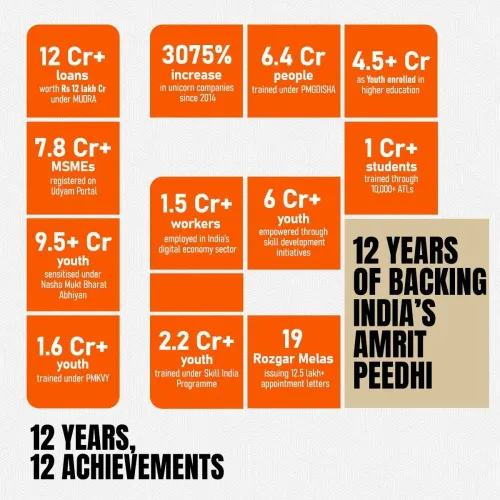
The twin pillars of Startup India and the Skill India Mission underpin Sitharaman's framing. Startup India, launched in January 2016, extended tax incentives, simplified compliance norms and structured funding support to young founders, helping catalyse one of the world's fastest-growing startup ecosystems. The Skill India Mission, rolled out in 2015, set out to train hundreds of millions of youth in vocational competencies, bridging the gap between formal education and market-ready employment.
The National Education Policy, approved in July 2020, added a further institutional layer by emphasising multidisciplinary learning, research orientation and stronger linkages between academic institutions and entrepreneurial ventures. Successive Union Budgets under Sitharaman's stewardship have channelled allocations toward digital infrastructure, innovation hubs and skilling programmes, reinforcing the political narrative that India's demographic advantage must be converted into economic output and global competitiveness.
Stakeholders and Impact
The immediate stakeholders are India's vast cohort of students, young professionals and startup founders — a population that demographers project will remain among the youngest in the world through the 2030s. For startup founders, the sustained policy attention has translated into a more accessible funding and regulatory environment. For students, reforms from the school level through higher education have sought to align curricula with industry needs and research imperatives.
Sitharaman's message also carries a signalling function for investors and multilateral bodies watching India's economic trajectory. By placing youth at the centre of India's 'rise to the world stage', the government reinforces its pitch that structural reforms in education and entrepreneurship are compounding into long-term growth.
What's Next
Attention will now turn to the next Union Budget and forthcoming policy statements for concrete indicators — fresh allocations for education and skilling, expansion of incubation infrastructure, and new incentives for early-stage startups. The #12YearsOfYuvaShakti messaging suggests the government intends to keep youth empowerment prominent in its political and economic communications as it approaches the mid-point of its third consecutive term. Whether that narrative is backed by measurable new outlays will be the test that analysts and young Indians alike will apply.
Point of View
She draws a straight line from the National Education Policy to Startup India, presenting them as a coherent, long-running programme rather than discrete initiatives. The move reinforces the BJP's broader narrative of India as a rising global power driven by internal human capital rather than external dependency. The real test of this framing will come in the next Budget, where allocations for education, skilling and early-stage entrepreneurship will either validate or complicate the rhetoric.
NationPress
19 Sept 2026
Frequently Asked Questions
What is #12YearsOfYuvaShakti?
#12YearsOfYuvaShakti is a hashtag marking twelve years of the Narendra Modi -led central government's focus on youth empowerment, used by senior BJP leaders including Finance Minister Nirmala Sitharaman on 13 June 2026 .
What did Nirmala Sitharaman say about India's youth?
Sitharaman posted that 'from classrooms to startups, our youth's talent, innovation and ambition is powering India's rise to the world stage', crediting young Indians with driving the country's growing global stature.
What is the Startup India scheme?
Startup India is a flagship government programme launched in January 2016 that provides tax incentives, simplified compliance and funding support to encourage entrepreneurship among young Indians.
What is the Skill India Mission?
The Skill India Mission , launched in 2015 , aims to train hundreds of millions of young Indians in vocational skills to improve their employability and support the broader startup and industrial ecosystem.
How does the National Education Policy relate to youth empowerment?
The National Education Policy , approved in July 2020 , emphasises multidisciplinary learning, research and stronger connections between academic institutions and entrepreneurial ventures, aligning education more closely with India's economic ambitions.