FM Sitharaman Backs NDA Skilling Push on Yuva Shakti Anniversary
Synopsis
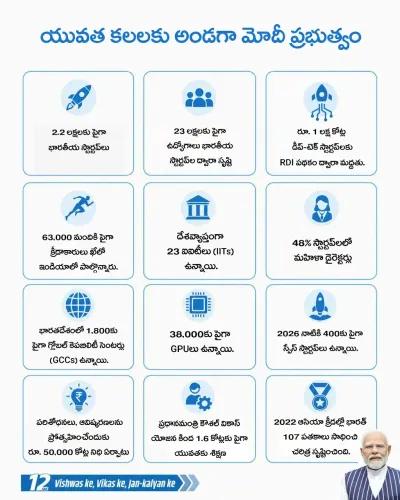
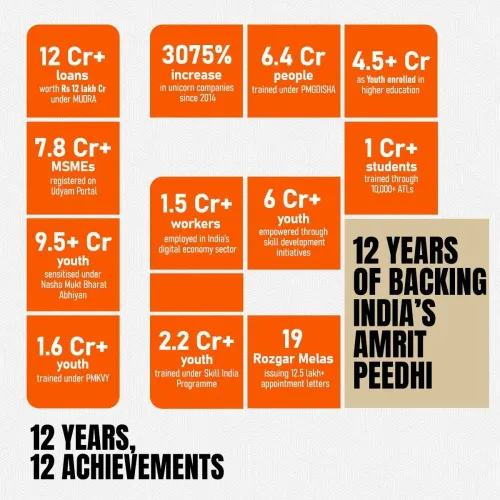
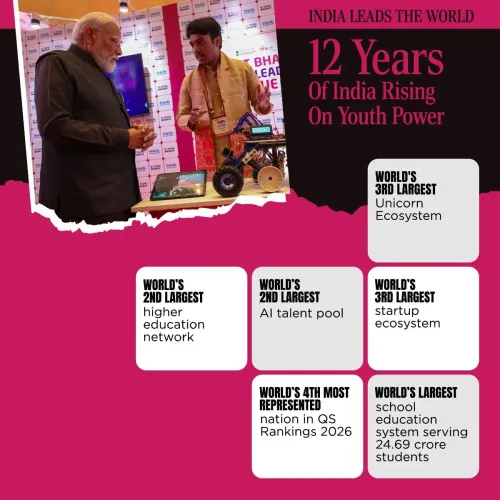
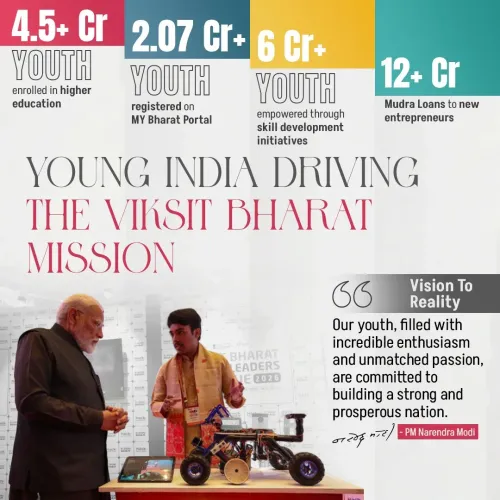
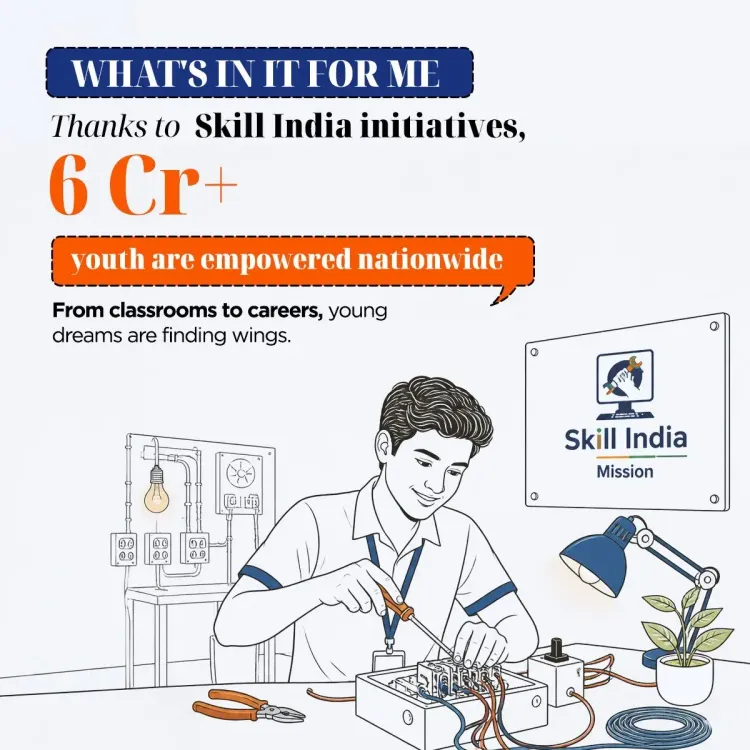
Union Finance Minister Nirmala Sitharaman marked the #12YearsOfYuvaShakti milestone on June 13, 2026, championing PM Modi-led NDA's decade-long push on youth skilling through flagship programmes like Skill India and PMKVY, with a focus on enabling young Indians to learn, earn and lead.
Key Takeaways
Union Finance Minister Nirmala Sitharaman posted in support of the #12YearsOfYuvaShakti campaign on June 13, 2026 .
The post credits PM Narendra Modi 's NDA government with empowering youth to 'learn, earn and lead.' The Skill India Mission , launched in July 2015 , targeted training of more than 400 million people in sector-specific skills.
The Pradhan Mantri Kaushal Vikas Yojana (PMKVY) remains the flagship short-term skill training scheme, with placement-linked incentives.
The National Education Policy 2020 integrated vocational training with formal education, broadening the skilling ecosystem.
Budget allocations for skill development and revisions to placement-linked incentives are the key policy metrics to watch next.
Union Finance Minister Nirmala Sitharaman on Saturday, June 13, 2026, highlighted the NDA government's youth skilling agenda, crediting Prime Minister Narendra Modi's leadership for empowering young Indians to 'learn, earn and lead.' The post, shared on the occasion of the #12YearsOfYuvaShakti campaign, underscores the ruling alliance's continued emphasis on vocational training as a pillar of economic policy.
Context
The hashtag #12YearsOfYuvaShakti marks a milestone in the NDA government's outreach to India's youth demographic, framing over a decade of governance through the lens of skill development and youth empowerment. Sitharaman's post reflects a coordinated messaging effort across the ruling alliance, positioning skilling as central to the government's economic and social record. As Finance Minister since 2019, Sitharaman has consistently allocated funds toward skill development in successive Union Budgets.
Policy Backdrop
The Skill India Mission, launched in July 2015, set an ambitious target of training more than 400 million people in sector-specific skills for domestic and overseas employment. Its flagship component, the Pradhan Mantri Kaushal Vikas Yojana (PMKVY), was rolled out the same year and has since been expanded with revised targets and placement-linked incentives. The National Skill Development Corporation (NSDC), a public-private partnership body, has been a key institutional vehicle for catalysing private sector participation in vocational training.
The National Policy for Skill Development and Entrepreneurship (2015) replaced an earlier 2009 policy and introduced quantitative targets alongside a framework for certification portability across states and employers. More recently, the National Education Policy 2020 integrated vocational training with mainstream education, seeking to reduce the historical stigma associated with non-academic career pathways.
Stakeholders and Impact
India's youth — particularly those entering the workforce without formal degrees — are the primary beneficiaries of these skilling programmes. Vocational training providers, both government-run and private, form the delivery backbone, while manufacturing and services sector employers are the intended end-consumers of a certified, job-ready workforce.
Since 2014, successive NDA governments have treated skill development as a core strategy for harnessing India's demographic dividend. Common norms introduced across ministries aim to reduce fragmentation and improve the portability of certificates, making it easier for trained youth to seek employment across state borders and industry sectors.
What's Next
Attention will now turn to the upcoming Union Budget, where the allocation for skill development and any revisions to placement-linked incentives under central schemes will be closely watched by industry bodies and youth welfare organisations. The government's ability to demonstrate measurable placement outcomes — not just training numbers — is expected to define the next phase of the skilling narrative. Sitharaman's post signals that youth empowerment will remain a prominent political and policy theme for the NDA heading into the budget season.
Point of View
Using the #12YearsOfYuvaShakti marker to consolidate the party's narrative around youth employment ahead of the budget season. By foregrounding 'learn, earn and lead,' the Finance Ministry is subtly linking fiscal policy — specifically skilling allocations — to electoral messaging around India's demographic dividend. The post also signals continuity: skilling is no longer a standalone welfare measure but is being positioned as integral to India's broader economic growth story. How the government translates this messaging into verifiable placement data in the next budget will be the real test of the decade-long skilling push.
NationPress
19 Sept 2026
Frequently Asked Questions
What is #12YearsOfYuvaShakti?
#12YearsOfYuvaShakti is a campaign hashtag used by NDA leaders to mark twelve years of the Modi-led government's youth empowerment and skilling initiatives, highlighting programmes like Skill India and PMKVY launched since 2014.
What is the Skill India Mission?
The Skill India Mission is a national programme launched in July 2015 by the Modi government, aimed at training more than 400 million people in sector-specific vocational skills for domestic and overseas employment.
What is Pradhan Mantri Kaushal Vikas Yojana (PMKVY)?
PMKVY is the flagship short-term skill training scheme under the Skill India Mission, rolled out in 2015 and subsequently expanded, providing certified training to youth with a focus on placement outcomes and placement-linked financial incentives.
What has Nirmala Sitharaman said about youth skilling?
On June 13, 2026 , Finance Minister Nirmala Sitharaman posted that 'skilling the youth leads to a world of opportunities,' crediting the PM Modi-led NDA government with empowering youngsters to learn, earn and lead.
How does the Union Budget support skill development in India?
The Union Budget, presented annually by Finance Minister Nirmala Sitharaman, allocates funds to the Ministry of Skill Development and Entrepreneurship for schemes like PMKVY and the NSDC, with placement-linked incentives forming a key component of disbursements.