Vaishnaw marks 12 years of Yuva Shakti, hails youth in Viksit Bharat push
Synopsis
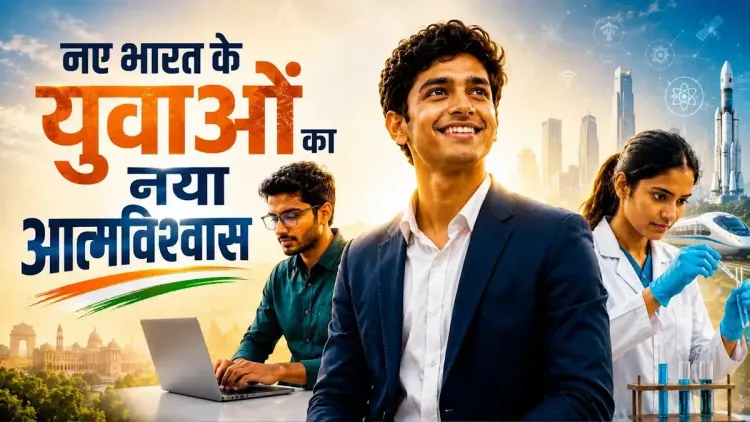
Union Minister Ashwini Vaishnaw marked 12 years of the Yuva Shakti initiative on 13 June 2026 with a Hindi couplet crediting India's youth as the driving force behind the Viksit Bharat 2047 goal, underscoring a decade of NDA policy anchored in the country's demographic dividend.
Key Takeaways
Union Minister Ashwini Vaishnaw posted a Hindi couplet on 13 June 2026 to mark 12 years of Yuva Shakti .
The post linked individual youth opportunity to the Viksit Bharat 2047 national development vision championed by PM Narendra Modi .
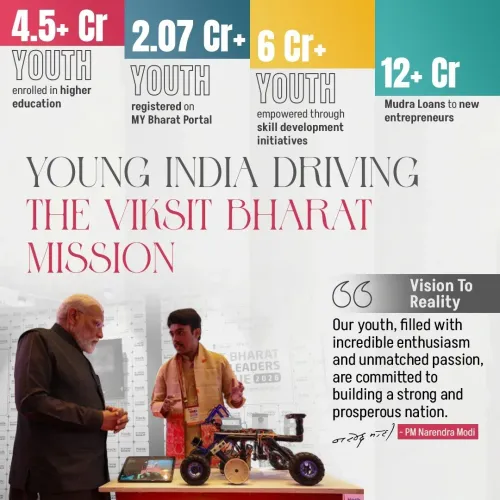
The National Youth Policy 2014 identified Indians aged 15–29 as primary drivers of development, anchoring schemes like Skill India and Startup India .
India's youth cohort of roughly 600 million people under 25 remains both the government's central policy asset and its most critical political constituency.
Upcoming Union Budget allocations for skilling and digital infrastructure will test whether anniversary messaging translates into renewed policy commitment.
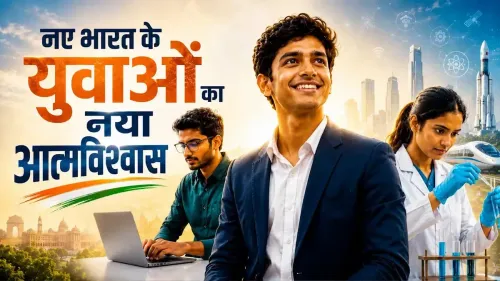
Union Minister Ashwini Vaishnaw on Saturday, 13 June 2026 marked the 12th anniversary of the Yuva Shakti initiative with a Hindi couplet on social media, saluting India's youth as the defining force behind the country's ambition to become a developed nation by 2047.
The minister's post read: 'Sapnon ko mila avsar, pratibha ko mila samman, yuva shakti bana rahi hai Viksit Bharat ki pehchaan' — 'Dreams have found opportunity, talent has found honour; the power of youth is shaping the identity of a Developed India.' The verse was accompanied by a video and the hashtag #12YearsOfYuvaShakti.
Context
The post marks twelve years since the concept of Yuva Shakti — youth power — was formally embedded in the NDA government's policy and communication architecture after 2014. The National Youth Policy 2014 identified Indians aged 15 to 29 as the primary engine of national development, providing the philosophical foundation for flagship programmes that followed. Vaishnaw's couplet distils that framing into a single rhetorical image: individual aspiration channelled into collective national progress.
Policy Backdrop
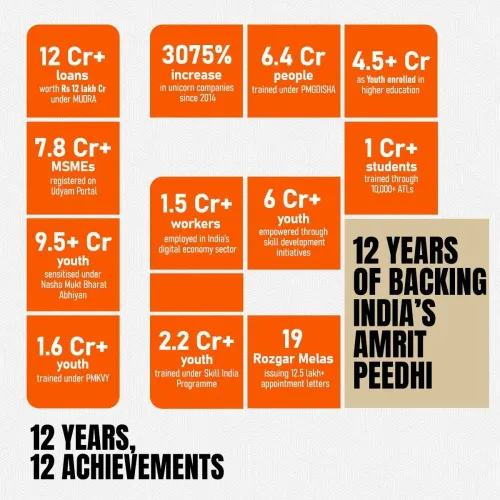
The anniversary sits within a decade-long stack of youth-oriented policy. The Skill India Mission, launched in 2014, set out to train millions of young people annually in vocational and entrepreneurial skills. Startup India, introduced subsequently, sought to convert that talent into economic output by easing regulatory friction for first-time founders. As minister holding the Electronics and Information Technology portfolio, Vaishnaw has repeatedly linked digital skilling and semiconductor manufacturing ambitions to the same demographic dividend argument — positioning technology as the ladder by which young Indians climb into formal, high-value employment.
The Viksit Bharat 2047 campaign, championed by Prime Minister Narendra Modi, provides the overarching narrative umbrella. Under it, ministries across the government have been encouraged to frame their sectoral targets — in railways modernisation, broadband connectivity, or chip fabrication — as contributions to a single, youth-led national transformation by the centenary of independence.
Stakeholders and Impact
India's youth cohort — roughly 600 million people under the age of 25 — represents one of the largest concentrations of young human capital anywhere in the world. For policymakers, this demographic is simultaneously an opportunity and a pressure point: a well-skilled, employed youth population accelerates growth, while an under-employed one generates social and political stress. Anniversary communications such as this one serve to remind that constituency that the government sees their advancement as a stated priority, not a rhetorical afterthought.
Young professionals in technology, manufacturing, and the gig economy are the most directly addressed audience. The BJP's youth wing, BJYM, has historically amplified such messaging as part of the party's broader outreach to first-time and young voters, making the political dimension of the communication inseparable from its policy content.
What's Next
Attention will now turn to whether the anniversary messaging is backed by fresh budgetary or programmatic announcements. The next Union Budget allocations for skilling, higher education, and digital infrastructure will be the clearest signal of whether Yuva Shakti rhetoric is matched by renewed resource commitment. Within Vaishnaw's own portfolios, any new youth-focused components in the Electronics and IT roadmap — particularly around semiconductor skilling or AI upskilling — or in the Railways apprenticeship and recruitment pipeline, will be watched closely. The 12-year mark also invites an audit: how many of the millions targeted by Skill India and allied schemes have moved into sustained, quality employment — a question that will shape the credibility of the Viksit Bharat 2047 promise as its deadline approaches.
Point of View
Shareable emotional frame that reinforces the Viksit Bharat 2047 master narrative ahead of the budget cycle. The choice of Hindi poetry rather than data-heavy prose is deliberate: it speaks directly to aspirational young voters in the Hindi heartland while keeping the message above partisan attack lines. At the same time, the 12-year milestone invites scrutiny of outcomes — Skill India's employment conversion rates remain contested — which means the rhetorical dividend depends on whether the government can pair the sentiment with credible new commitments. For Vaishnaw personally, amplifying the youth agenda across his three portfolios positions him as a minister who connects technology, infrastructure, and human capital into a coherent national project.
NationPress
25 Sept 2026
Frequently Asked Questions
What is Yuva Shakti and why is it trending in June 2026?
Yuva Shakti — meaning 'youth power' — is the NDA government's overarching frame for channelling India's large young population into national development. It is trending in June 2026 because Union Minister Ashwini Vaishnaw marked its 12th anniversary with a Hindi couplet on social media under the hashtag #12YearsOfYuvaShakti.
What did Ashwini Vaishnaw post for the Yuva Shakti anniversary?
Vaishnaw posted a Hindi couplet that translates as: 'Dreams have found opportunity, talent has found honour; the power of youth is shaping the identity of a Developed India.' The post included a video and the hashtag #12YearsOfYuvaShakti.
What is the Viksit Bharat 2047 vision that Vaishnaw referenced?
Viksit Bharat 2047 is Prime Minister Narendra Modi's campaign to transform India into a fully developed nation by the centenary of its independence, with youth-led innovation, digital infrastructure, and skilling at its core.
What government schemes support India's youth under the Yuva Shakti framework?
Key schemes include the Skill India Mission launched in 2014 to provide vocational training to millions annually, and Startup India, which eases regulatory barriers for young entrepreneurs. Both flow from the National Youth Policy 2014.
What should we watch after this Yuva Shakti anniversary post?
The next Union Budget allocations for skilling and higher education will be the clearest indicator of policy intent. New youth-focused components in Vaishnaw's Electronics and IT or Railways portfolios — such as AI upskilling or apprenticeship expansion — will also be closely monitored.