Joshi hails Modi govt's youth push for Viksit Bharat
Synopsis
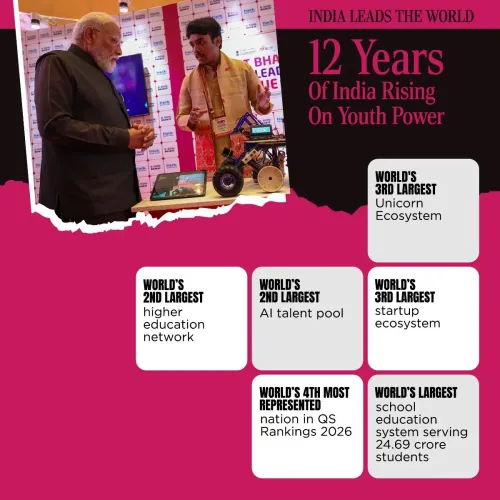
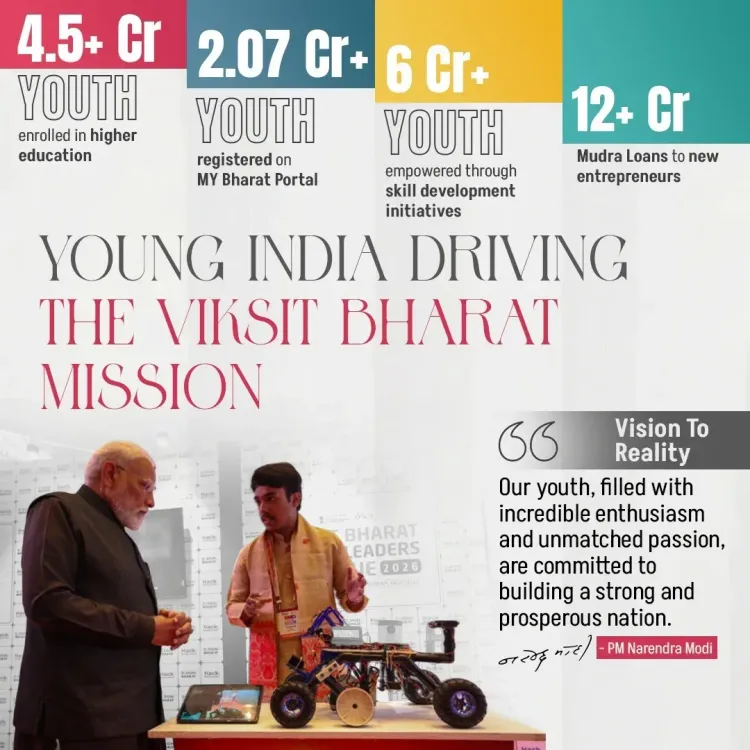
Union Minister Pralhad Joshi on 13 June 2026 credited PM Modi's education, skilling and entrepreneurship policies with empowering India's youth as the primary architects of the Viksit Bharat 2047 vision, marking over twelve years of youth-focused governance.
Key Takeaways
Union Minister Pralhad Joshi posted on 13 June 2026 celebrating India's youth as 'architects of a developed nation' under PM Modi .
The post carried hashtags #12YearsOfYuvaShakti and #ViksitBharat , signalling a milestone in the government's youth-outreach narrative.
The Skill India Mission (2015) targeted skilling 400 million people; Startup India (2016) provided funding and tax benefits to young entrepreneurs.
The National Education Policy 2020 integrated skill development and innovation into mainstream education.
The Viksit Bharat Sankalp Yatra (2023) linked welfare delivery directly to the government's 2047 developed-nation goal.
Future budget allocations and parliamentary reviews of scheme outcomes will test whether the rhetoric translates into measurable progress.
Union Consumer Affairs Minister Pralhad Joshi on Saturday, 13 June 2026, took to X to celebrate India's youth as the driving force behind the country's march toward a developed nation, crediting the transformative policies of the Narendra Modi government over the past decade-plus.
Context
Joshi's post, carrying the hashtags #12YearsOfYuvaShakti and #ViksitBharat, declared that 'India's youth are emerging as the architects of a developed nation' under Prime Minister Narendra Modi's leadership. The message frames young Indians not merely as beneficiaries of government policy but as active agents of national transformation — a framing that has become central to the BJP-led government's public communication since 2014.
The minister highlighted 'unprecedented opportunities in education, skill development, innovation and entrepreneurship' as the pillars enabling what he called 'Young India' to lead the charge toward Viksit Bharat, the government's flagship vision for achieving developed-country status by 2047.
Policy Backdrop
The post draws on a layered architecture of youth-focused schemes built over more than a decade. The Skill India Mission, launched in 2015, set an ambitious target of skilling 400 million people by 2022, embedding vocational training into the country's employment pipeline. Two years later, the Startup India initiative — announced in 2016 — sought to cultivate a generation of young entrepreneurs through funding access, tax incentives and regulatory simplification.
The National Education Policy (NEP) 2020 added another layer by emphasising multidisciplinary learning, skill integration and a culture of innovation from the school level upward. Most recently, the Viksit Bharat Sankalp Yatra, rolled out in 2023, carried these messages directly to citizens across the country, linking welfare scheme delivery to the broader 2047 development goal.
Stakeholders and Impact
India's demographic dividend — a working-age population that is among the largest in the world — sits at the heart of this policy narrative. Students, young entrepreneurs, first-generation job seekers and vocational trainees are the intended beneficiaries of the interlocking schemes Joshi's post references. For them, the effectiveness of these programmes translates into tangible outcomes: employment, business creation and upward mobility.
The Viksit Bharat framework positions this cohort as the primary engine of economic growth, arguing that converting demographic scale into productive capacity is the clearest path to developed-nation status. The consistency of this messaging across budgets, election manifestos and ministerial communications signals that youth policy remains a top political as well as developmental priority for the ruling dispensation.
What's Next
Attention will now turn to whether the government's next annual budget or mid-year policy reviews translate the rhetorical commitment into fresh allocations for skill-development infrastructure and youth entrepreneurship support. Parliamentary scrutiny of existing scheme outcomes — particularly the Skill India Mission's progress against its original targets — will be a key measure of how the Viksit Bharat vision is being operationalised beyond the messaging cycle.
Point of View
Timed around the symbolic twelve-year mark of the Modi government's youth-policy agenda. By bundling education, skilling and entrepreneurship under the single Viksit Bharat umbrella, the messaging attempts to convert a complex, multi-scheme policy record into a unified electoral and developmental story. The invocation of 'Young India as architects' is a deliberate rhetorical elevation — shifting youth from passive beneficiaries to active nation-builders — which has proven durable across budget cycles and election seasons. Whether the framing holds will depend increasingly on verifiable outcome data from flagship schemes as the 2047 deadline moves from aspiration to accountability.
NationPress
27 Oct 2026
Frequently Asked Questions
What is Viksit Bharat and when is its target year?
Viksit Bharat is the Indian government's national vision to achieve developed-country status by 2047 , the centenary of India's independence, through economic and social transformation.
What did Pralhad Joshi say about India's youth on 13 June 2026?
Minister Pralhad Joshi said India's youth are 'emerging as the architects of a developed nation' under PM Modi's leadership, citing opportunities in education, skill development, innovation and entrepreneurship.
What is the Skill India Mission?
The Skill India Mission , launched in 2015 , is a flagship government programme aimed at providing vocational training to enhance the employability of India's youth, with an original target of skilling 400 million people.
What is Startup India?
Startup India , announced in 2016 , is a government initiative to support young entrepreneurs through funding access, tax benefits and regulatory easing to build a robust innovation ecosystem.
What does #12YearsOfYuvaShakti mean?
The hashtag #12YearsOfYuvaShakti appears to mark a milestone in the Modi government's youth-empowerment agenda, though the specific origin and context of the campaign could not be independently verified from established public records.