Giriraj Singh Hails 12 Years of Youth Empowerment Under Modi
Synopsis
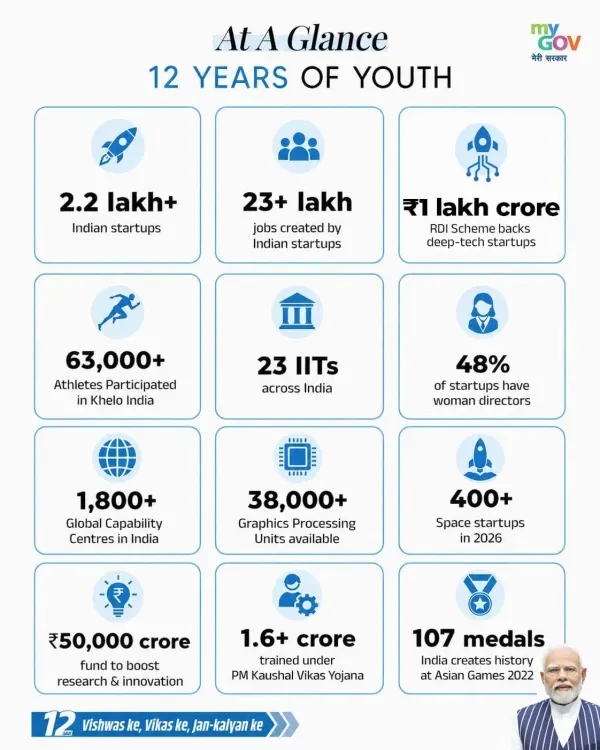
Union Textiles Minister Giriraj Singh marked 12 years of the Modi government's youth agenda on 13 June 2026, crediting Skill India, PMKVY, Startup India, MY Bharat Portal and Rozgar Mela with transforming India's youth into job-creators under the Viksit Bharat vision.
Key Takeaways
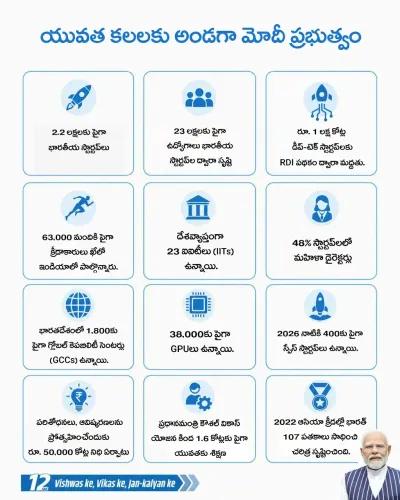
Union Textiles Minister Giriraj Singh posted on 13 June 2026 marking 12 years of the Modi government's youth empowerment agenda under the hashtag #12YearsOfYuvaShakti .
Skill India was launched in July 2015 with a target of skilling 400 million Indians; PMKVY has run multiple phases under the Ministry of Skill Development.
Startup India , announced in January 2016 , offered tax benefits and a fund-of-funds structure to boost entrepreneurship.
Khelo India , launched in January 2017 , integrates school sports with national games to nurture young athletic talent.
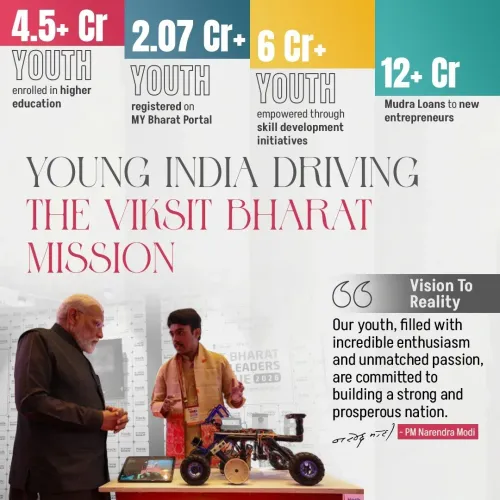
The MY Bharat Portal serves as a unified platform for youth volunteering, skilling and leadership development.
The government's overarching Viksit Bharat 2047 vision frames youth empowerment as the primary driver of India's development goals.
Union Textiles Minister Giriraj Singh on Saturday, 13 June 2026 credited Prime Minister Narendra Modi's decade-plus tenure with transforming India's youth from job-seekers into job-creators, citing flagship government programmes that have reshaped skilling, entrepreneurship and sports development across the country.
Context
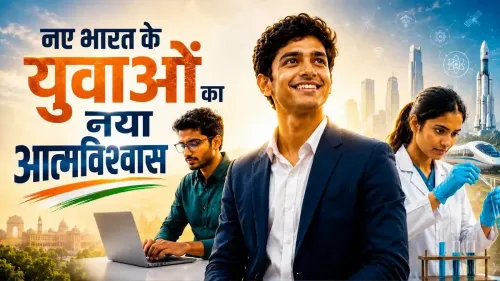
Posting on X under the hashtag #12YearsOfYuvaShakti, Singh wrote that under Modi's leadership over the past twelve years, 'Bharat ki yuva shakti naye aatmavishwas aur nayi urja ke saath ubhari hai' — 'India's youth power has emerged with new confidence and new energy.' He specifically named Skill India, PMKVY, Startup India, MY Bharat Portal and Rozgar Mela as initiatives that have driven this shift.
The minister added that a youth generation growing stronger in education, skill, innovation, entrepreneurship and sports is now leading the realisation of the Viksit Bharat vision — the government's overarching aspiration to make India a developed nation by 2047.
Policy Backdrop
The programmes Singh highlighted span more than a decade of central government policy. Skill India was launched in July 2015 with a stated target of skilling 400 million Indians, while Pradhan Mantri Kaushal Vikas Yojana (PMKVY), rolled out the same year under the Ministry of Skill Development, has run through successive phases to extend training targets nationwide.
Startup India, announced in January 2016, introduced tax incentives and a fund-of-funds structure to lower barriers for new ventures. The Khelo India programme, launched in January 2017, integrated school-level sports with annual national games to identify and nurture young athletic talent. The MY Bharat Portal, operated by the Ministry of Youth Affairs and Sports, provides a single platform for volunteering, skilling and leadership opportunities.
Together, these schemes reflect a deliberate policy architecture that links education, innovation and physical fitness into one narrative — positioning India's demographic dividend as the primary engine of long-term economic growth.
Stakeholders and Impact
The principal beneficiaries of this policy cluster are India's large cohort of young job-seekers, aspiring entrepreneurs and student athletes. By framing youth as creators rather than consumers of employment, the government has sought to reduce pressure on formal public-sector hiring while expanding the private startup ecosystem.
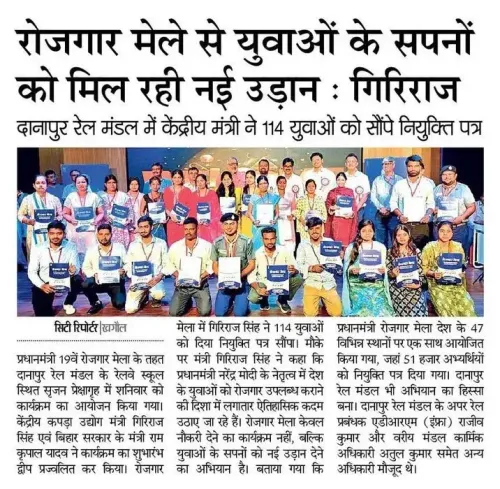
Rozgar Melas — government-organised employment fairs at which appointment letters are distributed directly to recruits — have been used as visible, on-ground demonstrations of job creation, supplementing the digital and skilling infrastructure built through the other schemes.
What's Next
The next phase of PMKVY and potential expansions to Rozgar Mela coverage are expected to feature in upcoming Union Budget announcements or national youth summits. Placement data and startup registration figures released by the Ministry of Skill Development will be closely watched as measurable indicators of the programmes' reach. Singh's post, timed to mark twelve years of the Modi government's youth agenda, signals that Viksit Bharat messaging will remain central to the BJP's political communication ahead of future electoral cycles.
Point of View
Reinforcing the party's 'job-creator not job-seeker' narrative ahead of future electoral cycles. By bundling Skill India, PMKVY, Startup India, Khelo India and MY Bharat Portal into a single celebratory frame, the communication strategy presents disparate ministries' programmes as a unified, coherent youth policy under Modi's personal leadership. The Viksit Bharat 2047 hook extends the narrative beyond any single term, positioning the BJP as the long-term steward of India's demographic dividend. The post also subtly elevates Singh's own ministerial profile by aligning him with the broader national youth agenda rather than confining him to textiles policy alone.
NationPress
22 Sept 2026
Frequently Asked Questions
What is the Skill India mission and what has it achieved?
Skill India is a national mission launched in July 2015 to train 400 million Indians in vocational and technical skills for employment and self-employment. It operates through multiple programmes including PMKVY and partners with industry to align training with market demand.
What is PMKVY and who can benefit from it?
Pradhan Mantri Kaushal Vikas Yojana (PMKVY) is a flagship skill-training programme launched in 2015 under the Ministry of Skill Development. It offers short-term, industry-relevant training to young Indians, including school dropouts, and provides a government-recognised certification on completion.
What is the Viksit Bharat vision that Giriraj Singh mentioned?
Viksit Bharat is the central government's vision to transform India into a fully developed nation by 2047 , the centenary of independence. It encompasses goals across economic growth, infrastructure, education, health and social development, with youth empowerment identified as a key pillar.
What is the MY Bharat Portal?
The MY Bharat Portal is a digital platform run by the Ministry of Youth Affairs and Sports that connects young Indians with opportunities in volunteering, skilling, leadership development and civic engagement under a single government interface.
What are Rozgar Melas and how do they work?
Rozgar Melas are government-organised employment fairs at which central and state government departments distribute appointment letters directly to newly recruited candidates. They serve as on-ground, visible demonstrations of public-sector job creation and are held periodically across different states.