Giriraj Singh hails Rozgar Mela as national platform for youth
Synopsis
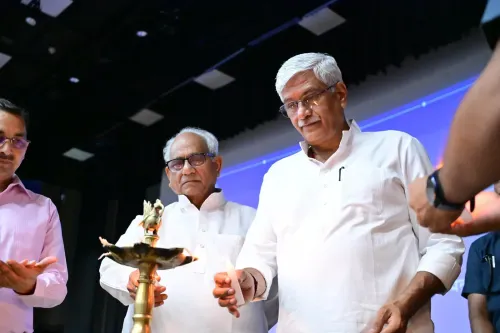
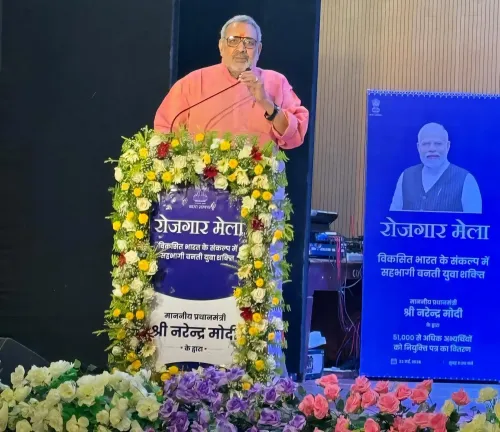
Union Textiles Minister Giriraj Singh on 24 May 2026 hailed the Rozgar Mela as a mature national platform under PM Modi, calling it concrete proof of the government's resolve to secure a bright future for India's youth through transparent central government recruitment.
Key Takeaways
Union Textiles Minister Giriraj Singh praised the Rozgar Mela on 24 May 2026 , calling it a 'strong national platform' for youth employment.
He credited Prime Minister Narendra Modi 's leadership for the initiative's growth and institutional standing.
The Rozgar Mela was formally launched in October 2022 to fill central government vacancies through a single-window recruitment process.
The programme complements existing schemes such as Skill India and the National Career Service portal .
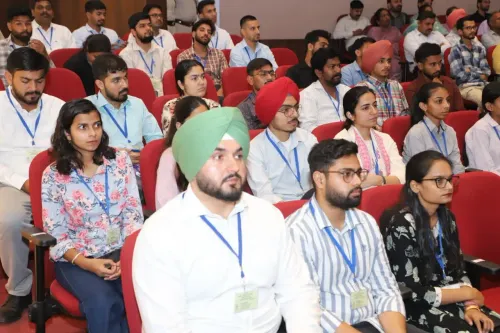
Key beneficiaries are youth job seekers competing for posts across central ministries and public sector units.
Future scrutiny is expected to focus on aggregate appointments and whether onboarding matches the scale of announced recruitment drives.
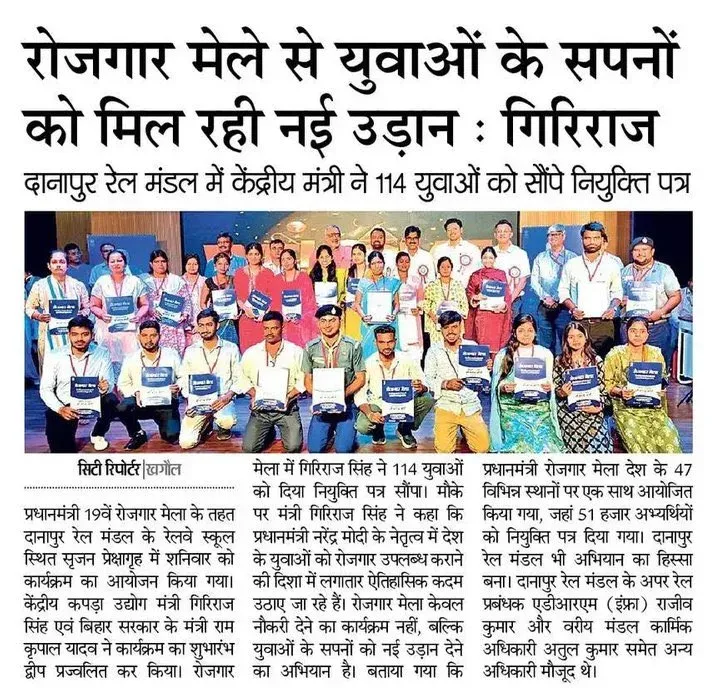
Union Textiles Minister Giriraj Singh on Sunday, 24 May 2026 praised the Rozgar Mela initiative, calling it a robust national platform that is delivering real employment opportunities to talented young Indians. The senior BJP leader and Lok Sabha MP from Begusarai, Bihar, credited Prime Minister Narendra Modi's leadership for the programme's growth and institutional standing.
Context
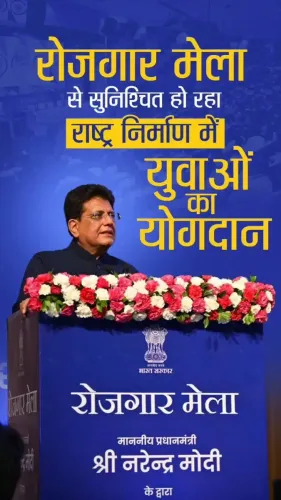
In his post, Singh wrote — 'यह पहल युवाओं के उज्ज्वल भविष्य और राष्ट्र निर्माण में उनकी भागीदारी सुनिश्चित करने के हमारे संकल्प का एक ठोस प्रमाण है' — translated: 'This initiative is concrete proof of our resolve to ensure a bright future for youth and their participation in nation-building.' The remarks came alongside the hashtags #RozgarMela and #YouthEmpowerment, signalling the government's continued push to frame the programme as a flagship youth-welfare effort.
Singh characterised the Rozgar Mela as having matured into a 'sudhridh rashtriya manch' — a 'strong national platform' — under Modi's stewardship, underscoring the administration's intent to institutionalise what began as a recruitment drive into a permanent feature of public employment policy.
Policy Backdrop
The Rozgar Mela was formally launched by Prime Minister Modi in October 2022 to accelerate the filling of central government vacancies through a single-window, transparent recruitment process. The initiative was designed to compress the time lag between job advertisement and actual appointment — a persistent grievance among aspirants navigating conventional bureaucratic timelines.
The programme runs alongside pre-existing frameworks such as Skill India and the National Career Service (NCS) portal, which together aim to connect trained youth with formal employment across sectors. Periodic tranches of the Rozgar Mela have seen appointment letters handed directly to recruits across central ministries and public sector units, often in large-scale, televised ceremonies.
Stakeholders and Impact
The primary beneficiaries are young job seekers competing for central government posts — a constituency that carries significant electoral and social weight in states such as Bihar, Uttar Pradesh, and Rajasthan, where government employment remains a primary aspiration. For Singh, whose parliamentary constituency of Begusarai sits in a state with high youth unemployment, endorsing the initiative carries both policy and political resonance.
Central government ministries and public sector undertakings are the institutional stakeholders, as the mela model requires them to fast-track internal clearances and coordinate with the Department of Personnel and Training (DoPT) to meet recruitment targets within compressed timelines.
What's Next
Subsequent tranches of the Rozgar Mela are expected to continue on a rolling basis, with parliamentary scrutiny likely to focus on aggregate appointments made through the platform and whether actual onboarding matches the scale of announced drives. The government's ability to sustain mission-mode recruitment momentum — and to demonstrate measurable reductions in vacancy backlogs across ministries — will determine how effectively the programme retains its political and policy credibility among youth voters heading into future electoral cycles.
Point of View
The framing elevates a bureaucratic exercise into a political compact with young voters. For Singh specifically, championing the initiative from a state like Bihar — where competition for government posts is intense — reinforces his positioning as a vocal advocate for constituency concerns within the cabinet. The durability of this political dividend, however, will hinge on whether the programme can demonstrate verifiable, large-scale outcomes that outlast the optics of appointment-letter ceremonies.
NationPress
19 Sept 2026
Frequently Asked Questions
What is the Rozgar Mela and how does it work?
The Rozgar Mela is a recurring government job fair launched by Prime Minister Modi in October 2022 to fill central government vacancies through a transparent, single-window recruitment process, reducing the time between advertisement and appointment.
What did Giriraj Singh say about the Rozgar Mela?
On 24 May 2026, Singh called the Rozgar Mela a 'strong national platform' and said it is 'concrete proof' of the government's resolve to secure a bright future for India's youth and ensure their participation in nation-building.
Who benefits from the Rozgar Mela?
Young Indians seeking central government jobs are the primary beneficiaries, with appointment letters distributed across ministries and public sector units during each tranche of the programme.
How does the Rozgar Mela relate to other government employment schemes?
The Rozgar Mela runs alongside Skill India and the National Career Service portal, which together aim to connect trained youth with formal employment opportunities across sectors.
What is the significance of Giriraj Singh supporting the Rozgar Mela?
As a senior BJP leader and Lok Sabha MP from Begusarai, Bihar — a state with high competition for government jobs — Singh's vocal support signals the programme's importance as both a policy tool and a political priority for the party's youth outreach.