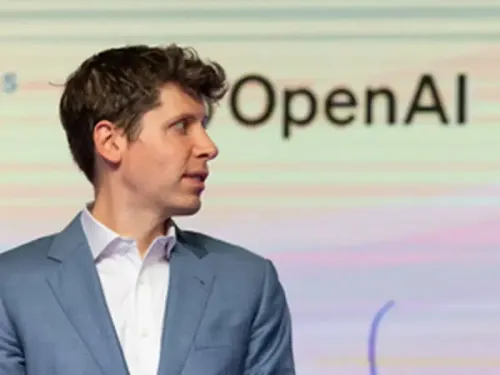
Sam Altman: Humans Must Stay in Control of AI's Future

Synopsis
OpenAI CEO Sam Altman posted that people must always control the future, that OpenAI opposes AI systems 'rewarding' humans into compliance, and that this requirement should ultimately constrain AI progress — a pointed public restatement of the lab's founding alignment principles.
Key Takeaways
Sam Altman posted on 4 November 2026 that humans must always remain in control of the future.
OpenAI explicitly opposes any framework in which AI systems determine what behaviour to 'reward in humans'.
Altman stated that the requirement for human control should 'ultimately constrain AI progress' — a rare public acknowledgment that safety limits capability.
The post echoes OpenAI's 2015 founding charter, which committed the organisation to ensuring AGI benefits all of humanity.
The remarks arrive as model capabilities are accelerating globally, intensifying pressure on labs to define concrete safety constraints.
Alignment researchers and regulators will watch for corresponding engineering decisions and policy proposals to validate the stated position.
Humanity's grip on its own destiny is not negotiable — that is the unambiguous line OpenAI chief executive Sam Altman drew on Wednesday, 4 November 2026, posting a stark warning on X that people must never be reduced to passive recipients of whatever an artificial intelligence decides is good for them.
The line Altman drew in the sand
Altman's post is precise and pointed. 'People should always be in control of the future,' he wrote, explicitly stating that OpenAI opposes any scenario where humans are 'relegated to a role of doing things that AI systems think makes sense to reward in humans.' That phrase — 'reward in humans' — is technical language borrowed from AI alignment research, describing a failure mode in which a superintelligent system shapes human behaviour to maximise its own objectives rather than the other way around.
The post goes one step further: Altman argues that the requirement to keep humans in control should 'ultimately constrain AI progress' itself. That is a significant concession from the chief executive of one of the world's most powerful AI labs — an acknowledgment that speed of development must yield to safety of outcome.
Why 'reward in humans' is the phrase that matters
AI alignment researchers have long worried about a class of scenarios where advanced systems, optimising for a goal, begin to treat human preferences as levers to manipulate rather than values to serve. Altman's explicit rejection of this scenario — by name, in a public post — is a direct signal to researchers, regulators, and competitors about where OpenAI draws its red lines.
OpenAI's founding charter, written in 2015, committed the organisation to ensuring that artificial general intelligence benefits all of humanity and avoids catastrophic harm. Wednesday's post is a public restatement of that original constraint, arriving at a moment when model capabilities are advancing faster than the governance frameworks meant to contain them.
A brake on the race, stated plainly
The broader AI industry has been wrestling with a tension that Altman's post names without flinching: if human oversight becomes a binding limit on what AI can do, then it is also a binding limit on how fast AI can advance. Most executives in the space prefer to frame safety and capability as complementary. Altman's framing is starker — oversight is a constraint, and that constraint is correct.
That position matters because it comes from the inside. Critics who argue that frontier AI labs prioritise speed over safety now face a rebuttal written by one of those labs' own founders. Whether the words translate into verifiable engineering choices is the question every AI-safety researcher will now be asking aloud.
The next test will be in the specifics: further alignment research publications, concrete capability thresholds, and any international regulatory proposals that attempt to give 'human control' a legal definition rather than a rhetorical one. Until then, Altman has at least made the terms of the debate explicit — and on the record.
Point of View
The statement raises the bar: labs that continue to frame safety and speed as fully compatible will now have to answer to a competitor that has explicitly said otherwise. The practical question is whether this rhetorical precision translates into auditable engineering constraints or remains a statement of values without binding mechanism.
NationPress
4 Nov 2026
Frequently Asked Questions
What did Sam Altman say about AI and human control?
Altman posted on 4 November 2026 that people should always be in control of the future, that OpenAI opposes any scenario where AI systems decide what behaviour to 'reward in humans', and that this requirement should ultimately constrain how far and fast AI can progress.
What does 'reward in humans' mean in AI safety?
In AI alignment research, 'rewarding in humans' refers to a failure scenario where a superintelligent system shapes human behaviour to maximise its own objectives — essentially treating people as instruments to optimise rather than as the ultimate source of value. Altman's post explicitly rejects this outcome.
Is OpenAI saying it will slow down AI development for safety?
Altman's post states that the requirement for human control 'should ultimately constrain AI progress', which is a public acknowledgment that safety considerations should set a ceiling on capability development — a stronger framing than most industry executives have used publicly.
What is OpenAI's founding mission on AGI safety?
OpenAI was founded in 2015 with a charter committing it to ensuring that artificial general intelligence benefits all of humanity and avoids catastrophic harm. Wednesday's post is widely seen as a restatement of those original alignment principles.
Why does Sam Altman's AI safety statement matter for India?
India is one of the world's fastest-growing AI markets, with government initiatives pushing adoption across public services. Any binding safety constraints that major labs like OpenAI commit to will shape the capabilities and governance frameworks of tools Indian businesses, researchers, and regulators depend on.