OpenAI CEO Sam Altman Admits Rough Year, Promises Best 12 Months Ahead

Synopsis
OpenAI chief executive Sam Altman publicly admitted the past year was not the company's best performance, accepted personal blame, and promised the next twelve months will be its strongest — framing AI progress as a tool for user freedom, agency, and wealth creation.
Key Takeaways
OpenAI CEO Sam Altman posted on 16 July 2026 that the past year was not the company's best and called it 'mostly my fault.' He promised the next 12 months will be the best in OpenAI 's history, citing strong work already underway by the team.
Altman stated his primary motivation is 'our users winning,' placing user benefit at the centre of the company's upcoming product cycle.
He articulated a core principle: 'AI has to be about giving lots of people more freedom, agency, and wealth.' He distanced OpenAI from fear-based AI narratives, saying the company does 'not want to scare people into doing our thing.' OpenAI was founded in December 2015 and launched ChatGPT in November 2022 , triggering global generative AI adoption.
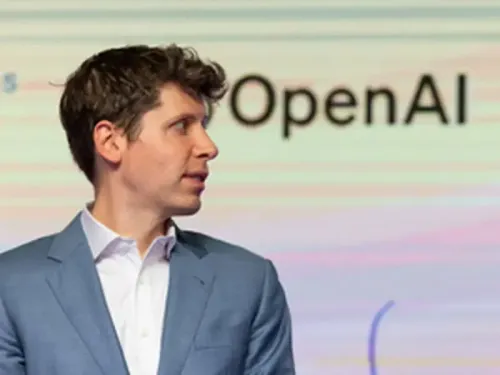
OpenAI chief executive Sam Altman acknowledged on Thursday, 16 July 2026 that the company had not delivered its strongest performance over the past year, accepting personal responsibility for the shortfall while promising that the next twelve months would be the best in the company's history.
Context
In the post, Altman wrote: 'we did not have our best last 12 months ever, which is mostly my fault, but we are about to have our best 12 months to date.' The admission is notable given OpenAI's standing as the world's most closely watched AI company, and because chief executives of major technology firms rarely offer such unqualified personal accountability in public forums.
Altman went on to say the team is 'doing amazing work' and that users will be 'very happy with what they've got cooking.' He added that his primary motivation is ensuring 'our users winning,' framing the coming product cycle explicitly around user benefit rather than competitive positioning.
Policy Backdrop
OpenAI was founded in December 2015 as a non-profit with the stated mission of ensuring artificial general intelligence benefits all of humanity. The company's public profile surged after it launched ChatGPT in November 2022, triggering a wave of global adoption of generative AI tools and intensifying regulatory attention from governments in the United States, European Union, and beyond.
Altman himself has had a turbulent tenure: he was abruptly removed and then reinstated as chief executive in November 2023 following a board disagreement over the company's strategic direction. That episode put a spotlight on internal governance tensions between rapid commercial deployment and the company's original safety-first mandate.
His latest post arrives as AI regulation is accelerating globally, with policymakers debating liability frameworks, mandatory safety evaluations, and compute governance. Against that backdrop, Altman's phrasing carries deliberate weight: 'AI has to be about giving lots of people more freedom, agency, and wealth.'
Stakeholders and Impact
The post speaks directly to three audiences simultaneously: OpenAI's hundreds of millions of end-users, the developer community building on its APIs, and regulators who have been pressing the company on deployment practices. The line 'we do not want to scare people into doing our thing' is a pointed signal that OpenAI intends to pursue adoption through demonstrated value rather than through fear-based narratives around AI risk.
For Indian users and developers — a fast-growing segment of ChatGPT's global base — the promise of an accelerated product roadmap could translate into new capabilities in regional languages, coding tools, and enterprise integrations. India has emerged as one of the largest markets for generative AI adoption, with millions of daily active users across consumer and professional applications.
Investors and partners will parse the acknowledgement of a difficult prior year carefully. While Altman did not specify what went wrong, the candour is consistent with a broader industry pattern in which AI leaders have alternated between capability announcements and public statements addressing internal recalibration.
What's Next
Attention will now turn to what OpenAI has 'cooking' — widely expected to include next-generation model releases and expanded API capabilities. Voluntary AI commitments and government policy proposals in the United States and Europe will also shape how those releases land with regulators.
Altman's explicit framing of AI as a tool for 'freedom, agency, and wealth' positions OpenAI ahead of anticipated policy debates about who benefits from AI and who bears its risks — a question with direct relevance for emerging economies including India.
Point of View
Agency, and wealth' framing is a direct counter to the dominant safety-and-risk narrative that has driven much of global AI regulation since 2023, repositioning OpenAI as a tool of individual empowerment rather than institutional caution. For Indian policymakers and developers, the statement reinforces that OpenAI's strategic compass remains pointed at mass-market adoption, which will intensify pressure on domestic AI policy to keep pace. The line about not wanting to 'scare people' is also a subtle jab at competitors and commentators who have leaned on existential risk arguments to shape the regulatory environment in their favour.
NationPress
15 Oct 2026
Frequently Asked Questions
Why did Sam Altman say the last 12 months were not OpenAI's best?
Sam Altman posted on 16 July 2026 that OpenAI did not have its best year and accepted personal responsibility, though he did not specify which products or decisions fell short of expectations.
What is OpenAI planning for the next 12 months?
Altman said the team has something 'cooking' for users and promised the next 12 months will be the best in OpenAI's history, widely expected to involve major new model releases and product updates.
What did Sam Altman say about AI and freedom?
Altman wrote that 'AI has to be about giving lots of people more freedom, agency, and wealth,' framing OpenAI's mission around broad-based empowerment rather than institutional or regulatory priorities.
Who is Sam Altman and why does his post matter?
Sam Altman is the co-founder and chief executive of OpenAI, the company behind ChatGPT and the GPT model series. His public statements are closely watched by AI users, developers, investors, and regulators worldwide.
How does this affect ChatGPT users in India?
India is one of ChatGPT's largest and fastest-growing markets. An accelerated OpenAI product roadmap could bring new capabilities in regional languages, coding, and enterprise tools relevant to Indian users and developers.