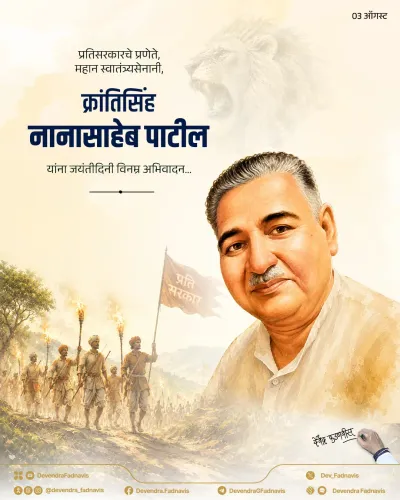
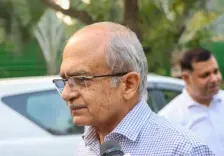
CM Fadnavis pays tribute to Vasudev Balwant Phadke on birth anniversary
Synopsis
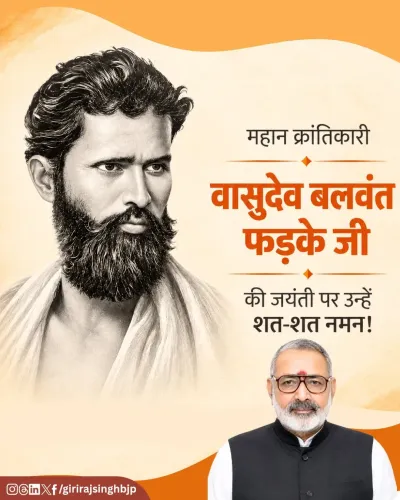
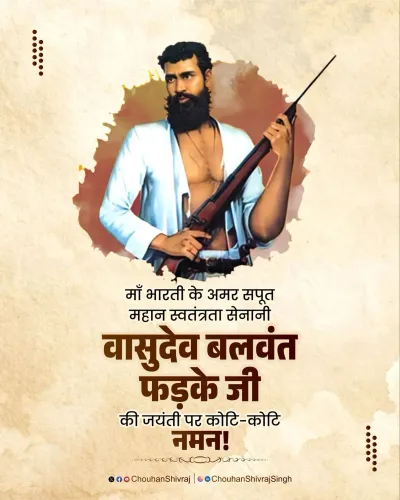
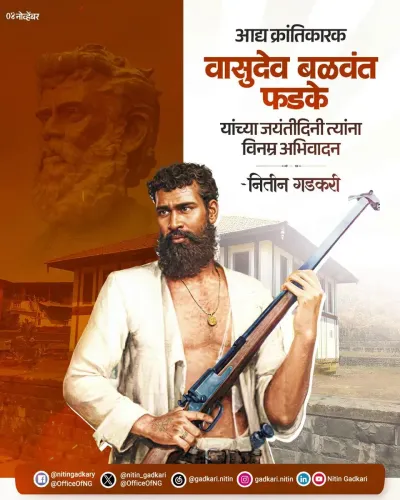
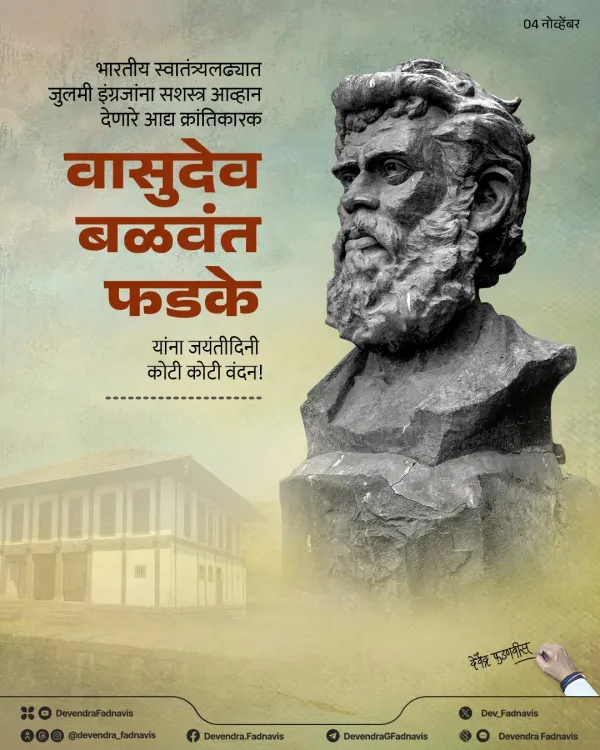
Maharashtra Chief Minister Devendra Fadnavis paid tribute to Vasudev Balwant Phadke — regarded as India's first armed revolutionary against British rule — on his birth anniversary on 4 November 2026, calling him the pioneer of India's freedom struggle.
Key Takeaways
Devendra Fadnavis posted a birth-anniversary tribute to Vasudev Balwant Phadke on 4 November 2026 .
Phadke is widely described as the 'father of India's armed revolution,' organising armed resistance against British rule in the 1870s .
He mobilised fighters from the Ramoshi and Koli communities , linking agrarian distress to anti-colonial action.
Captured and exiled to Aden , Phadke died in 1883 — decades before the mainstream independence movement took shape.
Maharashtra governments across parties have periodically honoured 19th-century revolutionaries to highlight the state's distinct contribution to India's freedom struggle.
Before Gandhi, before the mass movements, there was a man who picked up a sword. Maharashtra Chief Minister Devendra Fadnavis on Wednesday, 4 November 2026, paid tribute to Vasudev Balwant Phadke — widely regarded as the father of India's armed revolutionary tradition — on his birth anniversary, calling him the first freedom fighter to mount an armed challenge against British rule.
Posting in both English and Marathi, Fadnavis wrote: 'भारतीय स्वातंत्र्यलढ्यात जुलमी इंग्रजांना सशस्त्र आव्हान देणारे आद्य क्रांतिकारक' — 'the pioneer revolutionary who gave an armed challenge to the tyrannical British in India's freedom struggle' — and offered his 'koti koti vandan' (a million salutes) to Phadke's memory.
Who was Vasudev Balwant Phadke — and why does he matter
Vasudev Balwant Phadke, born in Shirdhon, Raigad district, Maharashtra, is considered one of India's earliest organised armed revolutionaries against British colonial rule. In the 1870s — decades before the Indian National Congress was even founded — he mobilised fighters from the Ramoshi and Koli communities, drawing a direct link between agrarian distress and anti-colonial resistance.
His insurrection was ultimately suppressed. Phadke was captured, tried, and exiled to Aden, where he died in 1883. Yet his legacy endured: later revolutionary nationalists, including the Chapekar brothers and the broader Maharashtra revolutionary tradition, drew ideological inspiration from his defiance. The label 'father of the armed revolution' is not merely rhetorical — it marks a lineage that shaped India's pre-Gandhian political imagination.
Maharashtra's tradition of honouring its pre-Gandhian heroes
Maharashtra has a distinctive tradition of state-level commemoration of 19th-century revolutionaries — figures who pre-date the mainstream Congress-led independence movement and represent a specifically Maharashtrian contribution to the national cause. Annual tributes on birth and death anniversaries of figures like Phadke serve both a cultural and a political function: asserting regional pride in a freedom-struggle narrative that is often dominated by all-India leaders.
For the ruling BJP in Maharashtra, honouring revolutionary figures with strong Maharashtrian roots also resonates with its broader cultural-nationalist politics, reinforcing a narrative of indigenous resistance rather than elite-led reform.
Point of View
Regionally rooted revolutionaries — a framing that subtly positions Maharashtra's freedom-struggle contribution as older and more defiant than the Congress-led mainstream narrative. By invoking Phadke's 'armed challenge' to British tyranny, the CM reinforces a cultural-nationalist idiom that resonates with the party's core base. These annual commemorations may be ceremonial in form, but they are deliberate in ideological messaging — anchoring contemporary BJP politics to a lineage of indigenous resistance. The timing, on a weekday morning with a bilingual post, also signals an effort to reach both English-speaking national audiences and Marathi-speaking voters simultaneously.
NationPress
4 Nov 2026
Frequently Asked Questions
Who was Vasudev Balwant Phadke?
Vasudev Balwant Phadke was a 19th-century Maharashtrian revolutionary who organised one of the earliest armed uprisings against British colonial rule in India during the 1870s. He is often called the 'father of India's armed revolution.'
Why is Vasudev Balwant Phadke called the father of the armed revolution?
Phadke mounted an organised armed insurrection against British authority decades before the mainstream independence movement, mobilising marginalised communities and directly linking agrarian distress to anti-colonial resistance — making him a pioneer of revolutionary nationalism.
When is Vasudev Balwant Phadke's birth anniversary?
Vasudev Balwant Phadke's birth anniversary falls on 4 November, which is commemorated annually in Maharashtra with state-level tributes and cultural events.
What did CM Devendra Fadnavis say about Phadke?
CM Fadnavis described Phadke as the 'pioneer revolutionary who gave an armed challenge to the tyrannical British in India's freedom struggle' and offered a million salutes to his memory on his birth anniversary.
Where was Vasudev Balwant Phadke from?
Vasudev Balwant Phadke was born in Shirdhon village in present-day Raigad district, Maharashtra. He was captured and exiled to Aden, where he died in 1883.