Sam Altman rules out OpenAI IPO in 2026, backs slower AI development
Synopsis
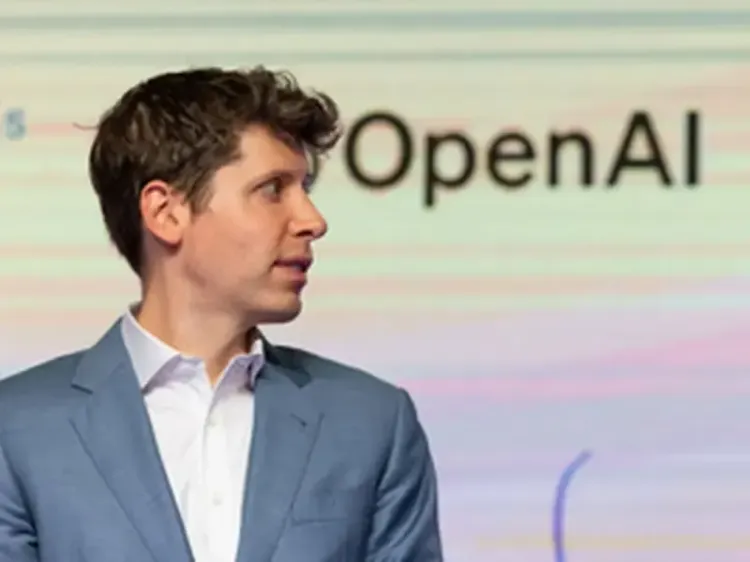
Sam Altman has done something rare: agreed with a rival. Hours after Anthropic's Dario Amodei called for slower AI development, OpenAI's CEO backed that view and declared a 2026 IPO 'ill-advised' — explicitly linking a public listing to unresolved questions on safety and alignment. When the two most powerful voices in frontier AI say slow down, the industry is paying attention.
Key Takeaways
Sam Altman confirmed an OpenAI IPO will not happen in 2026 , calling it 'ill-advised' given current AI safety challenges.
Altman backed Anthropic CEO Dario Amodei 's call for a slower approach to frontier AI development, hours after Amodei made his remarks public.
He acknowledged the industry has not yet made sufficient progress on monitorability and alignment — the ability to understand and control AI model behaviour.
Altman warned that commercial incentives and individual egos must not override the industry's broader safety responsibilities.
He called for deeper cooperation between AI companies and governments to manage the risks of increasingly capable systems.
OpenAI CEO Sam Altman has endorsed calls for a more measured pace of artificial intelligence development, citing mounting concerns over AI safety and the risks of losing meaningful control over increasingly powerful systems — while confirming that a public listing for OpenAI is off the table for 2026.
What Altman Said
Speaking to Fortune Magazine Editor-in-Chief Alyson Shontell, Altman said that taking OpenAI public at this stage would be premature. 'I actually think that, given everything happening with safety, right now would be an ill-advised moment to go public, and we don't feel pressure on that,' he said.
On a possible timeline, Altman was direct: 'I would say not 2026. We got a lot of stuff to do, like meeting this moment of what is going to be required for safety and alignment, and how the industry and governments can work together.' The remarks suggest an IPO could be pushed well beyond the current year.
The Safety Challenge OpenAI Acknowledges
Altman conceded that the industry has not yet made adequate progress on foundational safety questions. He argued that further advances in AI capabilities must be matched by improvements in what he called monitorability and alignment — the ability to understand what AI models are doing and ensure they follow human values.
'I don't think we're currently at a place where we could say, you know, push much further on capabilities without making more progress on monitorability, alignment, the ability to understand what a model is doing, and the ability to make sure that a model will follow human values and the intent of its users,' Altman said.
Altman Echoes Amodei's Call for Caution
The remarks came hours after Anthropic CEO Dario Amodei publicly advocated for a slower, more balanced approach to frontier AI development. That Altman — whose company is arguably the most prominent driver of AI capability acceleration — aligned with that framing is notable. It signals a rare moment of convergence between two of the industry's most consequential, and often competing, voices.
Altman stressed that the stakes extend beyond any single company. He called on firms across the sector to ensure that commercial pressures and individual ambitions do not override broader responsibilities. 'We all have a tremendous amount of responsibility, and cannot let egos or incentives for profit or anything else get in the way,' he said.
Why It Matters for the AI Industry
OpenAI's IPO had been the subject of widespread speculation, with some analysts flagging 2026 as a possible window. Altman's explicit dismissal of that timeline, tied directly to unresolved safety challenges, reframes the conversation: the company's public market debut, if it comes, will need to clear a safety bar — not just a valuation one.
This comes amid a broader global reckoning over AI governance, with governments in the European Union, the United States, and India all working to establish regulatory frameworks for frontier AI. Altman's call for industry-government cooperation signals that OpenAI sees regulation not as a threat but, at least rhetorically, as a necessary guardrail.
How OpenAI translates these stated commitments into verifiable safety practices — and whether an IPO eventually accelerates or dampens that accountability — remains the critical open question.
Point of View
Days after the same company restructured its governance to allow greater commercial flexibility. The alignment between Altman and Amodei on pace looks principled on the surface, but the harder question is whether 'we're not ready for an IPO' doubles as a shield against the scrutiny that public markets would bring. Safety rhetoric without a verifiable measurement framework is just that — rhetoric. Investors, regulators, and the public deserve more than deferred timelines.
NationPress
13 Sept 2026
Frequently Asked Questions
Why has Sam Altman ruled out an OpenAI IPO in 2026?
Altman said that given the current state of AI safety challenges, taking OpenAI public in 2026 would be 'ill-advised.' He indicated the company has significant work ahead on safety and alignment before a public listing would be appropriate.
What did Sam Altman say about AI safety and capabilities?
Altman acknowledged that the AI industry has not made sufficient progress on key safety issues, including monitorability and alignment. He said pushing further on AI capabilities without matching advances in safety understanding would be premature.
How does Altman's stance relate to what Anthropic's CEO said?
Anthropic CEO Dario Amodei called for a slower and more balanced approach to frontier AI development hours before Altman's remarks. Altman's comments broadly aligned with that position, representing a rare convergence between two leading — and often competing — AI companies.
What is OpenAI's position on industry-government cooperation on AI?
Altman said companies and governments need to work together to address the responsibilities created by increasingly capable AI systems. He also stressed that commercial interests and individual egos must not stand in the way of broader safety obligations.
When could an OpenAI IPO realistically happen?
Altman explicitly ruled out 2026, without specifying an alternative date. He framed any future listing as contingent on meaningful progress on AI safety and alignment — suggesting the timeline remains open-ended.