OpenAI CEO Altman signals IPO filing may precede actual listing

Synopsis
OpenAI CEO Sam Altman told staff that filing for an IPO and actually listing are two different things — and the company won't go public until it's ready. The remark signals a deliberate, staged approach to one of the most anticipated public offerings in tech history.
Key Takeaways
OpenAI CEO Sam Altman addressed staff on Wednesday about the company's IPO timing at a company-wide meeting.
Altman drew a clear distinction between filing for an IPO and completing an actual listing, saying the company would not go public until ready.
OpenAI was founded in December 2015 as a nonprofit and later established a capped-profit subsidiary, a structure that complicates a conventional public listing.
No formal IPO filing or specific timeline has been disclosed by the company.
The remarks signal OpenAI is actively planning for public markets while retaining flexibility on the actual debut date.
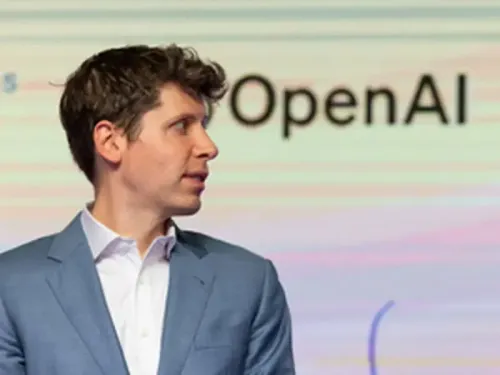
OpenAI CEO Sam Altman told staff on Wednesday that the company could file for an initial public offering (IPO) without immediately proceeding to an actual listing, signalling a deliberate, staged approach to going public. Speaking at a company-wide meeting, Altman drew a clear distinction between submitting an IPO filing and being ready to list shares, according to a person with knowledge of the comments. He said the company would not go public until it was ready.
What Altman said
At the all-hands meeting, Altman noted that filing for an IPO was different from completing one — a nuance that suggests OpenAI may pursue a so-called confidential or public S-1 filing as a preparatory step while retaining the option to delay the listing itself. The remarks, relayed by a person familiar with the discussion, indicate the company is actively thinking through the mechanics of a public offering even as it continues to scale its operations and research.
Why it matters
OpenAI is among the most closely watched private technology companies in the world, having raised billions in private capital at a valuation that has climbed sharply in recent years. A public listing would represent a landmark moment for the AI industry, providing a market-based benchmark for the value of frontier AI research and infrastructure. The timing of any listing carries significant implications for investors, employees holding equity, and competitors watching the sector's capital dynamics.
The competitive backdrop
OpenAI, founded in December 2015 as a nonprofit before establishing a capped-profit subsidiary, has long operated under an unusual governance structure that complicates a conventional IPO pathway. The company reportedly converted to a capped-profit model in 2019, with a nonprofit parent retaining oversight — a structure that any public listing would need to accommodate or restructure. Other well-funded AI labs and high-growth technology firms have similarly weighed the trade-offs between staying private and tapping public markets as valuations have surged.
What's next
Altman's comments stop well short of a formal IPO announcement or timeline, and the company has not disclosed any filing. The distinction he drew — between filing and listing — is a well-established manoeuvre in technology IPO playbooks, giving companies regulatory optionality without committing to a specific market debut date. Investors and industry observers will be watching for any formal SEC filing or updated disclosures as the clearest signal of OpenAI's public-market intentions.
Point of View
Not a slip — it manages employee equity expectations while keeping institutional investors on notice without triggering the legal and disclosure obligations of a formal filing. What mainstream coverage often misses is that OpenAI's capped-profit governance structure still requires meaningful restructuring before a conventional public listing is viable, making the 'we'll file before we list' framing as much a legal hedge as a strategic one. The internal briefing itself is notable: communicating IPO mechanics to staff is a retention and morale tool at a moment when AI talent competition from Google DeepMind, Anthropic, and xAI is at its most intense. The IPO window, if and when it opens for OpenAI, will set a valuation anchor for the entire frontier AI sector — making Altman's every public and private comment on the topic a market-moving event in itself.
NationPress
7 Oct 2026
Frequently Asked Questions
Is OpenAI planning an IPO?
OpenAI CEO Sam Altman has indicated the company is thinking about a public offering but has not announced a formal IPO or filing date. At a company-wide meeting on Wednesday , Altman said the company would not go public until it was ready, drawing a distinction between filing and actually listing.
What did Sam Altman say about the OpenAI IPO at the staff meeting?
Altman told staff that filing for an IPO was different from being ready to list shares, according to a person with knowledge of the comments. He said OpenAI would not proceed with a listing until the company was prepared to do so.
Why hasn't OpenAI gone public yet?
OpenAI operates under a capped-profit corporate structure with a nonprofit parent, which complicates a conventional public listing. The company has continued to raise large private funding rounds, reducing immediate pressure to access public capital markets.
What is the difference between filing for an IPO and listing?
Filing for an IPO — typically an S-1 registration with the SEC — is a preparatory regulatory step that does not obligate a company to complete a listing. A company can file confidentially or publicly and then delay or withdraw the offering, giving it flexibility on the actual market debut.
How does an OpenAI IPO affect the broader AI industry?
A public listing by OpenAI would establish a market-based valuation benchmark for frontier AI companies, influencing how investors price competitors such as Anthropic and xAI . It would also set a precedent for how AI labs with unconventional governance structures navigate public capital markets.