Trump Ends Federal Tax on Tips via Working Families Tax Cuts
Synopsis
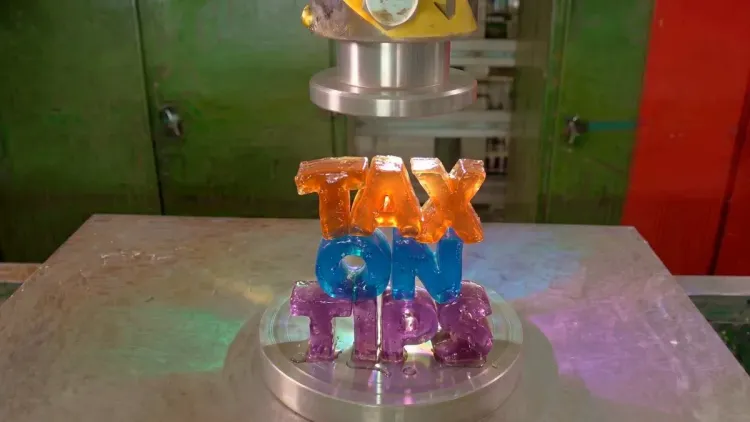
The White House declared on July 6, 2026, that President Trump's Working Families Tax Cuts have eliminated the federal tax on tips, delivering direct relief to millions of tipped workers in the US hospitality and service sectors. The announcement was made via a social media post featuring an ASMR-style video.
Key Takeaways
The White House confirmed on July 6, 2026 , that the federal income tax on tips has been eliminated.
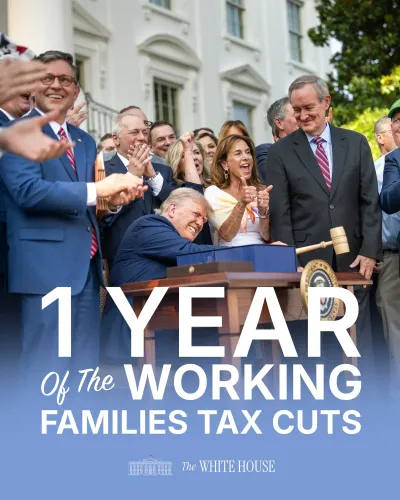
The measure is part of President Trump's Working Families Tax Cuts , a policy first pledged during his 2024 campaign .
Millions of tipped workers in sectors such as food service, hospitality, and personal care stand to benefit from higher take-home pay.
The policy extends the framework of the Tax Cuts and Jobs Act of 2017 , whose individual provisions were set to expire after 2025 .
Congressional codification and IRS regulations on implementation remain pending.
The White House used ASMR-format video content to amplify the announcement, reflecting a social-media-first communications strategy.
The White House announced on Monday, July 6, 2026, that the federal tax on tips has been eliminated under President Donald Trump's Working Families Tax Cuts, framing the measure as direct relief for service-industry workers and their families.
Context
The official White House account posted a video described as 'Satisfying ASMR' alongside the declaration: 'Thanks to President Trump's Working Families Tax Cuts, Tax on tips = GONE.' The post, which garnered immediate attention, signals the administration's intent to publicise the policy in formats designed to reach younger, social-media-native audiences.
Tipped workers — including servers, bartenders, delivery personnel, and salon workers — have historically been required to report gratuities as taxable income under federal law. The elimination of this tax represents a tangible change to take-home pay for millions of Americans in the hospitality and service sectors.
Policy Backdrop
Trump first pledged to end federal income tax on tips during his 2024 presidential campaign, framing it as relief for working-class voters in service industries concentrated in swing states such as Nevada and Florida. The promise was among the more targeted tax proposals of that campaign cycle.
The Working Families Tax Cuts build on the architecture of the Tax Cuts and Jobs Act of 2017, which lowered individual and corporate rates and doubled the standard deduction during Trump's first term. The individual provisions of that legislation were scheduled to expire after 2025, and the current administration has moved to extend and expand that framework into a second term.
The broader Republican approach of reducing marginal tax rates and carving out targeted deductions for wage earners outside traditional salaried employment is consistent with a pattern dating back to the Reagan-era supply-side model, updated here with explicit outreach to non-salaried, tip-dependent workers.
Stakeholders and Impact
The primary beneficiaries are the estimated millions of tipped workers in the United States, predominantly employed in food service, hospitality, transportation, and personal care. For a server earning a significant portion of income through gratuities, the removal of federal income tax on those amounts could meaningfully increase annual take-home pay.
Hospitality employers and industry associations have broadly welcomed the measure, arguing it improves worker retention and reduces administrative complexity around tip reporting. Critics of tip-tax exemptions have previously argued such provisions may entrench a tipping culture rather than pushing employers toward higher base wages, though no formal opposition has been cited in the administration's announcement.
What's Next
Attention now turns to Congressional action on any formal statutory codification of the tip exemption, as well as forthcoming Treasury Department and IRS regulations that will govern implementation, including definitions of qualifying tip income and employer reporting obligations.
The administration's use of social media to amplify the policy — including ASMR-style video content — points to a sustained communications strategy aimed at keeping the Working Families Tax Cuts visible ahead of the 2026 midterm elections. How the measure is received by working-class voters in service-heavy districts will be closely watched by both parties.
Point of View
Low-complexity policy win the Trump administration can communicate directly to a large, identifiable voter bloc — tipped workers — without requiring detailed legislative explanation. By anchoring the announcement in the Working Families Tax Cuts branding, the White House ties the measure to a broader narrative of second-term economic populism. The ASMR social media framing is deliberate: it signals that the administration is not merely governing but actively campaigning for the 2026 midterms on kitchen-table economic issues. The real test will come when Treasury and IRS issue implementing rules, where definitional details could narrow or widen the benefit significantly.
NationPress
7 Jul 2026
Frequently Asked Questions
What is the Working Families Tax Cuts tip exemption?
The Working Families Tax Cuts is a Trump administration tax measure that eliminates the federal income tax on tips received by service workers, meaning gratuities earned by eligible employees are no longer subject to federal income tax.
Who benefits from the removal of federal tax on tips in the US?
Tipped workers in industries such as restaurants, hotels, bars, salons, and delivery services are the primary beneficiaries, as a significant portion of their income — gratuities — will no longer be taxed at the federal level.
When did the Trump tip tax cut take effect?
The White House announced the elimination of the federal tip tax on July 6, 2026, though the precise effective date and implementation rules from the IRS and Treasury are still expected to be detailed formally.
Is the tip tax exemption permanent under US law?
The statutory permanence of the exemption depends on Congressional action to codify it into law; as of the White House announcement, formal legislative and regulatory details are still being worked out.
How does the 2026 tip tax cut relate to the 2017 Tax Cuts and Jobs Act?
The Working Families Tax Cuts build on the Tax Cuts and Jobs Act of 2017, which lowered individual rates and doubled the standard deduction; the new measure extends that framework and adds a targeted exemption for tip income as individual provisions from the 2017 law were set to expire after 2025.