White House Pitches Trump Tax Cuts as Middle-Class Shield
Synopsis
The White House on June 3, 2026 declared that President Donald Trump's signature tax cuts are fighting for the American middle class, reinforcing the administration's defence of the 2017 Tax Cuts and Jobs Act as Congress debates extending individual provisions set to expire after 2025.
Key Takeaways
The White House posted on June 3, 2026 that Trump's signature tax cuts are 'fighting for the AMERICAN MIDDLE CLASS'.
The reference points to the Tax Cuts and Jobs Act, enacted on December 22, 2017.
TCJA cut the U.S. corporate tax rate from 35 percent to 21 percent.
Individual TCJA provisions were scheduled to sunset after 2025, forcing congressional action.
Key stakeholders include middle-income taxpayers, small businesses and pass-through firms.
The post fits a long-running administration narrative tying tax relief to wage earners.
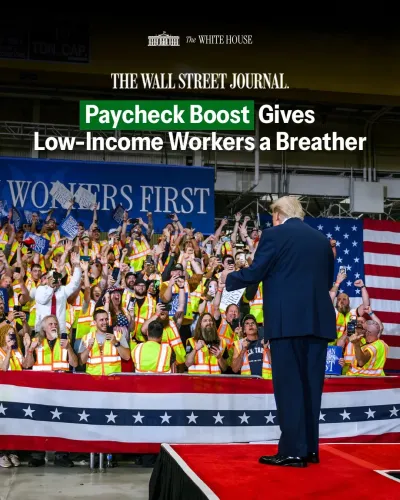
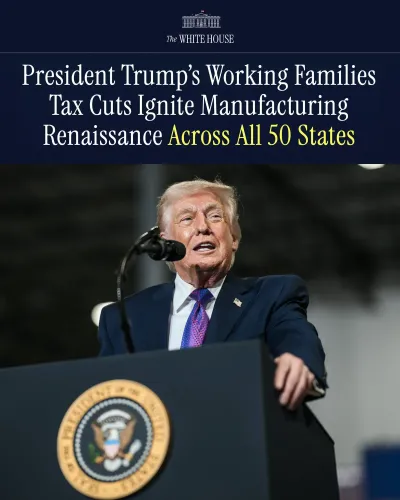
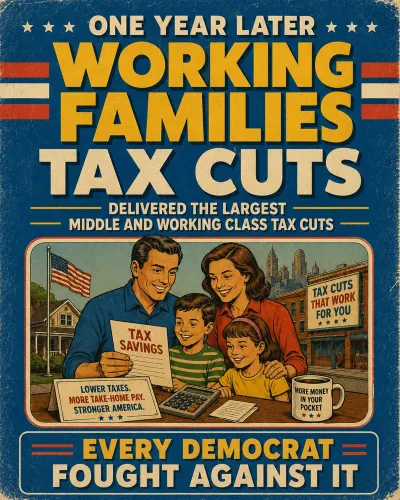
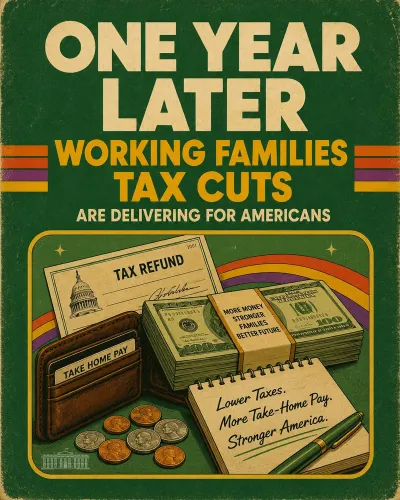
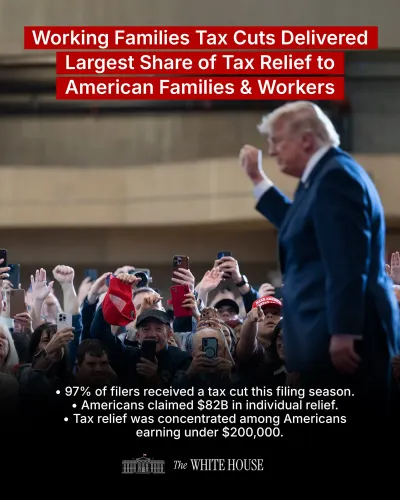
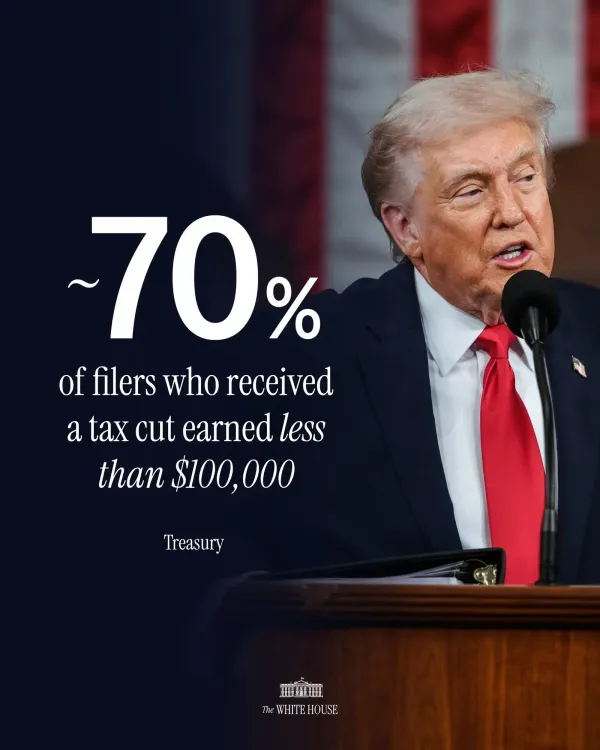
The White House, the official communications arm of the Executive Office of the President of the United States, posted on X on June 3, 2026, framing President Donald Trump's signature tax cuts as a fight on behalf of American wage earners. The single-line message, accompanied by an image, doubled down on the administration's long-running pitch that lower federal taxes translate into higher take-home pay for households.
'President Trump's signature tax cuts are fighting for the AMERICAN MIDDLE CLASS,' the post read, capitalising the target constituency for emphasis. The statement positions tax policy as the centrepiece of the administration's domestic economic narrative.
Context
The reference draws directly on the Tax Cuts and Jobs Act (TCJA), the sweeping 2017 legislation enacted on December 22, 2017. The law cut the U.S. corporate tax rate from 35 percent to 21 percent and reshaped individual income brackets, the standard deduction and several itemised deductions. It was the most comprehensive rewrite of the American tax code in roughly three decades.
Individual provisions of the TCJA were structured to sunset after 2025, leaving Congress to decide whether to extend, modify or allow them to lapse. That deadline turned tax policy into a recurring legislative flashpoint and a defining message line for the Trump White House.
Policy backdrop
From the law's rollout, the Trump administration has consistently cast tax reduction as a wage-and-jobs lever rather than a windfall for high earners, a framing that Republican lawmakers have echoed in defending the statute against repeal efforts. Critics, including many Democrats and several non-partisan analysts, have argued that benefits skewed toward corporations and top income deciles, while supporters point to bracket adjustments and a doubled standard deduction as gains for ordinary households.
The White House's latest post fits within that long-running rhetorical contest. By tagging the cuts as a fight 'for the AMERICAN MIDDLE CLASS', the administration is staking out the political ground it intends to defend as extension debates continue on Capitol Hill.
Stakeholders and impact
The most directly affected constituencies are middle-income taxpayers, who feel the impact through withholding tables, the standard deduction and the child tax credit, and small businesses that file through pass-through entities and benefit from the Section 199A qualified business income deduction.
Corporates, which received the headline rate cut, remain a permanent beneficiary because the 21 percent corporate rate was not subject to the same sunset clause as individual provisions. State and local governments, particularly in high-tax states, continue to grapple with the law's cap on state and local tax (SALT) deductions, an issue that has split lawmakers within both parties.
For Indian readers, the U.S. tax debate carries indirect significance. American corporate tax policy influences global capital flows, the competitiveness of U.S.-listed Indian-origin firms, and the after-tax remittance capacity of the large Indian diaspora working in the United States.
What's next
Attention now turns to congressional action on the expiring TCJA individual provisions and any accompanying revenue or spending measures the administration may put forward. The legislative calendar, the composition of the House and Senate tax-writing committees and the broader fiscal outlook will shape how far the White House's middle-class framing translates into statute.
For the administration, the political utility of the message is clear: anchoring economic identity to tax relief gives the White House a durable talking point as Washington enters another cycle of fiscal negotiation. Whether the messaging holds depends on how the next round of tax legislation distributes its gains, and how voters perceive the result in their pay cheques.
Point of View
Locking the administration's economic identity to the language of middle-class relief. With individual TCJA provisions sunsetting after 2025, the White House is pre-loading the political frame that any extension fight will be conducted on. The strategy mirrors how Republicans defended the original 2017 law, but the durability of the message depends on whether voters connect headline tax policy to their actual take-home pay. Expect this line to recur through every fiscal negotiation of the cycle.
NationPress
19 Sept 2026
Frequently Asked Questions
What are Trump's signature tax cuts?
They refer to the Tax Cuts and Jobs Act of 2017, the law signed by President Donald Trump that lowered the U.S. corporate tax rate from 35 percent to 21 percent and restructured individual income tax brackets, the standard deduction and several deductions.
When was the Tax Cuts and Jobs Act passed?
The Tax Cuts and Jobs Act was enacted on December 22, 2017, and is widely described as the largest overhaul of the U.S. tax code in nearly three decades.
Why are TCJA provisions expiring in 2025?
Many individual income tax provisions of the TCJA were written with a sunset clause that ends them after 2025, largely to fit congressional budget rules. The corporate rate cut, however, was made permanent.
How do U.S. tax cuts affect Indian taxpayers?
U.S. tax changes affect Indians indirectly through global capital flows, the competitiveness of multinationals, and the after-tax income of the Indian diaspora in the United States, which can influence remittances back home.
What does the White House post actually say?
The White House posted on June 3, 2026 that 'President Trump's signature tax cuts are fighting for the AMERICAN MIDDLE CLASS', framing the cuts as a policy aimed at middle-income American households.