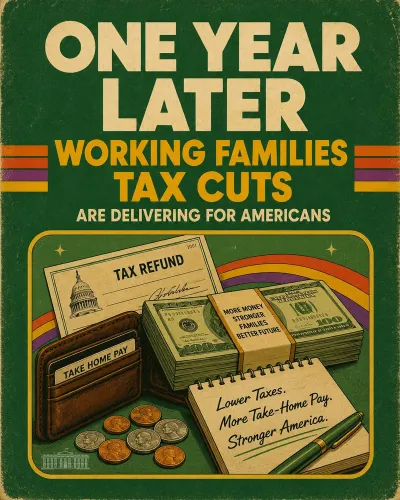
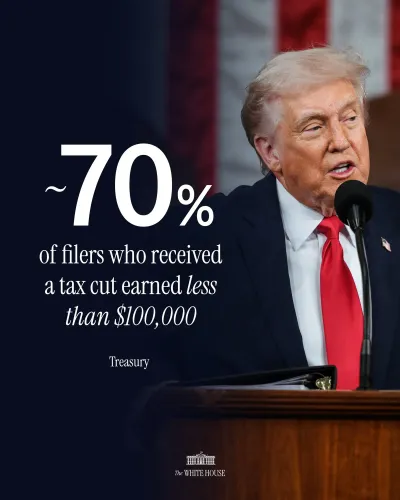
White House Touts Trump Tax Cuts Boosting Worker Paychecks
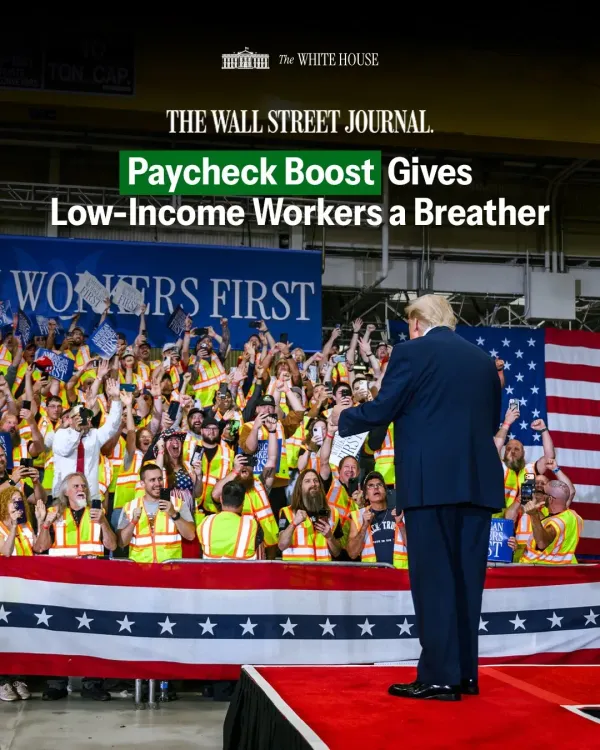
Synopsis
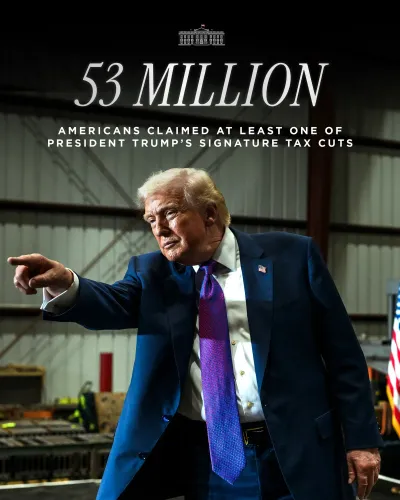
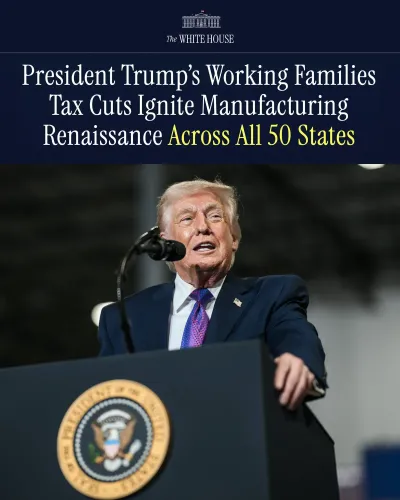
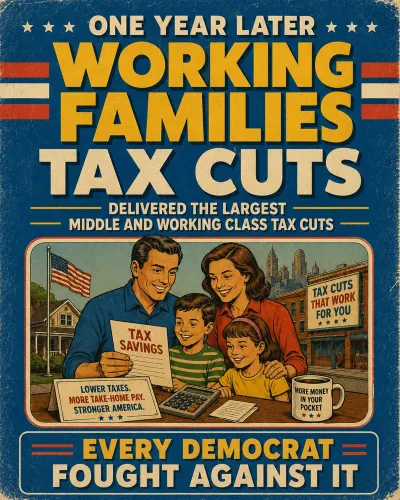
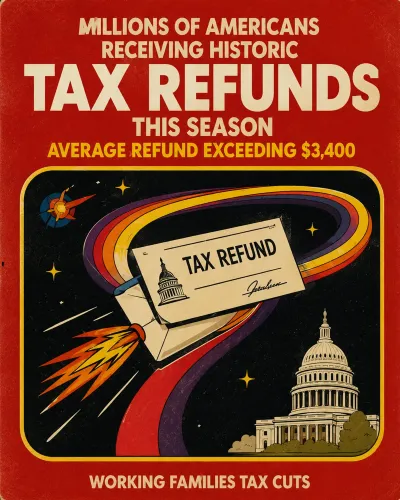
The White House credited President Trump's Working Families Tax Cuts with delivering paycheck gains and faster earnings growth for working-class Americans, reinforcing the administration's long-standing argument that the 2017 Tax Cuts and Jobs Act produced measurable household-level benefits.
Key Takeaways
The White House posted on 25 July 2026 attributing recent paycheck gains for working-class Americans to President Trump's Working Families Tax Cuts .
The administration cited 'a paycheck bump in recent months' and 'some signs of faster earnings growth' as evidence of the policy's impact.
The messaging builds on the Tax Cuts and Jobs Act signed in December 2017 , which cut individual tax rates and doubled the standard deduction.
Several TCJA provisions for individual filers were set to expire after 2025 , making their extension a key legislative priority.
Independent verification of the specific wage gains cited will hinge on upcoming Bureau of Labor Statistics monthly earnings data.
The White House on Saturday, 25 July 2026, credited President Donald Trump's Working Families Tax Cuts with delivering tangible wage gains to working-class Americans, citing reported paycheck increases and signs of faster earnings growth in recent months.
The official White House account posted that 'working-class Americans have experienced a paycheck bump in recent months after tax breaks and some signs of faster earnings growth,' attributing the trend directly to the administration's tax policy.
Context
The Working Families Tax Cuts referenced in the post build on the framework established by the landmark Tax Cuts and Jobs Act (TCJA), signed into law in December 2017 during Trump's first term. That legislation lowered statutory income-tax rates across most individual brackets and doubled the standard deduction, with proponents arguing it would boost after-tax wages for lower- and middle-income households.
The administration has consistently pointed to the TCJA as the foundational driver of wage growth, framing subsequent tax measures as continuations of the same policy arc aimed at working-class relief.
Policy Backdrop
The 2017 Tax Cuts and Jobs Act was the most sweeping overhaul of the United States federal tax code in decades. It cut the top corporate rate from 35% to 21% and reduced individual rates across multiple brackets, while expanding credits for families. Republican lawmakers and the Trump administration have repeatedly argued these changes created a tighter labour market that pushed wages upward, particularly for workers at the lower end of the income scale.
Several TCJA provisions affecting individual filers were set to expire after 2025, making their extension a central legislative priority for the administration. The current messaging around paycheck gains is widely seen as building public and congressional support for keeping those cuts in place.
Stakeholders and Impact
Working-class and middle-income Americans are the stated beneficiaries of the policy, with the White House framing the paycheck bump as direct evidence that supply-side tax reductions translate into household-level gains. Critics of the TCJA have historically argued that the largest benefits flowed to corporations and high-income earners, while wage effects for lower-income workers were more modest or attributable to other labour-market factors.
The Bureau of Labor Statistics monthly earnings releases serve as the primary independent benchmark against which such administration claims are measured. Any divergence between official data and White House characterisations typically becomes a flashpoint in the broader political debate over tax policy.
What's Next
Congressional attention is expected to remain focused on whether to extend or modify TCJA provisions that were scheduled to lapse, a decision that would affect tens of millions of taxpayers. The administration's continued emphasis on wage gains signals that tax policy will remain a central economic message heading into the next legislative cycle.
Upcoming Bureau of Labor Statistics earnings reports will be closely watched as independent data points either reinforcing or complicating the White House's narrative on the impact of the Working Families Tax Cuts on ordinary American workers.
Point of View
The messaging is clearly calibrated for a broader, non-ideological audience. The emphasis on paychecks rather than GDP or equity markets signals a deliberate pivot to kitchen-table economics ahead of likely legislative battles over expiring tax provisions. For Indian observers tracking US fiscal policy, the episode illustrates how tax legislation in the world's largest economy is routinely re-litigated through retail political messaging long after enactment.
NationPress
24 Oct 2026
Frequently Asked Questions
What are Trump's Working Families Tax Cuts?
The Working Families Tax Cuts refer to tax relief measures promoted by the Trump administration for working- and middle-class Americans, rooted in the framework of the 2017 Tax Cuts and Jobs Act, which lowered individual income-tax rates and doubled the standard deduction.
Did Trump's tax cuts increase wages for working-class Americans?
The White House claims working-class Americans have seen a paycheck bump and faster earnings growth in recent months, attributing this to the tax cuts. Independent assessments rely on Bureau of Labor Statistics data, and economists differ on how much of any wage growth is directly attributable to the tax legislation versus other labour-market factors.
What is the Tax Cuts and Jobs Act?
The Tax Cuts and Jobs Act (TCJA) is a federal tax overhaul signed by President Trump in December 2017. It cut the corporate tax rate from 35% to 21%, reduced individual income-tax rates across most brackets, and doubled the standard deduction for households.
When do the Trump tax cuts expire?
Several TCJA provisions affecting individual taxpayers were scheduled to expire after 2025, making their extension or permanent enactment a major legislative priority for the Trump administration and Republican lawmakers.
How does the White House measure the impact of tax cuts on workers?
The administration points to paycheck growth and earnings data as evidence of the tax cuts' impact. The primary independent source for such figures is the Bureau of Labor Statistics, which publishes monthly earnings reports used to verify or challenge administration claims.