CM Bhajan Lal Launches 'Bharat Taxi' Cooperative Scheme in Jaipur
Synopsis
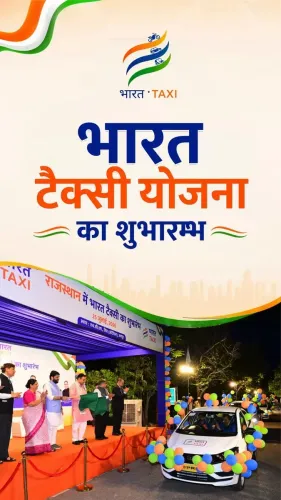
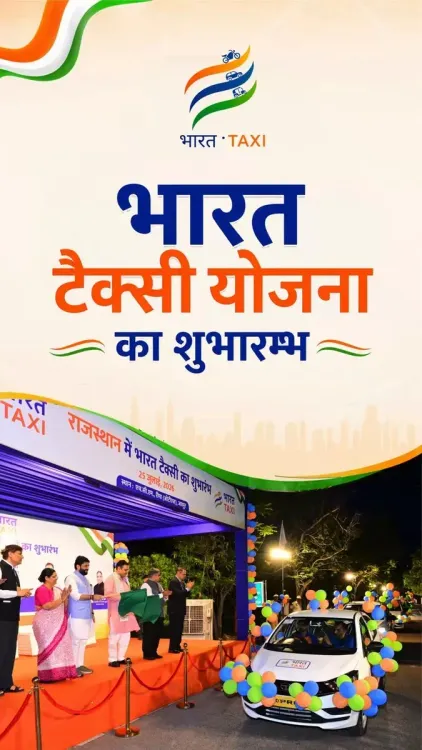
Rajasthan Chief Minister Bhajan Lal Sharma launched the Bharat Taxi Yojana on 25 July 2026, a cooperative model that makes taxi drivers co-owners of the service rather than employees, aiming to boost self-employment and self-reliance across the state.
Key Takeaways
Bharat Taxi Yojana was launched by Rajasthan CM Bhajan Lal Sharma on 25 July 2026 in Jaipur .
The scheme is built on a cooperative ownership model where drivers become stakeholders, not just employees.
The initiative is designed to generate self-employment opportunities and promote self-reliance across Rajasthan.
The launch was held at the Harish Chandra Mathur Rajasthan State Institute of Public Administration .
The scheme aligns with India's national push to expand cooperatives into urban transport and services , backed by the Ministry of Cooperation established in 2021 .
District-level rollout details, vehicle financing, and integration with national programmes remain to be announced.
Rajasthan Chief Minister Bhajan Lal Sharma on Saturday, 25 July 2026, launched the Bharat Taxi Yojana at the Harish Chandra Mathur Rajasthan State Institute of Public Administration in Jaipur. The scheme introduces a cooperative ownership model for taxi services, positioning drivers as owners rather than employees. The initiative is aimed at generating self-employment and promoting self-reliance across the state.
Context
Posting on X, CM Sharma described the launch as a 'भव्य शुभारंभ' (grand inauguration) and stated that the 'सारथी' (drivers) associated with the scheme 'will not merely be employees, but will be its owners.' He framed the cooperative initiative as one that 'will create new opportunities for self-employment in the state and promote self-reliance.' The event was held at Rajasthan's premier state training and public administration institute, which has frequently served as a venue for government programme launches.
Policy Backdrop
The Bharat Taxi Yojana draws from a broader national push to revive and expand India's cooperative sector. The Government of India established a dedicated Ministry of Cooperation in July 2021 to provide focused policy attention to cooperative enterprises across economic activities. That ministry has since encouraged states to extend the cooperative model beyond traditional sectors such as dairy and agriculture into urban services including transport.
The cooperative taxi model mirrors ownership structures seen in successful dairy cooperatives, where participants hold a stake in the enterprise rather than drawing a fixed wage. By applying this framework to urban mobility, Rajasthan is among the states attempting to create ownership-based livelihoods outside formal salaried employment, particularly for youth and gig-economy workers.
Stakeholders and Impact
The primary beneficiaries of the scheme are taxi drivers and youth seeking self-employment across Rajasthan. Under the cooperative structure, drivers — referred to as 'saarathi' — are expected to gain an ownership stake, potentially giving them a share in revenues and decision-making rather than a purely transactional relationship with a platform or employer. Cooperative societies are positioned as the institutional vehicle through which this model will be administered.
The scheme also carries implications for the broader gig and platform economy in the state, where drivers on commercial aggregator platforms have historically lacked asset ownership or job security. A cooperative alternative could offer a structurally different income model for this segment of workers.
What's Next
Attention will now turn to the district-level rollout of the Bharat Taxi Yojana, including details on vehicle financing partnerships and the number of drivers to be enrolled in the initial phase. Observers will also watch whether the scheme is integrated with national cooperative frameworks or skill development programmes backed by the Ministry of Cooperation. The operational structure, including fare regulation and cooperative governance, will be key to determining the scheme's long-term viability and reach across Rajasthan.
Point of View
Translating a Union ministry mandate into a tangible, on-ground programme. If the vehicle financing and governance mechanisms prove robust, the scheme could serve as a replicable template for other BJP-governed states looking to address gig-worker precarity without direct fiscal transfers. The real test, however, will be in district-level execution and whether cooperative societies have the institutional capacity to sustain the model.
NationPress
26 Jul 2026
Frequently Asked Questions
What is the Bharat Taxi Yojana in Rajasthan?
The Bharat Taxi Yojana is a cooperative taxi scheme launched by Rajasthan CM Bhajan Lal Sharma on 25 July 2026, under which taxi drivers become co-owners of the cooperative rather than working as employees, with the aim of promoting self-employment and self-reliance.
Who launched the Bharat Taxi scheme and where?
Rajasthan Chief Minister Bhajan Lal Sharma launched the Bharat Taxi Yojana at the Harish Chandra Mathur Rajasthan State Institute of Public Administration in Jaipur on 25 July 2026.
How is Bharat Taxi Yojana different from regular taxi services?
Unlike conventional taxi platforms where drivers are employees or contractors, the Bharat Taxi Yojana is built on a cooperative model where drivers — called 'saarathi' — hold ownership stakes in the service, giving them a share in revenues and decision-making.
What is the connection between Bharat Taxi Yojana and India's cooperative policy?
The scheme aligns with the national cooperative push initiated when the Government of India established a dedicated Ministry of Cooperation in July 2021 to extend cooperative models beyond agriculture into sectors like urban transport.
Who benefits from the Bharat Taxi Yojana in Rajasthan?
Taxi drivers, youth seeking self-employment, and cooperative societies in Rajasthan are the primary beneficiaries, as the scheme is designed to create ownership-based livelihoods in the urban transport sector.