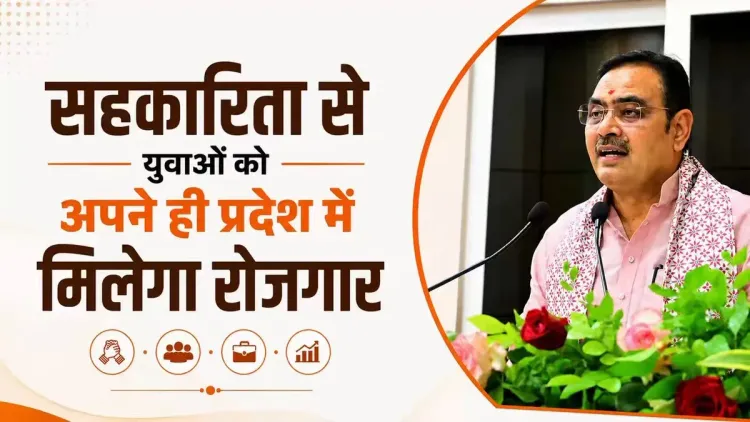
CM Bhajan Lal Sharma Pitches Cooperatives as Youth Jobs Engine
Synopsis
Rajasthan Chief Minister Bhajan Lal Sharma has called for expanding the cooperative sector to generate honourable local employment for the state's youth, aligning with India's national cooperative push launched in 2021.
Key Takeaways
CM Bhajan Lal Sharma publicly backed cooperative sector expansion as a tool for youth employment in Rajasthan on 25 July 2026 .
He emphasised that youth should get 'honourable employment' within their own state, signalling concern over out-migration.
The stance aligns with the Union government's Ministry of Cooperation , established in July 2021 to promote cooperative-based economic growth.
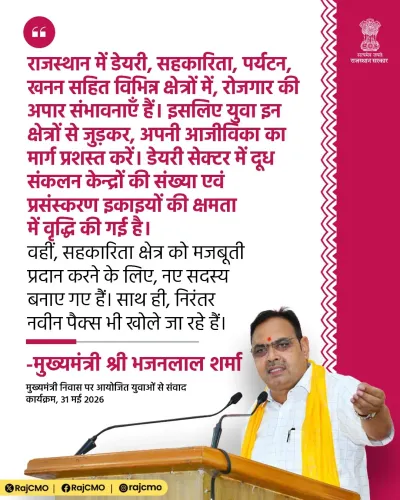
Rajasthan already has an established agricultural and dairy cooperative network that could serve as a base for expansion.
Concrete policy measures — budget allocations or new schemes — are yet to be announced and will be the key indicator of follow-through.
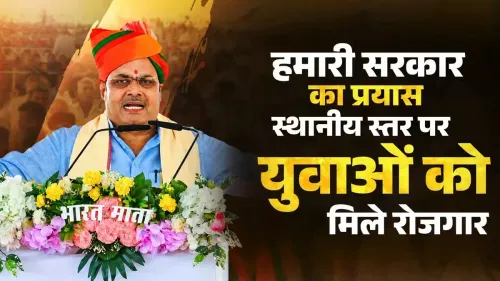
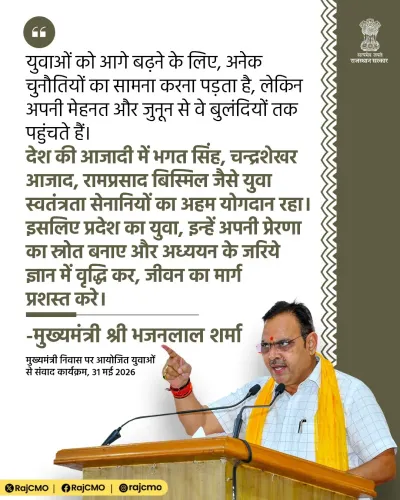
Rajasthan Chief Minister Bhajan Lal Sharma on Saturday, 25 July 2026 called for expanding the cooperative sector as a means of generating dignified employment for the state's youth within Rajasthan itself, urging that young people should not have to leave their home state in search of work.
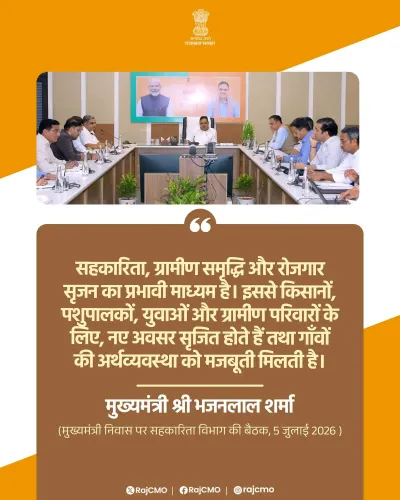
Posting in Hindi on X, CM Sharma stated: 'सहकारिता क्षेत्र स्थानीय युवाओं के लिए रोजगार का सशक्त माध्यम बन सकता है' ['The cooperative sector can become a powerful medium of employment for local youth'], adding that its expansion would open new avenues of 'honourable employment' for the state's young people in their own region.
Context
Bhajan Lal Sharma has served as Rajasthan's Chief Minister since December 2023, steering the BJP government's focus toward state-led economic development and youth welfare. His remarks come as unemployment and out-migration remain persistent concerns in the largely agrarian western Indian state, where a significant share of working-age youth seek opportunities in metropolitan centres outside Rajasthan.
The cooperative sector in Rajasthan has a well-established presence in agriculture, dairy, and credit, with networks of cooperative societies spread across both urban and rural districts. Expanding these institutions is seen as a way to anchor economic activity closer to where people live.
Policy Backdrop
The CM's statement aligns with a national policy direction set in motion when the Government of India established the Ministry of Cooperation in July 2021, the first such dedicated ministry at the Union level. The ministry's mandate explicitly includes using cooperatives as vehicles for rural employment, economic decentralisation, and self-reliance.
Since 2021, multiple states have moved to expand cooperative frameworks — particularly in agriculture and allied sectors — as a way to retain local talent and reduce pressure on urban infrastructure. Rajasthan's large rural population and established dairy and farm-cooperative base give it a structural foundation to scale such efforts.
Stakeholders and Impact
The primary beneficiaries of any cooperative expansion would be Rajasthan's youth, especially those in semi-urban and rural areas who currently face limited formal employment options locally. Cooperative societies in sectors such as dairy, handicrafts, agri-processing, and credit could absorb a meaningful share of the first-time job-seeking population if adequately capitalised and managed.
Existing cooperative societies and their member-farmers would also see indirect benefits through better access to processing, marketing, and financial services that a more robust cooperative network could provide. For the state government, a successful cooperative employment push would ease fiscal pressure from direct job-creation programmes.
What's Next
Observers will watch the Rajasthan state budget and the upcoming assembly session for concrete allocations or new youth-focused cooperative schemes that translate this stated intent into policy. Any new scheme would need to address capitalisation of cooperative societies, skill linkages, and governance reforms to be effective at scale.
If the state follows through with targeted budget support, Rajasthan could emerge as a model for cooperative-led youth employment in the broader national context — a development that would carry both economic and political significance ahead of future electoral cycles.
Point of View
' he taps into a sentiment of local pride while aligning with the BJP's national cooperative agenda, lending the state government ideological coherence with New Delhi. The absence of specific scheme announcements, however, means this remains an intent signal rather than a policy commitment. The real test will be whether the next budget session translates the rhetoric into funded, accountable programmes for cooperative expansion.
NationPress
25 Oct 2026
Frequently Asked Questions
What did Rajasthan CM Bhajan Lal Sharma say about cooperatives?
CM Bhajan Lal Sharma said the cooperative sector can become a powerful medium of employment for local youth, and that its expansion will create new avenues of honourable employment for Rajasthan's young people within the state itself.
How can cooperatives create jobs for youth in Rajasthan?
Cooperative societies in sectors like dairy, agriculture, agri-processing, handicrafts, and credit can absorb local youth by expanding operations, requiring management, processing, and marketing personnel without the need for youth to relocate to other states.
What is India's Ministry of Cooperation and why was it set up?
The Ministry of Cooperation was established by the Government of India in July 2021 as the country's first dedicated ministry for the cooperative sector, with the goal of strengthening cooperatives as vehicles for rural employment, economic decentralisation, and self-reliance.
What cooperative infrastructure does Rajasthan already have?
Rajasthan has a significant existing network of agricultural and dairy cooperative societies spread across both rural and urban districts, giving the state a structural foundation on which to build expanded cooperative employment programmes.
What should we watch for next on Rajasthan cooperative employment?
Watch for Rajasthan state budget allocations and announcements in the upcoming assembly session for any new youth-focused cooperative schemes or funding commitments that would translate CM Sharma's stated intent into concrete policy.