CM Bhajan Lal: Rajasthan cooperatives now engines of farmer prosperity
Synopsis
Rajasthan Chief Minister Bhajan Lal Sharma declared on 25 July 2026 that cooperative societies once marred by corruption and nepotism under Congress are now engines of farmer prosperity and youth employment under the BJP-led double-engine government.
Key Takeaways
Bhajan Lal Sharma posted on 25 July 2026 contrasting cooperative governance under Congress and the current BJP administration in Rajasthan .
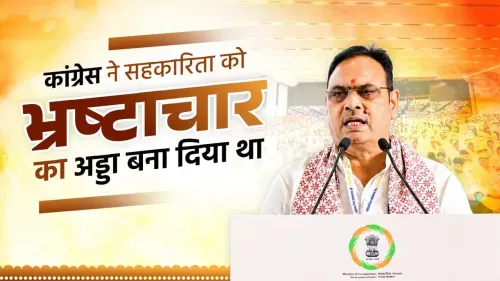
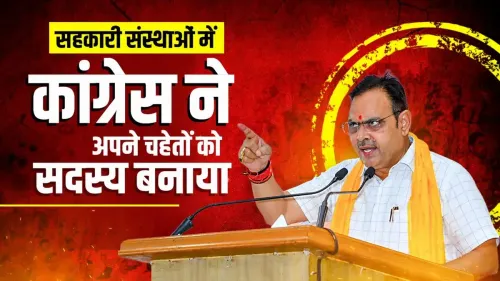
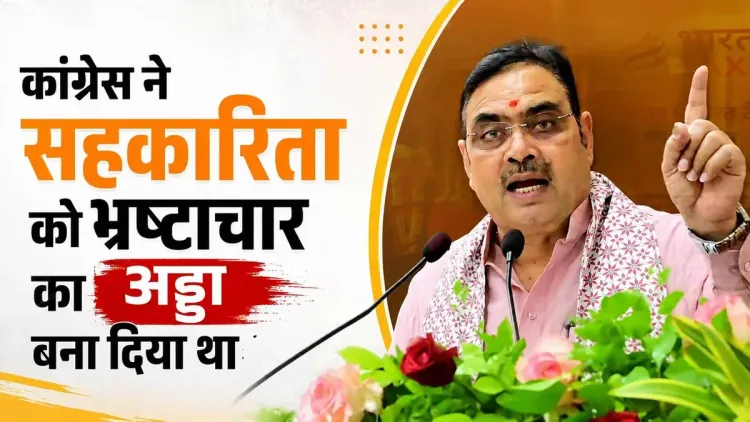
He alleged that cooperatives under the previous Congress government were symbols of 'corruption and nepotism' ( bhrashtachar aur bhai-bhatijavaad ).
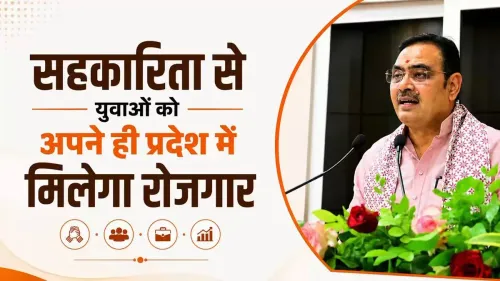
The Chief Minister positioned the same institutions as now becoming vehicles for farmer welfare and youth employment under BJP rule.
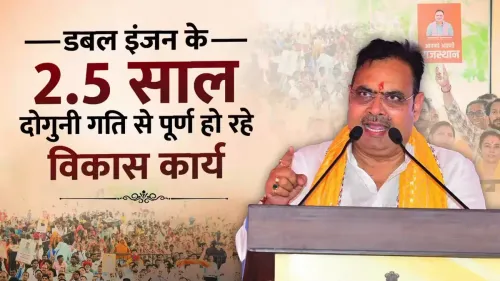
The 'double-engine government' framing refers to the alignment of the Rajasthan state government and the central BJP government under the same party.
The central Ministry of Cooperation , established in 2021 , provides the national policy framework underpinning state-level cooperative reforms.
Upcoming budget sessions and cooperative department audits will be key tests of the government's reform claims.
Rajasthan Chief Minister Bhajan Lal Sharma on Saturday, 25 July 2026, declared that cooperative societies in the state have been transformed from symbols of corruption under the previous Congress government into active vehicles of rural prosperity, farmer welfare, and youth employment under the current BJP-led double-engine administration.
In a post on X, Sharma wrote in Hindi: 'कांग्रेस के शासन में जो सहकारी समितियाँ भ्रष्टाचार और भाई-भतीजावाद का प्रतीक बन गई थीं, आज डबल इंजन सरकार के नेतृत्व में वही समितियाँ राजस्थान की समृद्धि, किसानों की खुशहाली और युवाओं के रोजगार का सशक्त माध्यम बन रही हैं।' [Translation: 'The cooperative societies that had become symbols of corruption and nepotism under Congress rule are today, under the leadership of the double-engine government, becoming powerful means of Rajasthan's prosperity, farmers' well-being, and employment for youth.']
Context
Bhajan Lal Sharma assumed office as Rajasthan Chief Minister in December 2023 after the Bharatiya Janata Party won the state assembly elections, ending the previous Indian National Congress administration. The transition of power has been accompanied by sustained BJP messaging contrasting the new government's institutional approach with what it characterises as the Congress era's patronage-driven governance.
Cooperative societies in Rajasthan span rural credit bodies, dairy cooperatives, and agricultural input organisations — institutions that directly touch the lives of millions of farmers and rural households across the state. The BJP government announced reviews of these cooperatives shortly after taking office, citing alleged irregularities from the prior regime.
Policy Backdrop
The post fits within a broader national framework. The central government established a dedicated Ministry of Cooperation in 2021 — a first for India — to systematically strengthen cooperative institutions and integrate them into the mainstream economy. This ministry has provided states like Rajasthan with a policy scaffold for reforming cooperatives around credit access, digitalisation, and employment generation.
The 'double-engine government' formulation — a recurring BJP phrase describing the alignment of state and central governments under the same party — is central to the Chief Minister's framing. The argument is that this alignment unlocks faster policy implementation and resource flow for institutions such as cooperatives that require both state administration and central financial support.
Stakeholders and Impact
Farmers represent the most immediate constituency for cooperative reform. Rural credit cooperatives are often the first point of institutional lending for small and marginal farmers, and their functional health directly affects agricultural investment cycles. Youth employment through cooperatives — whether in dairy processing, warehousing, or agri-logistics — is a secondary but politically significant dimension of the government's messaging.
The Indian National Congress, as the principal opposition in Rajasthan, is the implicit target of the Chief Minister's remarks. The post frames the contrast as a governance quality distinction rather than a purely political one, though the language of 'corruption' and 'nepotism' carries clear electoral undertones ahead of future electoral cycles.
What's Next
Upcoming Rajasthan budget sessions and cooperative department audits are the natural venues where the government's claims about cooperative revival will face scrutiny. Any state-level alignment with central cooperative ministry programmes on digitalisation or expanded credit disbursement would substantiate the reform narrative Sharma is advancing.
The Chief Minister's public positioning on cooperatives signals that this sector is likely to feature prominently in the BJP's governance communication in Rajasthan in the months ahead — particularly as the government seeks to demonstrate tangible rural outcomes from its post-2023 institutional overhaul.
Point of View
Making them a credible vehicle for farmer-welfare messaging. The framing also pre-positions the BJP ahead of any future electoral contest by establishing a governance quality contrast rather than a purely ideological one. Whether the rhetoric translates into verifiable outcomes — credit disbursal data, employment numbers, audit reports — will determine how durable this narrative proves to be.
NationPress
25 Oct 2026
Frequently Asked Questions
What did Rajasthan CM Bhajan Lal Sharma say about cooperative societies?
He said that cooperative societies which were symbols of corruption and nepotism under Congress rule are now becoming powerful means of farmer welfare and youth employment under the BJP-led double-engine government in Rajasthan.
What is the double-engine government Bhajan Lal Sharma refers to?
'Double-engine government' is a BJP phrase describing the political alignment between a BJP-ruled state government and the BJP-led central government, which the party argues enables faster and more effective policy delivery.
What are cooperative societies in Rajasthan?
Cooperative societies in Rajasthan include rural credit bodies, dairy cooperatives, and agricultural input organisations that provide financial and logistical support to farmers and rural communities across the state.
When was India's Ministry of Cooperation established?
The central Ministry of Cooperation was established in 2021 — the first such dedicated ministry in India — to strengthen cooperative institutions and integrate them more effectively into the national economy.
What was the BJP's criticism of Congress-era cooperatives in Rajasthan?
The BJP, including CM Bhajan Lal Sharma, has alleged that cooperative societies under the previous Congress administration were marked by corruption and nepotism, and that the party used them as patronage networks rather than genuine farmer-support institutions.