CM Bhajan Lal Marks 2.5 Years of Double-Engine Rule in Rajasthan
Synopsis
Rajasthan Chief Minister Bhajan Lal Sharma marked 2.5 years of the BJP's double-engine government on 24 June 2026, claiming the state is advancing at double speed across roads, power, education, health, employment, farmer welfare, and industrial development.
Key Takeaways
Bhajan Lal Sharma posted on 24 June 2026 to mark 2.5 years of BJP governance in Rajasthan at state and Centre simultaneously.
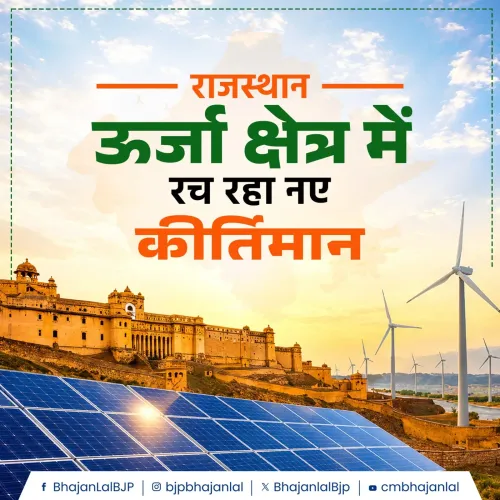
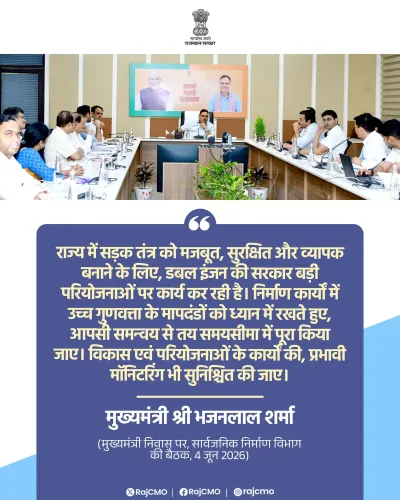
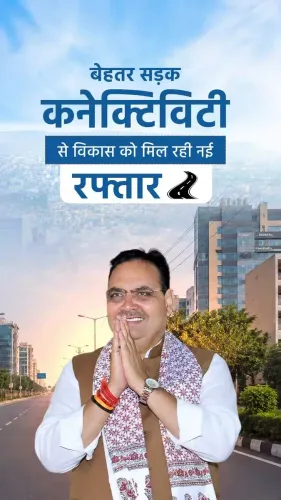
The CM claimed 'unprecedented progress' across ten sectors : roads, water, electricity, education, health, employment, farmer welfare, infrastructure, investment, and industrial development.
The 'double-engine government' concept, first used in 2014 , argues that BJP control at both Centre and state accelerates policy delivery.
Rajasthan returned to BJP rule in December 2023 after five years of Congress government, with Sharma as the new Chief Minister.
The state's development blueprint aligns with national schemes such as PM Gati Shakti and mirrors models applied in Madhya Pradesh and Chhattisgarh .
The next annual budget and any state investment summit will be key indicators of follow-through on these pledges.
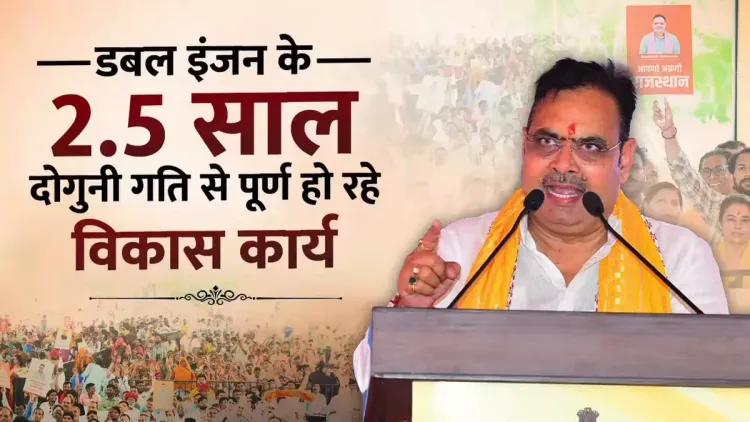
Rajasthan Chief Minister Bhajan Lal Sharma on Wednesday, 24 June 2026, highlighted what he described as unprecedented progress across multiple sectors in the state over the past two-and-a-half years of BJP governance at both the state and Centre, asserting that Rajasthan is now growing at twice the previous pace.
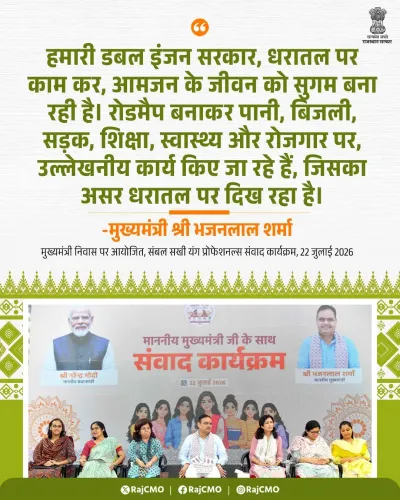
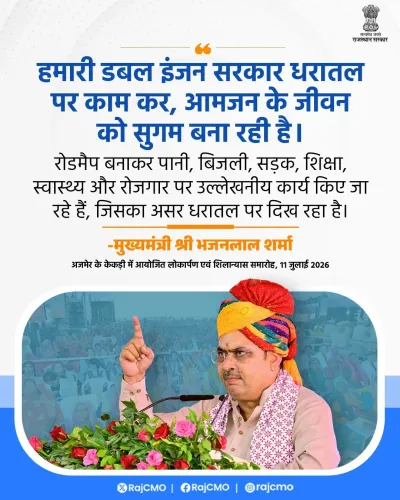
Posting on X, Sharma wrote — 'डबल इंजन सरकार के 2.5 वर्षों में राजस्थान दोगुनी गति से विकास के नए आयाम स्थापित कर रहा है' ['In 2.5 years of the double-engine government, Rajasthan is establishing new dimensions of development at double the speed']. He cited roads, water, electricity, education, health, employment, farmer welfare, basic infrastructure, investment, and industrial development as areas witnessing 'unprecedented progress.'
Context
The post marks a symbolic milestone: 2.5 years since the BJP returned to power in Rajasthan following the November–December 2023 assembly elections, ending a five-year Congress government that had been in office since 2018. Bhajan Lal Sharma was sworn in as Chief Minister in December 2023, making him the state's first BJP chief minister after that gap.
The post comes with a video attachment, suggesting the communication is part of a structured outreach campaign to mark the government's halfway point before the next assembly cycle.
Policy Backdrop
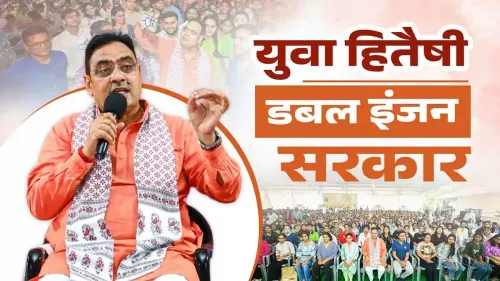
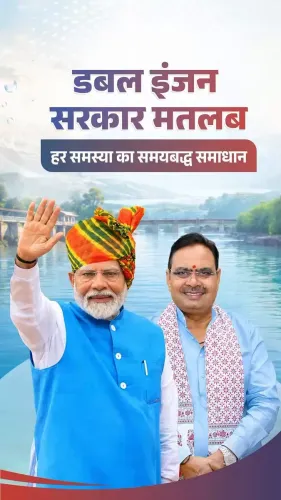
The phrase 'double-engine government' — डबल इंजन सरकार — is a BJP coinage first deployed during the 2014 Lok Sabha campaign. It describes the party's argument that states governed by the BJP benefit from smoother, faster policy coordination with a BJP-led Union government in New Delhi.
Rajasthan's post-2023 development agenda broadly mirrors the template applied in other BJP-governed states such as Madhya Pradesh and Chhattisgarh, with emphasis on road connectivity, power supply, irrigation, and industrial corridors. National frameworks such as PM Gati Shakti — the Centre's multi-modal infrastructure master plan — provide the Union-level scaffolding that state governments like Rajasthan's are expected to plug into.
Stakeholders and Impact
The sectors Sharma listed span virtually the entire public-services spectrum: farmers, students, patients, job-seekers, and industrial investors are all cited as beneficiaries. Rajasthan, India's largest state by area, has historically faced challenges in water scarcity, rural connectivity, and attracting manufacturing investment away from more industrialised western and southern states.
Industrial and investment policy is a particular focus: state-level investment summits and single-window clearance systems have been recurring instruments in BJP-governed states to signal openness to private capital. Whether Rajasthan's specific metrics match the claims made in the post cannot be independently verified from available data at this time.
What's Next
The 2.5-year mark is typically when ruling governments in India begin consolidating their narrative ahead of mid-term reviews and the eventual pre-election budget cycle. Rajasthan's next annual budget presentation and any forthcoming investment summit will serve as concrete tests of the industrial and infrastructure pledges Sharma's government has made.
Observers will also watch whether the state translates the broad sectoral claims into verifiable output data — project completion rates, electricity hours supplied, and employment figures — as the BJP prepares its record for the next assembly election, due in late 2028.
Point of View
The BJP signals it is already building the record it will campaign on. The breadth of sectors listed — spanning welfare, infrastructure, and investment — is deliberate, designed to speak simultaneously to rural voters, urban consumers, and the business community. The 'double-engine' framing continues to serve a dual purpose: crediting the Union government for state-level gains while positioning any shortfall as a problem the state inherited from the previous Congress administration. With the next Rajasthan assembly election roughly two years away, this communication cadence is likely to intensify as the government moves from claim-making to proof-point delivery.
NationPress
23 Sept 2026
Frequently Asked Questions
What is the double-engine government in Rajasthan?
The 'double-engine government' refers to the BJP holding power simultaneously at the Centre and in Rajasthan, which the party argues enables faster and more coordinated policy implementation. The term has been used by BJP since 2014.
When did Bhajan Lal Sharma become Chief Minister of Rajasthan?
Bhajan Lal Sharma was sworn in as Chief Minister of Rajasthan in December 2023 after the BJP won the state assembly elections held in November–December 2023.
What sectors did CM Bhajan Lal Sharma highlight in his 2.5-year review?
Sharma cited roads, water, electricity, education, health, employment, farmer welfare, basic infrastructure, investment, and industrial development as areas of 'unprecedented progress' in Rajasthan.
How long has BJP been in power in Rajasthan?
As of June 2026, the BJP has been in power in Rajasthan for approximately 2.5 years, having won the assembly elections in late 2023 and forming the government in December 2023.
What national schemes support Rajasthan's development agenda?
Rajasthan's infrastructure push aligns with Union government frameworks such as PM Gati Shakti, the Centre's multi-modal connectivity master plan, alongside state-level investment summits and single-window clearance systems.