CM Bhajan Lal Sharma Highlights Rajasthan Road Growth
Synopsis
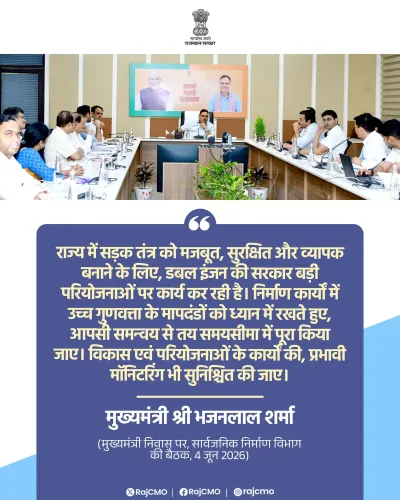
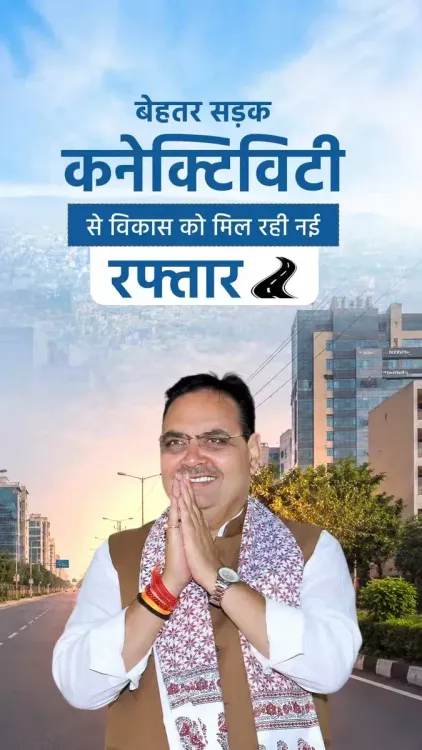
Rajasthan Chief Minister Bhajan Lal Sharma credited PM Narendra Modi's leadership for the state's road connectivity gains, saying the BJP's double engine government is building village-level road networks to accelerate tourism, employment, trade and investment across India's largest state.
Key Takeaways
CM Bhajan Lal Sharma posted on 2 June 2026 highlighting road connectivity as a key development achievement in Rajasthan .
He credited PM Narendra Modi 's guidance and the 'double engine' BJP government at Centre and state for the gains.
The government says road expansion is directly linked to boosting tourism, employment, trade and investment across the state.
The Bharatmala Pariyojana (2017) and PM Gati Shakti National Master Plan (2021) are the central policy frameworks underpinning Rajasthan's road push.
Rajasthan , India's largest state by area, has a particular need for rural connectivity given the spread of its tourism circuits, agricultural zones and mining belts.
Specific project names, kilometre targets and budget figures are yet to be publicly detailed by the state government.
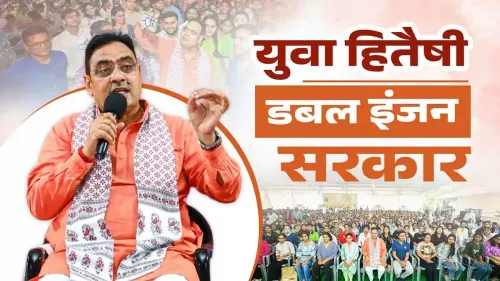
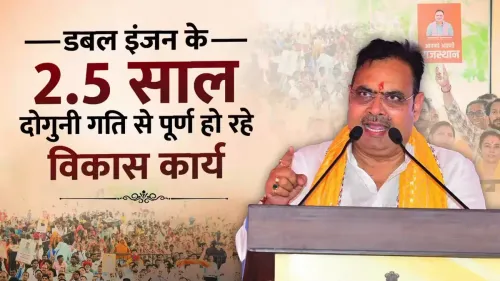
Rajasthan Chief Minister Bhajan Lal Sharma on Tuesday, 2 June 2026 credited Prime Minister Narendra Modi's leadership for accelerating road connectivity across the state, asserting that the 'double engine' government is expanding a robust road network to every village to drive tourism, employment, trade and investment.
Context
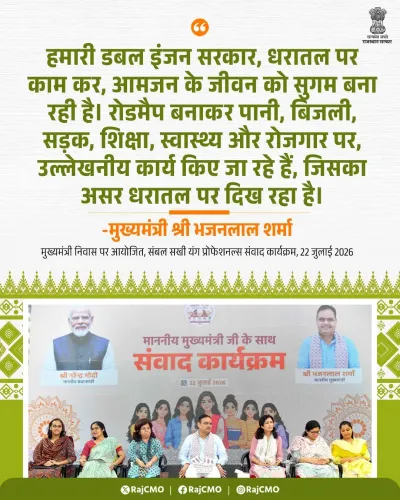
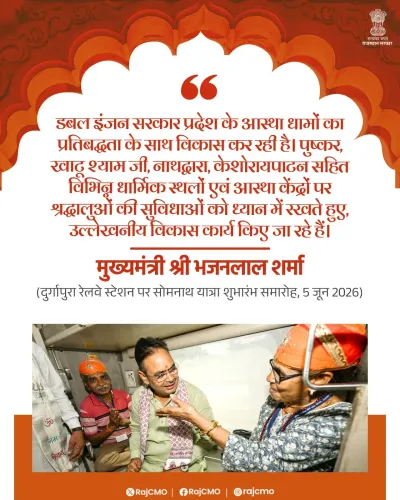
Posting in Hindi on X, CM Sharma wrote: 'डबल इंजन सरकार गांव-गांव तक सुदृढ़ सड़क नेटवर्क का विस्तार कर पर्यटन, रोजगार, व्यापार और निवेश को नई गति प्रदान कर रही है' — 'The double engine government is expanding a strong road network to every village, giving new momentum to tourism, employment, trade and investment.' The post also praised PM Modi's 'able guidance' (कुशल मार्गदर्शन) as the driver behind Rajasthan's development trajectory.
The 'double engine government' phrase refers to the BJP holding power simultaneously at the Centre and in the state — a formulation the party uses to argue that policy alignment between New Delhi and Jaipur accelerates project delivery and fund flows.
Policy Backdrop
Road infrastructure in Rajasthan — India's largest state by area — has been a long-standing priority given the distances between rural settlements, tourist circuits, and urban commercial hubs. Two central programmes underpin the current push: the Bharatmala Pariyojana, approved in 2017, which targets national highway upgrades and economic corridors passing through the state; and the PM Gati Shakti National Master Plan, launched in 2021, which integrates road projects with multimodal logistics nodes to reduce freight and travel time.
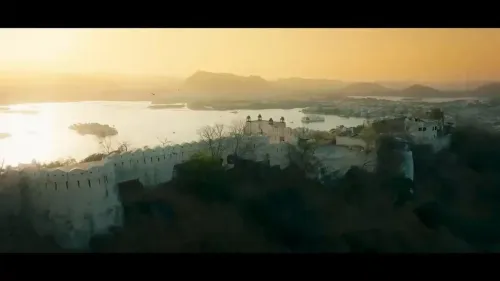
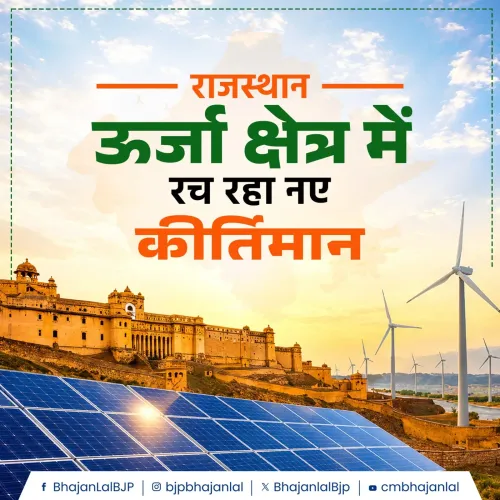
The state's economy depends heavily on tourism — anchored by heritage destinations such as Jaipur, Jodhpur, and Jaisalmer — alongside mining and agriculture, all of which require reliable rural-urban road links to realise their commercial potential.
Stakeholders and Impact
Rural residents stand to gain most directly from last-mile connectivity, reducing travel time to markets, hospitals and schools. The tourism sector, which contributes significantly to state revenues, benefits from improved access to heritage sites and desert circuits that are currently constrained by poor road quality in interior districts.
Local traders and logistics operators also stand to gain from reduced transport costs, while the state government frames enhanced connectivity as a signal to potential investors considering Rajasthan as a destination for warehousing, manufacturing and agri-processing units.
What's Next
Observers will watch Rajasthan's upcoming state budget sessions and assembly announcements for specific project sanctions, kilometre targets, and fund allocations that would give concrete shape to the connectivity goals outlined in CM Sharma's post. Any new Bharatmala corridor notifications or state highway tenders in Rajasthan will be read as direct follow-through on the political commitment signalled here.
If the 'double engine' road push translates into measurable rural connectivity metrics, it could strengthen the BJP's governance narrative in Rajasthan ahead of future electoral cycles — making the pace of on-ground delivery a key political benchmark to watch.
Point of View
Voter-visible proxy for the benefits of party alignment between Jaipur and New Delhi. The messaging is strategically broad, linking roads to tourism, jobs, trade and investment simultaneously, which maximises its appeal across rural and urban constituencies. What the post conspicuously lacks is specificity: no kilometre targets, no scheme names, no budget figures — suggesting this is political signalling rather than a policy announcement. The real test will come in budget sessions and tender notifications, where intent must convert into verifiable delivery.
NationPress
20 Oct 2026
Frequently Asked Questions
What did Rajasthan CM Bhajan Lal Sharma say about road development?
CM Bhajan Lal Sharma said that under PM Narendra Modi's guidance, Rajasthan is achieving new heights of development, with the double engine government rapidly expanding a strong road network to every village to boost tourism, employment, trade and investment.
What is the 'double engine government' in Rajasthan?
The 'double engine government' refers to the BJP being in power both at the Centre (led by PM Modi) and in Rajasthan (led by CM Sharma), which the party argues enables faster project approvals, better fund flows and more coordinated infrastructure delivery.
Which central road schemes are active in Rajasthan?
Two major central programmes are active in Rajasthan: the Bharatmala Pariyojana, approved in 2017 for national highway upgrades and economic corridors, and the PM Gati Shakti National Master Plan, launched in 2021 to integrate road infrastructure with multimodal logistics.
How does road connectivity benefit Rajasthan's tourism sector?
Rajasthan's tourism economy — centred on heritage cities like Jaipur, Jodhpur and Jaisalmer — depends on reliable road access to interior destinations. Better roads reduce travel time, improve tourist experience and open up lesser-known heritage and desert circuits to commercial traffic.
When did Bhajan Lal Sharma become Chief Minister of Rajasthan?
Bhajan Lal Sharma became Chief Minister of Rajasthan in December 2023 following the BJP's victory in the state assembly elections held that year.