CM Bhajan Lal hails 'double engine' growth in Rajasthan

Synopsis
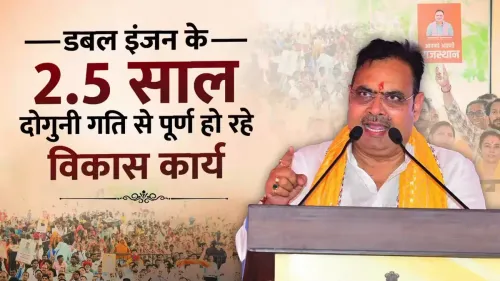
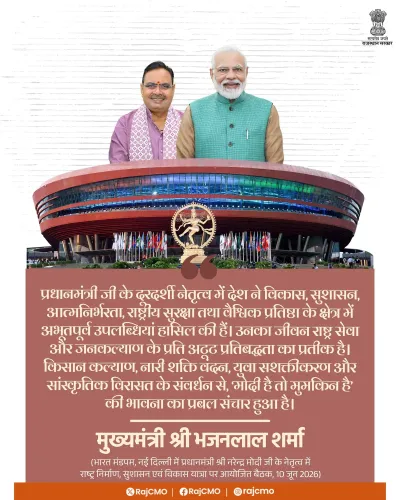
Rajasthan Chief Minister Bhajan Lal Sharma on 10 July 2026 credited PM Narendra Modi's leadership for progress across agriculture, industry, roads, rail, and energy in Rajasthan, invoking the BJP's 'double engine government' model that has aligned state and central administrations since December 2023.
Key Takeaways
Bhajan Lal Sharma posted on 10 July 2026 crediting PM Narendra Modi for Rajasthan's development momentum.
The post cited gains in agriculture, industry, roads, rail, and energy as evidence of a new chapter of progress.
Sharma used the BJP's 'double engine government' phrase, referring to aligned BJP rule at both the state and central level.
Rajasthan has had a BJP government since December 2023 , ending a five-year Congress tenure.
The hashtag #NayaRajasthan_VikasitRajasthan frames the messaging around a 'New, Developed Rajasthan' vision.
No specific project names, completion figures, or investment amounts were cited in the post.
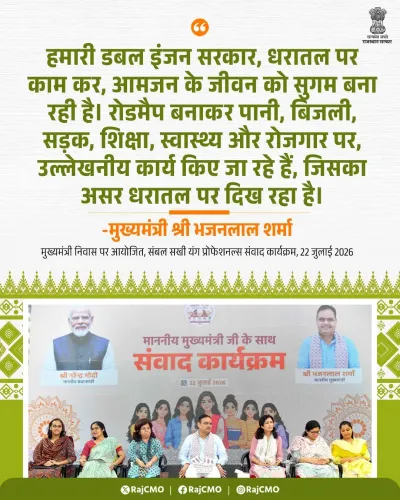
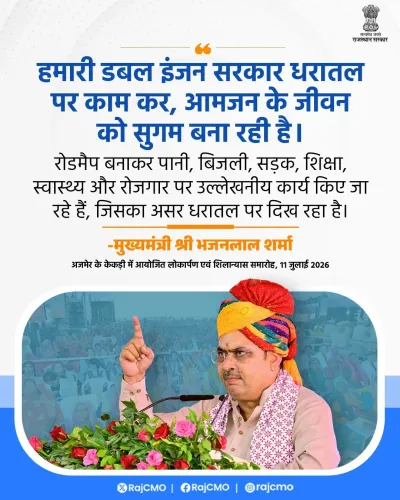
Rajasthan Chief Minister Bhajan Lal Sharma on Friday, 10 July 2026, credited Prime Minister Narendra Modi's leadership for what he described as a new chapter of progress in Rajasthan, citing gains across agriculture, industry, roads, rail, and energy. The post, shared on X, used the BJP's signature 'double engine government' framing to argue that aligned central and state administrations are lifting the quality of life for every citizen in the state.
Context
Sharma's post, written in Hindi, declared: 'Rajasthan aaj pragati ka naya adhyay likh raha hai' ('Rajasthan is writing a new chapter of progress today'), attributing the momentum to Modi's 'kushal margdarshan' ('able guidance'). The message covered a broad sweep of sectors — farm prosperity, industrial pace, road, rail and energy infrastructure — under the hashtag #NayaRajasthan_VikasitRajasthan (New Rajasthan, Developed Rajasthan). It reflects the standard BJP communication template used by state governments aligned with the centre.
Bhajan Lal Sharma took office as Chief Minister in December 2023 after the BJP won the Rajasthan assembly elections, ending a five-year Congress government. The win brought Rajasthan back into the BJP fold for the first time since 2018, creating the 'double engine' alignment the post celebrates.
Policy Backdrop
The 'double engine government' phrase has been a fixture of BJP political vocabulary since the 2014 Lok Sabha elections, used to argue that states with BJP governments receive faster delivery of centrally sponsored schemes. The logic holds that a shared party leadership at both the state secretariat and New Delhi reduces friction in fund transfers, project approvals, and administrative coordination.
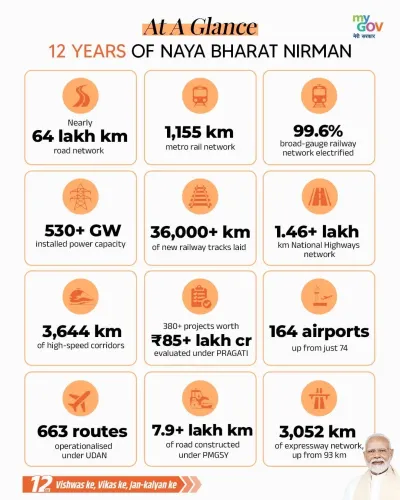
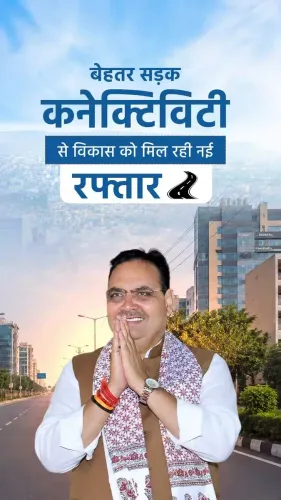
In Rajasthan, the sectors highlighted — agriculture, roads, rail connectivity, and energy — align with major centrally sponsored programmes covering rural infrastructure, highway expansion, and power sector reforms. The state's vast geography and historically underdeveloped eastern and western corridors make infrastructure investment a politically salient issue for its electorate.
Stakeholders and Impact
Rajasthan's farming community, which constitutes a significant share of the state's population, is a primary stakeholder in any claim of agricultural prosperity. Industrial units, particularly in sectors such as mining, textiles, and emerging renewables — where Rajasthan holds natural advantages in solar and wind energy — are the other key beneficiaries named in the post's framing.
Citizens in smaller towns and rural districts stand to gain most directly from road and rail expansion, which the Chief Minister listed alongside energy access as pillars of the 'Naya Rajasthan' vision. The post does not cite specific project names, completion figures, or investment amounts, keeping the message at a broad, aspirational register.
What's Next
The immediate markers to watch are Rajasthan's state budget allocations for roads, irrigation, and energy, as well as progress reports on centrally sponsored schemes operating in the state. How quickly the 'double engine' narrative translates into verifiable project completions will shape both the government's credibility with voters and its positioning ahead of future electoral cycles.
As more BJP-governed states adopt similar messaging frameworks, Rajasthan's performance on infrastructure and farm income will serve as a concrete test case for whether aligned central-state governance delivers measurably faster development outcomes.
Point of View
Which has been used consistently across party-governed states to credit central leadership for local development gains. The messaging arrives as the Rajasthan government approaches the mid-point of its term, a window when ruling parties typically seek to consolidate their development narrative ahead of the next electoral cycle. By anchoring state progress to PM Modi's guidance rather than specific schemes or spending figures, the post prioritises political branding over policy accountability. The broader pattern — replicated across BJP states — suggests this is as much about national party cohesion as it is about Rajasthan-specific governance.
NationPress
8 Oct 2026
Frequently Asked Questions
What did Rajasthan CM Bhajan Lal Sharma say about development in the state?
Bhajan Lal Sharma stated on 10 July 2026 that Rajasthan is writing a new chapter of progress under PM Modi's guidance, citing improvements in agriculture, industry, roads, rail, and energy.
What is the 'double engine government' Bhajan Lal Sharma referred to?
'Double engine government' is a BJP phrase describing simultaneous party rule at the central and state levels, implying faster delivery of development schemes due to aligned administrations.
When did BJP come to power in Rajasthan?
The BJP won the Rajasthan assembly elections in December 2023, with Bhajan Lal Sharma sworn in as Chief Minister, ending a Congress government that had been in office since 2018.
What is Naya Rajasthan or Naya Rajasthan Viksit Rajasthan?
'Naya Rajasthan Viksit Rajasthan' (New Rajasthan, Developed Rajasthan) is the BJP Rajasthan government's development slogan, used to frame infrastructure and welfare initiatives under the current administration.
What sectors did CM Bhajan Lal Sharma highlight in his post?
Sharma highlighted agriculture, industrial growth, roads, rail connectivity, and energy as the key sectors driving Rajasthan's development under the double engine government framework.