CM Bhajan Lal Sharma Highlights Rajasthan Power Sector Gains
Synopsis
Rajasthan Chief Minister Bhajan Lal Sharma on 11 June 2026 announced over 11 lakh new domestic and 2.18 lakh agricultural electricity connections, crediting PM Modi's guidance and the BJP double-engine government for transforming the state's energy sector and delivering relief to households and farmers.
Key Takeaways
Rajasthan CM Bhajan Lal Sharma announced more than 11 lakh new domestic electricity connections in the state.
Over 2.18 lakh new agricultural connections have been added, providing relief to farmers.
The CM credited Prime Minister Narendra Modi's guidance and the 'double-engine government' for the power sector transformation.
The drive builds on central schemes including Saubhagya (universal household electrification, 2017) and PM-KUSUM (solar pumps for farmers, 2019).
Improved and uninterrupted power supply has been cited as a key outcome alongside the new connections.
Future progress will hinge on discom capital expenditure, feeder separation, and renewable energy expansion in Rajasthan .
Rajasthan Chief Minister Bhajan Lal Sharma on Thursday, 11 June 2026 highlighted the state government's progress in expanding electricity access, citing the addition of more than 11 lakh new domestic power connections and over 2.18 lakh new agricultural connections under what he described as the 'double-engine government' working under the guidance of Prime Minister Narendra Modi.
Context
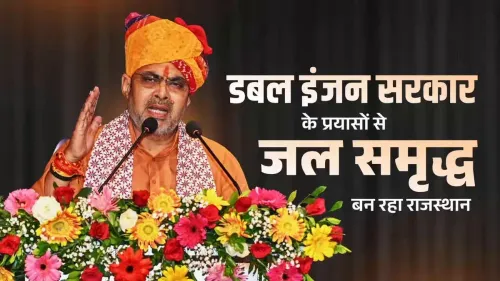
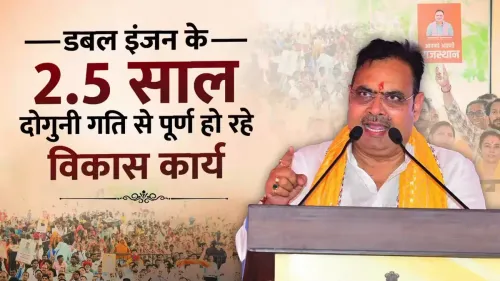
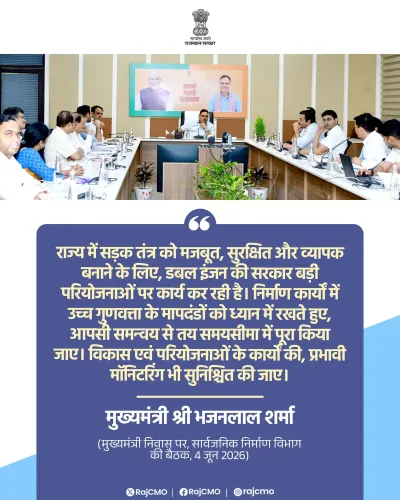
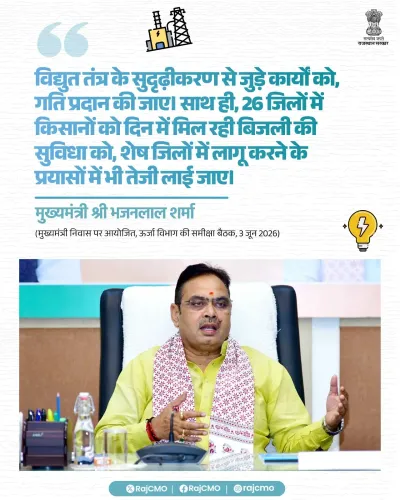
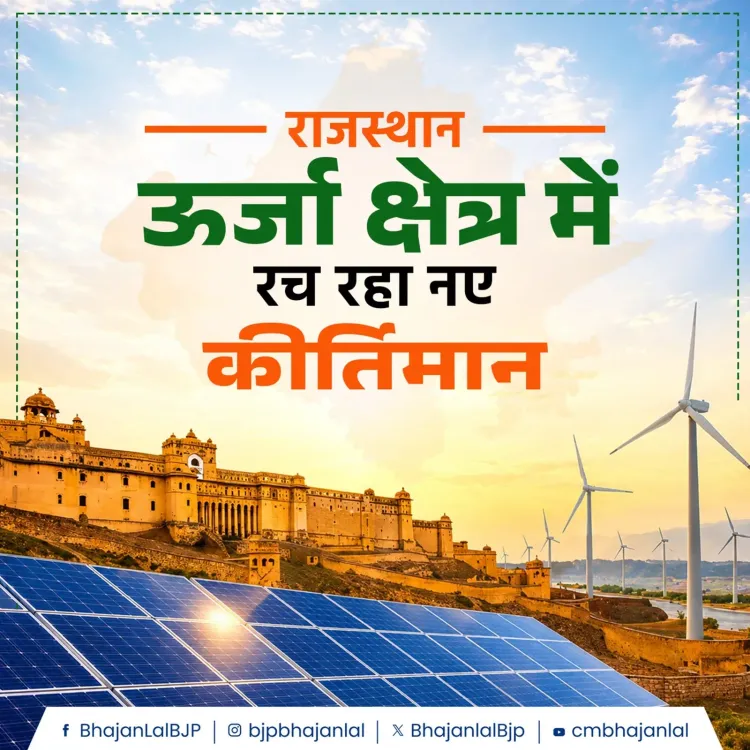
Sharma's post, written in Hindi, declared 'ऊर्जा आत्मनिर्भरता की ओर बढ़ते राजस्थान के मजबूत कदम' ('Strong steps of Rajasthan towards energy self-reliance'). He credited the 'double-engine government' — a BJP phrase denoting aligned state and central administrations — with transforming the state's energy sector. The post was accompanied by four images illustrating the outreach.
The Chief Minister stated that 'unprecedented relief' has reached ordinary residents and farmers through new connections and uninterrupted power supply. The figures cited — more than 11 lakh domestic and more than 2.18 lakh agricultural connections — represent the government's claimed additions since the current administration took office.
Policy Backdrop
The connection drive draws on a lineage of central government electrification programmes. The Pradhan Mantri Sahaj Bijli Har Ghar Yojana (Saubhagya), launched in September 2017, set the framework for universal household electrification across India, with states implementing the scheme through their distribution companies. Rajasthan has historically been an early mover on grid extension under BJP administrations.
For the agricultural sector, the PM-KUSUM scheme, introduced in 2019, promotes solar-powered pumps and decentralised renewable energy for farmers — a key constituency in a predominantly agrarian state like Rajasthan. The 'double-engine' alignment between the state and central government has been cited by the ruling party as enabling faster fund flows and scheme implementation.
Since 2014, the Union government has pursued a 24x7 power supply mandate alongside energy security through central schemes that states co-fund and administer. Rajasthan, with its vast solar potential, has also been a significant contributor to India's renewable energy capacity addition targets.
Stakeholders and Impact
Rural households stand to benefit most directly from the new domestic connections, as electrification enables lighting, cooling, and access to digital services. For farmers, reliable agricultural connections reduce dependence on diesel pumps and lower irrigation costs, directly affecting crop economics.
Distribution companies (discoms) in Rajasthan have historically struggled with high aggregate technical and commercial losses. Any sustained improvement in billing and collection linked to new connections would also carry fiscal implications for the state's power utilities. The broader population of Rajasthan's approximately 8 crore residents is the stated beneficiary of improved supply reliability.
What's Next
The state government's ability to sustain and deepen these gains will depend on capital expenditure allocations for discom infrastructure in forthcoming budget sessions, as well as progress on feeder separation and smart metering projects. Renewable energy purchase obligations and any fresh solar capacity tenders will be closely tracked by energy sector observers.
With the BJP seeking to consolidate its governance record ahead of future electoral cycles, energy access and farmer welfare are likely to remain centrepiece themes in the administration's public communications.
Point of View
Using concrete connection numbers to anchor the abstract 'double-engine government' narrative to tangible outcomes for households and farmers. By invoking PM Modi's guidance, the communication reinforces vertical political alignment — a standard BJP playbook ahead of performance reviews and electoral cycles. The focus on agricultural connections is particularly strategic in Rajasthan, where farmer welfare is a perennial swing factor. Whether the figures translate into sustained supply quality and discom financial health will be the harder, longer-term test of the energy sector's claimed transformation.
NationPress
27 Oct 2026
Frequently Asked Questions
How many new electricity connections has Rajasthan added under CM Bhajan Lal Sharma?
According to CM Bhajan Lal Sharma's post on 11 June 2026, Rajasthan has added more than 11 lakh new domestic electricity connections and over 2.18 lakh new agricultural connections.
What is the double-engine government in Rajasthan?
The 'double-engine government' is a BJP phrase referring to the alignment of the BJP state government in Rajasthan with the BJP-led Union government, which the party argues enables faster implementation of central schemes and fund flows.
What central schemes are driving electricity expansion in Rajasthan?
The key central schemes include Saubhagya (Pradhan Mantri Sahaj Bijli Har Ghar Yojana), launched in 2017 for universal household electrification, and PM-KUSUM, introduced in 2019 to promote solar pumps and decentralised energy for farmers.
Who is Bhajan Lal Sharma?
Bhajan Lal Sharma is the BJP Chief Minister of Rajasthan, sworn in December 2023. He heads the state government that is implementing central and state power sector schemes.
What is PM-KUSUM and how does it help Rajasthan farmers?
PM-KUSUM is a Union government scheme launched in 2019 that promotes solar-powered irrigation pumps for farmers, reducing their dependence on diesel and lowering electricity costs. Rajasthan, with its high solar potential, is a key beneficiary state.