Malad Co-op Bank donates ₹11 lakh to CM Fadnavis relief fund
Synopsis
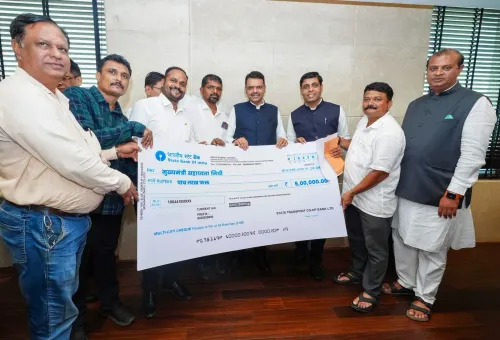
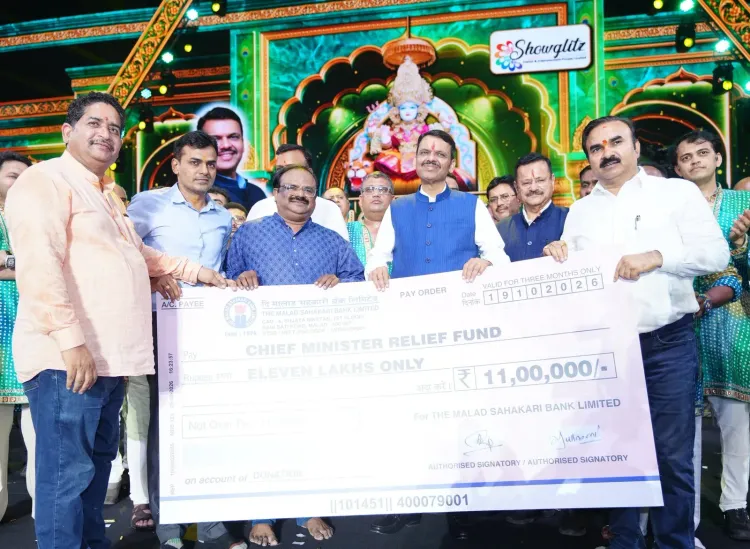
The Malad Co-operative Bank Limited presented a cheque of ₹11,00,000 to Maharashtra CM Devendra Fadnavis in Mumbai for the Chief Minister's Relief Fund, channelling institutional support toward drought-affected farmers across the state.
Key Takeaways
The Malad Co-operative Bank Limited donated ₹11,00,000 to the Maharashtra Chief Minister's Relief Fund .
The cheque was handed over to Chief Minister Devendra Fadnavis in Mumbai on 20 October 2026 .
The funds are earmarked specifically for the assistance of drought-affected farmers in Maharashtra.
CM Fadnavis personally thanked the bank's representatives at the handover.
Cooperative bank donations are a recurring channel supplementing government relief during Maharashtra's periodic drought episodes.
A cooperative bank from Mumbai stepped forward to help Maharashtra's drought-hit farmers on Tuesday, 20 October 2026, when The Malad Co-operative Bank Limited handed over a cheque of ₹11,00,000 to Chief Minister Devendra Fadnavis in Mumbai for the Chief Minister's Relief Fund — a state mechanism designed to channel emergency support to communities battered by drought.
The Chief Minister's Office of Maharashtra announced the donation on X, stating in Marathi: 'दुष्काळग्रस्त शेतकऱ्यांच्या मदतीसाठी मुख्यमंत्री सहाय्यता निधीमध्ये ₹11,00,000 देणगीचा धनादेश सुपूर्द करण्यात आला' ('a cheque of ₹11,00,000 was handed over to the Chief Minister's Relief Fund for the assistance of drought-affected farmers'). CM Fadnavis personally acknowledged the bank's contribution and expressed his gratitude.
Maharashtra's drought belt and the relief fund's role
Maharashtra is among India's states most exposed to recurring drought cycles, particularly across its Marathwada, Vidarbha, and north Maharashtra regions, where rain-fed agriculture leaves millions of farmers vulnerable to crop failure. The Chief Minister's Relief Fund serves as a rapid-response kitty — collecting contributions from institutions, corporates, and individuals and funnelling them toward affected districts when government allocations need to be supplemented.
Cooperative banks occupying a critical space in Maharashtra's rural and semi-urban financial ecosystem have historically contributed to such relief drives. The pattern underscores how civil society institutions, even urban ones like The Malad Co-operative Bank Limited, align with state-led humanitarian responses during agricultural stress.
What the ₹11 lakh cheque signals
While ₹11 lakh is a single contribution in what is typically a broader fundraising effort, its symbolic and practical weight lies in the mechanism it reinforces. Each institutional donation keeps the CM Relief Fund visible and active, encouraging other bodies — corporate, cooperative, and community — to follow. The fund's strength has always been aggregation: many streams feeding one pool for targeted disbursement to distressed farmers.
Eyes will now turn to official updates on how the accumulated donations are disbursed across drought-affected districts, and whether this contribution triggers a broader round of institutional giving ahead of the winter agricultural season.
Point of View
Participatory instrument — one that invites institutional stakeholders into the relief ecosystem rather than relying solely on state expenditure. The gesture also speaks to the political economy of cooperative banking in Maharashtra, where institutions maintain close ties with the ruling establishment. How swiftly and transparently the accumulated fund reaches drought-hit districts will be the true test of this mobilisation.
NationPress
20 Oct 2026
Frequently Asked Questions
What is the Maharashtra Chief Minister's Relief Fund?
The Chief Minister's Relief Fund is a state-level mechanism that collects donations from institutions, corporates, and individuals to disburse emergency financial assistance to communities affected by natural calamities such as droughts and floods in Maharashtra.
How much did The Malad Co-operative Bank donate to CM Fadnavis?
The Malad Co-operative Bank Limited donated ₹11,00,000 (eleven lakh rupees) to the Maharashtra Chief Minister's Relief Fund for drought-affected farmers.
Which areas in Maharashtra are most affected by drought?
Maharashtra's Marathwada, Vidarbha, and north Maharashtra regions are historically the most drought-prone, with rain-fed agriculture leaving farmers in these zones highly vulnerable to crop failure during deficient monsoon years.
Who is Devendra Fadnavis?
Devendra Fadnavis is the Chief Minister of Maharashtra, responsible for overseeing state governance including disaster relief, farmer welfare, and the administration of the Chief Minister's Relief Fund.
Can cooperative banks donate to the Maharashtra CM Relief Fund?
Yes. Cooperative banks, along with corporates and individuals, regularly contribute to the Maharashtra Chief Minister's Relief Fund. Such institutional donations are an established supplementary channel for state drought-relief efforts.