White House: U.S. Citizenship a Privilege to Be Honoured
Synopsis
The White House posted on August 8, 2026 that U.S. citizenship is 'one of the greatest privileges on Earth' and must be treated accordingly — a brief but pointed declaration that signals the executive office's framing on citizenship value and access.
Key Takeaways
The White House posted on August 8, 2026 declaring U.S. citizenship 'one of the greatest privileges on Earth.' The statement carries no attached policy detail but signals a clear executive framing: citizenship as an earned privilege, not a routine status.
Such messaging has appeared across administrations in contexts ranging from naturalization ceremonies to immigration-pathway debates.
The post directly affects the cultural and regulatory environment for naturalization applicants and existing U.S. citizens.
Follow-up executive actions or legislative proposals will determine whether this is a values statement or the start of a policy move.
U.S. citizenship carries weight that few legal statuses in the world can match — and the White House wants that point heard clearly. On Saturday, August 8, 2026, The White House, the official communications account of the Executive Office of the President, posted a pointed declaration on X: 'U.S. citizenship is one of the greatest privileges on Earth, and it should be treated that way.'
A statement with a long history behind it
The phrase lands in a tradition that stretches across administrations. U.S. government communications have repeatedly framed citizenship not merely as a legal status but as a compact — a set of rights paired with responsibilities enshrined in the Constitution. Naturalization ceremonies, presidential addresses, and legislative debates have all returned to this same axis: that becoming or being an American citizen is not a formality but a consequential act.
What makes this particular post notable is its brevity and directness. There is no policy rider attached, no bill cited, no ceremony named. The statement stands alone — a declaration of principle from the executive office, issued without qualification.
Why this framing matters in 2026
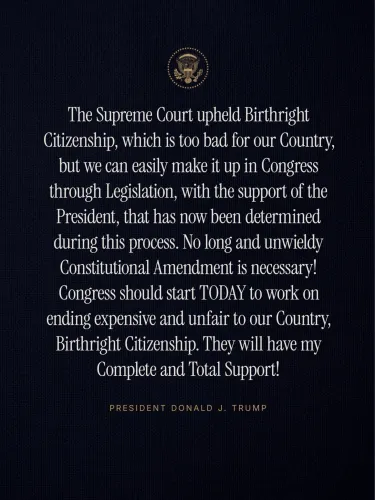
Citizenship policy sits at the intersection of immigration law, national identity, and constitutional rights — one of the most contested terrains in American political life. When the White House frames citizenship as a 'privilege,' it signals a particular orientation: that access to citizenship is earned and exceptional, not automatic or routine. That framing has direct implications for debates over naturalization pathways, birthright citizenship, and the standards applied to applicants seeking to become U.S. nationals.
For the millions of naturalization applicants currently navigating the system — and for the tens of millions of naturalised U.S. citizens already living and working across the country — the tone of executive messaging matters. It shapes the regulatory and cultural environment in which citizenship decisions are made.
What follows this signal
A one-line post from the White House rarely exists in isolation. The linked media in the original post, the timing, and any follow-up executive action or legislative proposals will determine whether this is a statement of values or the opening note of a policy push. The gap between a rhetorical frame and a concrete rule change is wide — but the White House just staked out where it stands on the value of the prize.
Point of View
The language used around citizenship has consistently previewed the regulatory direction that follows. Issued without a specific policy hook, this post functions as a values anchor — establishing the executive's ideological baseline before any concrete rule change is announced. For observers tracking U.S. immigration and citizenship policy, the direction of travel is being signalled clearly.
NationPress
9 Aug 2026
Frequently Asked Questions
What did the White House say about U.S. citizenship in August 2026?
The White House posted on August 8, 2026 that 'U.S. citizenship is one of the greatest privileges on Earth, and it should be treated that way' — a brief, unqualified declaration of the executive office's position on the value of citizenship.
What does it mean when the White House calls citizenship a privilege?
Framing citizenship as a privilege rather than a right signals that the executive views access to citizenship as earned and exceptional. This framing has historically been associated with stricter naturalization standards and tighter immigration pathways.
Does this White House post signal a new immigration policy?
The post does not cite a specific bill or executive order. However, such executive messaging often previews a policy direction. Follow-up statements, linked media, and legislative proposals will clarify whether this is a values statement or the start of a concrete policy push.
Who is affected by U.S. citizenship policy statements?
Naturalization applicants, existing U.S. citizens — including tens of millions of naturalised Americans — and immigrants on pathways to citizenship are all directly affected by the tone and direction of executive messaging on citizenship.
How has U.S. citizenship been framed by past administrations?
Across administrations, U.S. government communications have consistently described citizenship as a significant legal status tied to both constitutional rights and civic responsibilities, often invoked at naturalization ceremonies and during immigration-policy debates.