CM Bhajan Lal Slams Congress on Cooperatives, Backs BJP's 'Sahakar Se Samriddhhi'
Synopsis
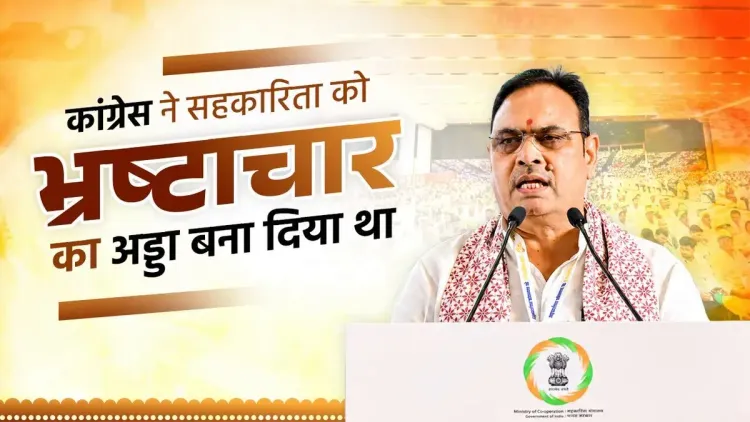
Rajasthan Chief Minister Bhajan Lal Sharma on 6 July 2026 accused Congress of corrupting the cooperative sector and credited the BJP's 'Sahakar Se Samriddhhi' mantra with giving the country a new direction, marking five years of the cooperative reform push.
Key Takeaways
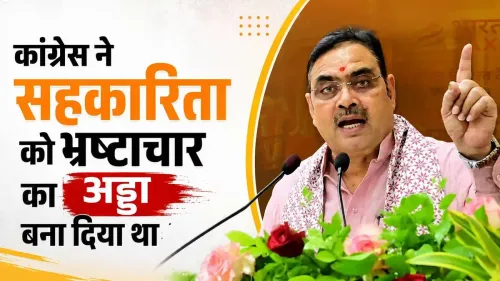
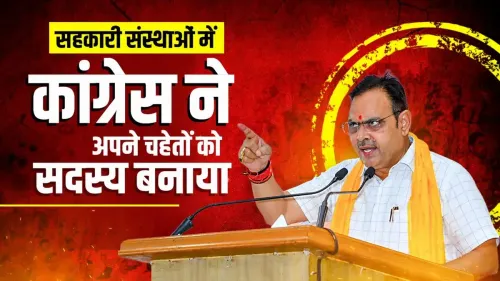
CM Bhajan Lal Sharma accused Congress of turning cooperative institutions into a 'den of corruption' in a post on 6 July 2026 .
He credited the BJP government's 'Sahakar Se Samriddhhi' mantra with providing a new direction to the country and Rajasthan .
The post was tagged #sahkarsesamriddhike5saal , indicating a BJP campaign marking five years of cooperative reform.
The Ministry of Cooperation was created by the Government of India in July 2021 — the first standalone cooperative ministry in India's history.
Cooperative societies serving rural farmers are the primary beneficiaries and stakeholders of the policy shift being highlighted.
State budget allocations and new cooperative legislation in Rajasthan's 2026-27 session will be key indicators of on-the-ground reform progress.
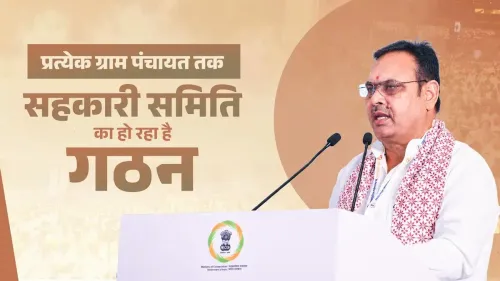
Rajasthan Chief Minister Bhajan Lal Sharma on Monday, 6 July 2026, took a sharp dig at the Congress party over its management of the cooperative sector, asserting that the BJP government has given the country and the state a new direction through the mantra of 'Sahkariyta se Samriddhhi' (Prosperity through Cooperation). The post, shared on his official X account under the hashtag #sahkarsesamriddhike5saal, accompanied a video and drew a pointed contrast between the two parties' stewardship of cooperatives.
Context
In his post, CM Sharma wrote: 'Kaangres ne jise bhrashtaachaar ka adda banaaya, Bhaajpa sarkaar ne use Sahakar se Samriddhhi ka naya mantra dekar desh aur Pradesh ko ek nayi disha mein aage badhaaya hai' — meaning, 'What Congress turned into a den of corruption, the BJP government has transformed by giving the country and the state a new direction with the mantra of Prosperity through Cooperation.' The statement is a direct indictment of Congress-era governance of cooperative institutions, framing the BJP's approach as a corrective and reformative turn.
The hashtag #sahkarsesamriddhike5saal — translating to 'Five years of Sahakar Se Samriddhhi' — signals a broader BJP campaign marking a milestone in its cooperative reform push, though specific five-year data for Rajasthan post-2023 remain to be officially tabulated.
Policy Backdrop
The slogan 'Sahakar Se Samriddhhi' (Prosperity through Cooperation) has been a cornerstone of the Bharatiya Janata Party's rural economic agenda since the Government of India created a dedicated Ministry of Cooperation in July 2021 — the first such standalone ministry in independent India's history. The ministry was established with the stated objective of deepening the cooperative movement, streamlining regulations, and integrating cooperatives into the mainstream rural economy.
Since 2014, the BJP-led central government has consistently positioned cooperative societies as a vehicle for rural economic growth, and BJP-ruled states have aligned their state-level policy narratives accordingly. Rajasthan, which returned to BJP rule in December 2023 with Bhajan Lal Sharma as Chief Minister, has been part of this broader federal cooperative reform architecture.
Stakeholders and Impact
Cooperative societies and rural farmers are the primary stakeholders in this policy space. Cooperative institutions in India — spanning credit, dairy, marketing, and input supply — serve tens of millions of rural households, making governance of this sector a politically and economically significant issue. Any shift in policy direction, whether in oversight, funding, or legislative framework, directly affects the livelihoods of farmers and rural communities across Rajasthan.
The Indian National Congress, as the principal opposition party both at the Centre and in Rajasthan, is squarely targeted by CM Sharma's remarks. The BJP has long argued that Congress-era management of cooperative bodies was marked by political patronage and financial irregularities, a charge the Congress has consistently denied.
What's Next
Observers will watch the Rajasthan state budget allocations for 2026-27 and any new cooperative legislation tabled during the upcoming assembly session for concrete indicators of the government's reform commitments. At the national level, a broader cooperative policy review is also anticipated, which could further shape the contours of the 'Sahakar Se Samriddhhi' agenda. CM Sharma's post suggests the BJP intends to keep cooperative reform as a visible political and policy priority heading into the next electoral cycle.
Point of View
Anchored in the 2021 Ministry of Cooperation, gives the BJP a durable institutional narrative to deploy in rural-heavy states like Rajasthan. The five-year hashtag campaign suggests coordinated national messaging rather than a standalone state-level statement. With Rajasthan's next assembly election still years away, this signals the BJP is already building its rural economic record as a long-term electoral asset.
NationPress
5 Oct 2026
Frequently Asked Questions
What did Rajasthan CM Bhajan Lal Sharma say about Congress and cooperatives?
CM Bhajan Lal Sharma said that what Congress turned into a 'den of corruption,' the BJP government has transformed through the mantra of 'Sahakar Se Samriddhhi,' giving the country and Rajasthan a new direction.
What is 'Sahakar Se Samriddhhi'?
'Sahakar Se Samriddhhi' means 'Prosperity through Cooperation.' It is the BJP-led central government's guiding slogan for cooperative sector reform, launched alongside the creation of the Ministry of Cooperation in July 2021.
When was India's Ministry of Cooperation created?
The Ministry of Cooperation was created by the Government of India in July 2021, making it the first standalone ministry dedicated to the cooperative sector in independent India's history.
What does the hashtag #sahkarsesamriddhike5saal mean?
The hashtag translates to 'Five years of Sahakar Se Samriddhhi' and indicates a BJP campaign marking five years of its cooperative reform initiative at the national level.
Who are the main beneficiaries of cooperative sector reforms in Rajasthan?
Rural farmers and cooperative society members are the primary beneficiaries, as cooperative institutions covering credit, dairy, and agricultural marketing directly affect millions of rural households across Rajasthan.