Khattar Plans RWA-Led Redevelopment to Fix Urban Colonies
Synopsis
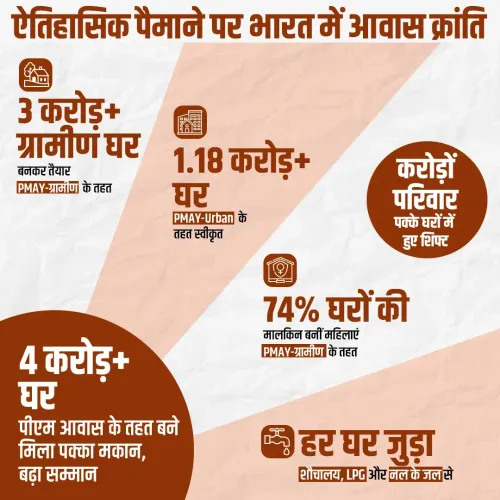
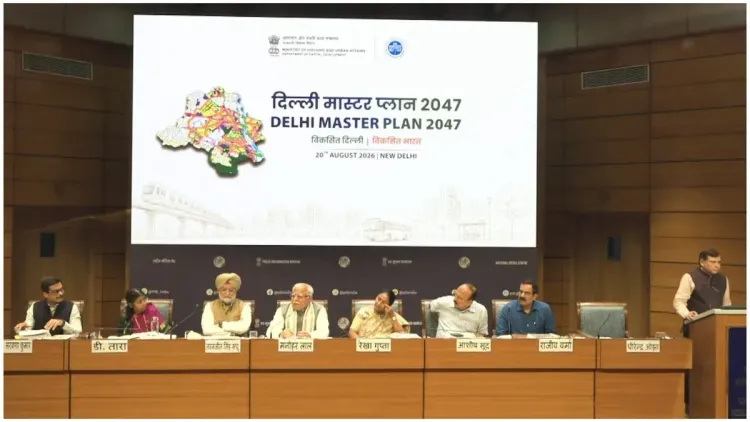
Union Minister Manohar Lal Khattar has announced that Resident Welfare Associations will be registered and encouraged to adopt a redevelopment policy modelled on PMAY-U's in-situ slum redevelopment vertical, aiming to make residential colonies more habitable without large-scale relocation.
Key Takeaways
Union Minister Manohar Lal Khattar announced on 20 August 2026 a plan to register RWAs and drive colony redevelopment through them.
The approach is modelled on the in-situ redevelopment vertical under Pradhan Mantri Awas Yojana-Urban (PMAY-U) , launched in 2015 .
In-situ redevelopment uses existing land as a resource, enabling rebuilding without relocating residents.
RWA registration is positioned as the foundational step to give colonies legal standing for formal redevelopment agreements.
Specific policy contours, financing mechanisms, and timelines have not yet been made public.
States such as Haryana and Delhi are likely early candidates for pilot projects under this framework.
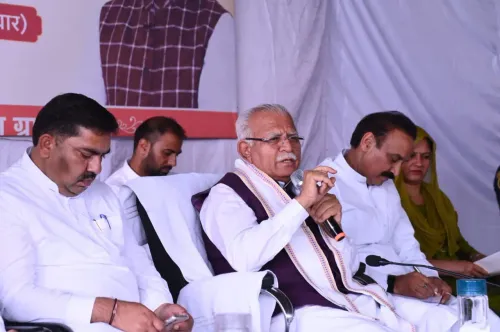
India's residential colonies — millions of them ageing, underserviced, and slipping into disrepair — may soon have a new lifeline. Union Minister of Housing and Urban Affairs Manohar Lal Khattar on Thursday, 20 August 2026 outlined a plan to register Resident Welfare Associations (RWAs) and use them as the engine for colony-level redevelopment, drawing directly from the in-situ redevelopment model already embedded in central housing policy.
Khattar's post, in Hindi, states: 'To make colonies into habitable areas, RWAs will be registered and motivated to adopt a redevelopment policy on the lines of the in-situ redevelopment policy.' The framing is deliberate — it signals that the government does not intend to bulldoze and relocate, but to rebuild from within.
What In-Situ Redevelopment Actually Means
The phrase 'in-situ' is doing heavy lifting here. Under Pradhan Mantri Awas Yojana-Urban (PMAY-U), launched in 2015, in-situ slum redevelopment is one of four core verticals — it uses the land where people already live as a resource, bringing in private developers to construct pucca housing without uprooting communities. Khattar's proposal appears to adapt this logic for the broader universe of residential colonies, not just slums.
The distinction matters. Unauthorised and semi-regularised colonies across Delhi, Haryana, and other states have long struggled with poor drainage, crumbling roads, and absent civic infrastructure — but their residents are not slum-dwellers in the formal sense. Existing schemes have often passed them by. Routing redevelopment through registered RWAs could give these colonies a formal identity and a seat at the table with municipal bodies.
Why RWA Registration Is the Pivot
Registration is not a bureaucratic footnote — it is the gateway. An unregistered RWA has no legal standing to sign agreements, receive funds, or engage with state agencies on redevelopment plans. By making registration the first step, the ministry is essentially creating the institutional infrastructure before the policy arrives.
Khattar, who as Chief Minister of Haryana oversaw urban regularisation drives in the state, is familiar with how informal colonies resist top-down intervention but respond to community-led models. The RWA route sidesteps the political friction of forced redevelopment by making residents the formal proponents of their own colony's transformation.
The Policy Gap Still to Be Filled
The specific contours of the proposed redevelopment policy for RWAs — financing mechanisms, developer incentives, floor-area-ratio norms, and any implementation timeline — have not yet been made public. What exists today is a direction, not a detailed blueprint. State-level guidelines and pilot projects, particularly in Haryana and the National Capital Region, will be the real test of whether the intent translates into liveable streets.
If the model works, it could quietly redraw how India thinks about urban renewal — not as a crisis intervention for the very poor, but as a routine, community-anchored process for the vast middle tier of residential India that has always fallen between the cracks.
Point of View
Politically significant universe of semi-regularised urban colonies. By making RWA registration the entry point, the ministry is building institutional scaffolding before the policy itself is finalised — a sequencing that could accelerate adoption if state governments follow through. The move also reflects a pattern visible across BJP-governed states: devolving urban renewal to community bodies to reduce political friction and bypass the delays of top-down municipal execution. The critical question is whether the Centre will back the intent with a concrete financing and regulatory framework, or leave states to improvise.
NationPress
5 Oct 2026
Frequently Asked Questions
What did Manohar Lal Khattar announce about RWAs and redevelopment?
Khattar announced that Resident Welfare Associations will be registered and motivated to adopt a redevelopment policy modelled on the in-situ redevelopment vertical of Pradhan Mantri Awas Yojana-Urban, with the goal of making residential colonies more habitable.
What is in-situ redevelopment under PMAY-Urban?
In-situ redevelopment is one of four verticals under Pradhan Mantri Awas Yojana-Urban (launched 2015) that redevelops areas — typically slums — in their existing location using the land as a resource and private developer participation, without relocating residents.
Why does RWA registration matter for colony redevelopment?
A registered RWA has legal standing to sign agreements, engage with municipal bodies, and participate formally in redevelopment plans. Without registration, colonies have no institutional identity to interface with government schemes.
Which states could be early pilots for this RWA redevelopment policy?
Haryana and the National Capital Region are the most likely early candidates, given Khattar's background as Chief Minister of Haryana and the large number of unauthorised and semi-regularised colonies in these areas.
Has the government released details of the new RWA redevelopment policy?
As of 20 August 2026, the specific policy contours — including financing mechanisms, developer incentives, floor-area-ratio norms, and implementation timelines — have not been made public. The announcement outlines a direction, not a finalised blueprint.