Khattar Hails PMAY's 4 Crore Homes, 12 Years of Welfare
Synopsis
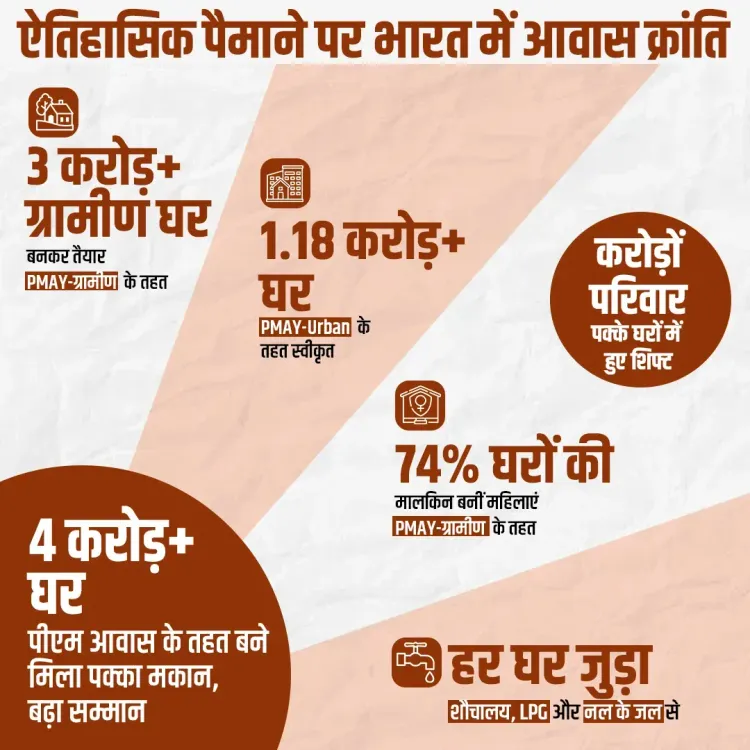
Union Housing Minister Manohar Lal Khattar marked 12 years of the Modi government on June 8, citing over 4 crore homes built under PMAY and convergent delivery of toilets, LPG, and tap water to poor families as proof of transformative, dignity-driven welfare.
Key Takeaways
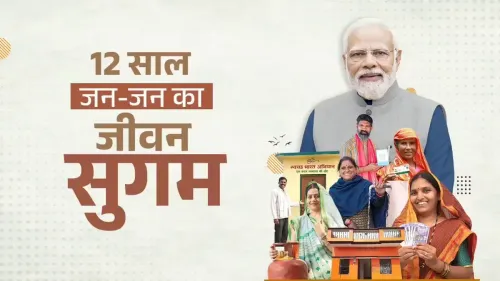
Union Minister Manohar Lal Khattar posted on June 8, 2026 under #12YearsOfGaribKalyan to mark 12 years of the Modi government.
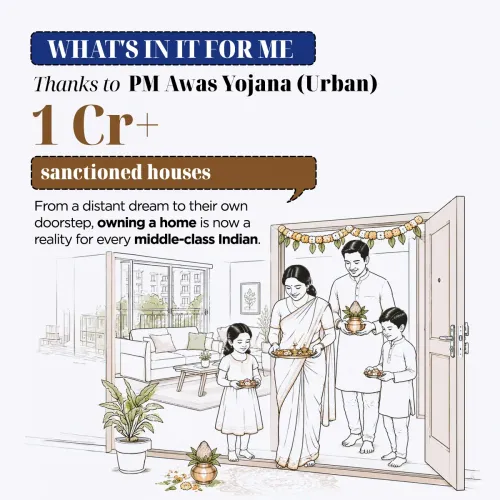
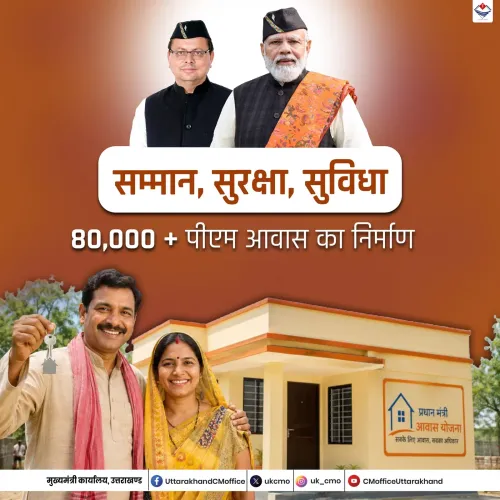
He cited the construction of over 4 crore homes under the Pradhan Mantri Awas Yojana as a flagship achievement.
Homes were equipped with toilets ( Swachh Bharat Mission ), LPG ( Pradhan Mantri Ujjwala Yojana ), and piped water ( Jal Jeevan Mission ) as part of a convergence model.
Khattar described the Garib Kalyan model as an 'inspiring example for the entire world,' underscoring its claimed international relevance.
Updated PMAY completion data and parliamentary scrutiny of scheme convergence are expected in the upcoming monsoon session.
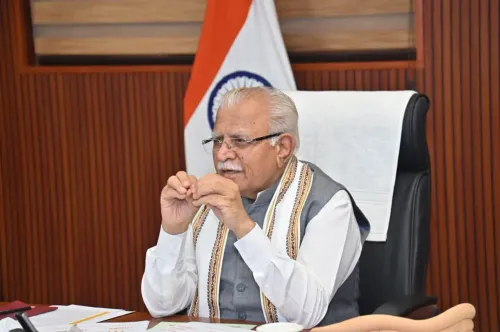
Union Minister of Housing and Urban Affairs Manohar Lal Khattar on Monday, June 8, 2026, credited Prime Minister Narendra Modi's leadership for transforming India's housing landscape, citing the construction of over 4 crore homes under the Pradhan Mantri Awas Yojana (PMAY) alongside delivery of toilets, LPG connections, and piped water to crores of families.
Context
Posting under the hashtag #12YearsOfGaribKalyan (12 Years of Welfare for the Poor), Khattar wrote that under Modi's leadership, 'unprecedented transformation' had come to India's residential sector. He noted that equipping newly built homes with toilets, LPG, and tap water had brought 'dignity, security, and new hope' to crores of families. The post marks the completion of 12 years of the current central government's tenure and is part of a broader BJP-led campaign commemorating welfare milestones since 2014.
Policy Backdrop
Pradhan Mantri Awas Yojana was launched in June 2015 with the aim of providing pucca (permanent) housing to economically weaker sections in both rural and urban areas. The scheme has been implemented in convergence with the Swachh Bharat Mission — initiated in October 2014 — which targeted universal sanitation coverage through toilet construction.
Clean cooking fuel was addressed through the Pradhan Mantri Ujjwala Yojana, announced in May 2016, which extended free LPG connections to below-poverty-line households, particularly women. Piped drinking water delivery to rural homes was taken up under the Jal Jeevan Mission, announced in August 2019. Together, these four schemes form the backbone of what the government has described as an integrated, convergence-based model of poverty alleviation — ensuring that a new house is not merely a structure but a unit equipped with basic amenities.
Stakeholders and Impact
The primary beneficiaries of this convergence model are rural and urban poor families from economically weaker sections who previously lacked access to formal housing, sanitation, clean fuel, or safe drinking water. Khattar's post frames this as a shift from transactional welfare to dignity-driven provisioning — a distinction the BJP has consistently emphasised in its political messaging around Garib Kalyan (welfare for the poor).
The minister also highlighted the model's international resonance, stating that the 'model of Garib Kalyan and public participation has today become an inspiring example for the entire world.' The government has previously presented its direct-benefit and asset-provisioning approach at multilateral forums as a replicable template for developing nations.
What's Next
Attention will now turn to updated PMAY completion data and any parliamentary committee reviews of scheme convergence expected in the upcoming monsoon session of Parliament. The #12YearsOfGaribKalyan campaign is likely to see continued amplification from senior BJP leaders across platforms in the days ahead. How the government presents verified, audited completion numbers for PMAY will be closely watched by policy observers and opposition parties alike.
Point of View
Arriving precisely as the BJP marks 12 years in power at the Centre and seeks to consolidate its welfare-delivery narrative ahead of future electoral cycles. By bundling PMAY with Ujjwala, Jal Jeevan Mission, and Swachh Bharat, the government reinforces a 'whole-household' framing that goes beyond brick-and-mortar housing numbers. The invocation of global admiration for the Garib Kalyan model is a recurring rhetorical device used to elevate domestic welfare programmes into a foreign-policy and soft-power asset. Whether independent audits corroborate the 4-crore completion figure will determine how durable this narrative proves to be in parliamentary and public scrutiny.
NationPress
24 Oct 2026
Frequently Asked Questions
What is Pradhan Mantri Awas Yojana and how many homes have been built?
Pradhan Mantri Awas Yojana is a central government scheme launched in June 2015 to provide permanent housing to economically weaker sections. Union Minister Manohar Lal Khattar has cited over 4 crore homes constructed under the scheme, though independent verification of this figure is pending.
What is the #12YearsOfGaribKalyan hashtag about?
#12YearsOfGaribKalyan marks 12 years of the Narendra Modi-led central government and is used by BJP leaders to highlight welfare achievements such as housing, sanitation, clean fuel, and piped water delivery since 2014.
Which schemes are linked to PMAY homes for toilets, LPG, and water?
Toilets in PMAY homes are provided under the Swachh Bharat Mission, LPG connections under Pradhan Mantri Ujjwala Yojana, and piped drinking water under the Jal Jeevan Mission — all converged to equip each new house with basic amenities.
Who is Manohar Lal Khattar?
Manohar Lal Khattar is a senior BJP leader who served as Chief Minister of Haryana before becoming Union Minister of Power and Housing and Urban Affairs in the Modi cabinet.
What comes next for PMAY in 2026?
Policy observers are watching for updated and audited PMAY completion data and parliamentary committee reviews of scheme convergence, both expected to feature in the upcoming monsoon session of Parliament.