Rijiju Marks 12 Years of Modi Govt Welfare Schemes
Synopsis
Union Parliamentary Affairs Minister Kiren Rijiju marked 12 years of PM Modi's government on 9 June 2026, citing PMAY, Jal Jeevan Mission, Ayushman Bharat, Jan Dhan, MUDRA, UPI, and infrastructure expansion as defining welfare pillars of the BJP-led administration.
Key Takeaways
Union Minister Kiren Rijiju posted on 9 June 2026 marking 12 years of the Modi-led central government under the hashtag #12YearsOfSeva .
He cited Pradhan Mantri Awas Yojana (launched 2015 ) for pucca housing and Jal Jeevan Mission (launched 2019 ) for piped tap water to rural households as key welfare pillars.
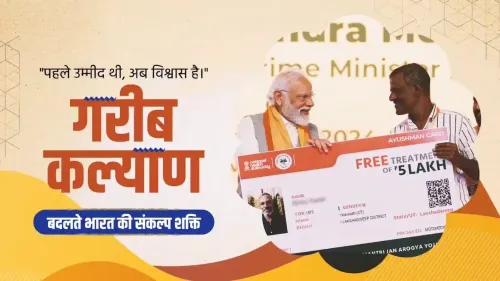
Ayushman Bharat (launched 2018 ) provides health insurance of up to Rs 5 lakh per family; Jan Dhan Yojana (launched August 2014 ) brought the unbanked into formal finance.
UPI , rolled out in 2016 by the National Payments Corporation of India, is highlighted as a digital empowerment achievement of the same governance era.
The BJP's welfare communication model combines technology-mediated delivery, Aadhaar linkage, and direct benefit transfers as its defining governance approach.
Outcome budget data for PMAY , Jal Jeevan Mission , and Ayushman Bharat in 2025-26 and 2026-27 will be the key measure of on-ground delivery progress.
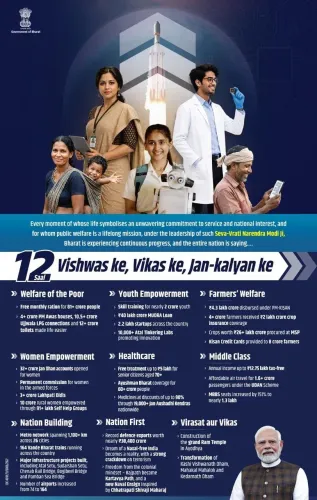
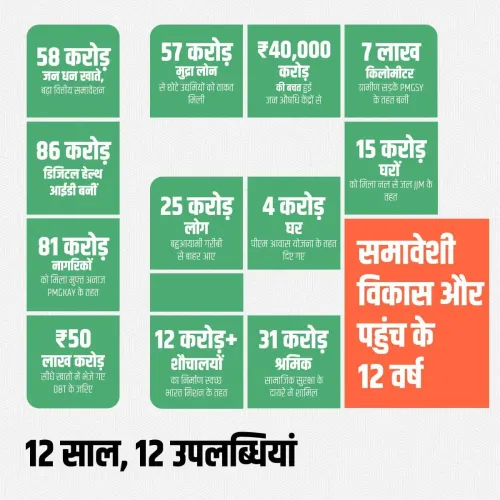
Union Parliamentary Affairs Minister Kiren Rijiju on Tuesday, 9 June 2026 credited Prime Minister Narendra Modi's 12-year tenure with transforming government welfare initiatives into what he called a 'strong guarantee of a better life for crores of Indians,' listing flagship schemes spanning housing, water, health, finance, and digital infrastructure.
Context
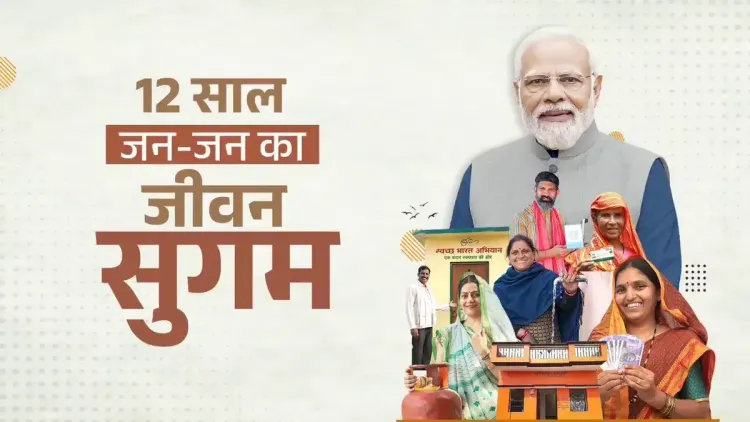
Posting under the hashtag #12YearsOfSeva, Rijiju wrote in Hindi: 'बीते 12 वर्षों में माननीय प्रधानमंत्री श्री नरेंद्र मोदी जी के नेतृत्व में जन-कल्याणकारी योजनाएँ केवल सरकारी पहल नहीं रहीं, बल्कि करोड़ों भारतीयों के बेहतर जीवन की मजबूत गारंटी बनी हैं' — ('In the past 12 years, under the leadership of Prime Minister Narendra Modi, welfare schemes have not remained mere government initiatives but have become a strong guarantee of a better life for crores of Indians.'). The post marks the completion of 12 years of the Modi-led central government, which assumed office in May 2014.
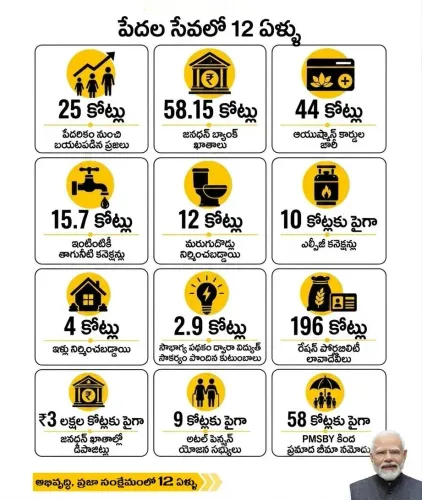
Rijiju enumerated a cluster of schemes: Pradhan Mantri Awas Yojana for pucca housing, Jal Jeevan Mission for piped tap water, Ujjwala Yojana for cooking gas, Ayushman Bharat for health coverage, Jan Dhan and MUDRA Yojana for economic empowerment, UPI for digital payments, and road and airport expansion for improved connectivity. He described these collectively as '12 years of public service turning into public welfare, and of trust turning into development.'
Policy Backdrop
Pradhan Mantri Awas Yojana, launched in 2015, was designed to provide pucca houses to rural and urban poor households. Jal Jeevan Mission, announced in 2019, set out to deliver piped tap water connections to every rural household in the country — a significant infrastructure undertaking across India's vast hinterland.
Ayushman Bharat, introduced in 2018, offers health insurance cover of up to Rs 5 lakh per family annually, targeting low-income households. Pradhan Mantri Jan Dhan Yojana, the earliest of the cluster, was launched in August 2014 to bring the unbanked population into the formal financial system, laying the groundwork for subsequent direct benefit transfers and digital payment adoption. UPI, built by the National Payments Corporation of India and rolled out in 2016, has since scaled into one of the world's largest real-time payment platforms.
The broader policy model has relied on technology-mediated delivery — combining Aadhaar linkage, direct benefit transfers, and measurable household-level outcomes — rather than traditional input-based public spending. The Digital India programme, launched in July 2015, provided the overarching policy umbrella under which UPI and other digital services expanded.
Stakeholders and Impact
The schemes cited by Rijiju target overlapping but distinct beneficiary groups: rural households and urban poor families for housing and water, women from low-income households for Ujjwala cooking gas connections, the unbanked population for Jan Dhan accounts, and small entrepreneurs for MUDRA credit. Taken together, they represent the central government's multi-pronged approach to basic-services delivery over its two consecutive terms.
Senior BJP leaders across the country have used the #12YearsOfSeva occasion to amplify the government's welfare record, framing the anniversary as a political and governance milestone ahead of future electoral cycles.
What's Next
Analysts and parliamentary watchers will look to the forthcoming outcome budgets for 2025-26 and 2026-27 for verified physical and financial progress data on PMAY, Jal Jeevan Mission, and Ayushman Bharat. Possible new phases, enhanced fund allocations, or scheme expansions could be announced in the next full Budget Session of Parliament. The government's ability to demonstrate last-mile delivery on these programmes will remain central to its governance narrative going forward.
Point of View
Water, health, finance, and digital infrastructure, the statement is designed to appeal across income and geographic segments simultaneously. The timing, at the 12-year mark, signals an intensification of the party's governance-achievement communication ahead of future electoral contests. Whether the schemes' on-ground outcomes match the political narrative will be tested as outcome-budget data becomes available.
NationPress
22 Sept 2026
Frequently Asked Questions
What is #12YearsOfSeva about?
#12YearsOfSeva is a BJP-led social media campaign marking 12 years of the Narendra Modi government, which came to power in May 2014. Senior leaders including Union Minister Kiren Rijiju used the hashtag on 9 June 2026 to highlight flagship welfare schemes launched during this period.
What welfare schemes did Kiren Rijiju mention in his post?
Rijiju cited Pradhan Mantri Awas Yojana (housing), Jal Jeevan Mission (piped water), Ujjwala Yojana (cooking gas), Ayushman Bharat (health insurance), Jan Dhan Yojana (financial inclusion), MUDRA Yojana (small business credit), UPI (digital payments), and road and airport expansion.
What is Ayushman Bharat and who does it cover?
Ayushman Bharat is a national health protection scheme launched in 2018 that provides health insurance cover of up to Rs 5 lakh per family per year, primarily targeting low-income and vulnerable households across India.
What is Jal Jeevan Mission?
Jal Jeevan Mission is a central government scheme announced in 2019 with the goal of providing piped tap water connections to every rural household in India, addressing a long-standing gap in basic water infrastructure.
Who is Kiren Rijiju?
Kiren Rijiju is a senior BJP leader from Arunachal Pradesh who serves as Union Minister of Parliamentary Affairs and Minister of Minority Affairs. He has held multiple cabinet portfolios under the Modi government and is a prominent face of the ruling party in the Northeast.