Rijiju marks Modi's third-term oath anniversary, cites 12 years of welfare gains
Synopsis
Union Parliamentary Affairs Minister Kiren Rijiju marked PM Modi's third consecutive oath anniversary on 9 June 2026, citing twelve years of welfare delivery — housing, free ration, health cover, and LPG connections — as evidence that a developed India by 2047 is within reach under the NDA government's leadership.
Key Takeaways
Kiren Rijiju posted on 9 June 2026 marking the second anniversary of PM Modi's third-term oath , using the hashtag #12YearsOfSeva .
PM Narendra Modi was first sworn in on 26 May 2014 and took oath for a third consecutive term in June 2024 .
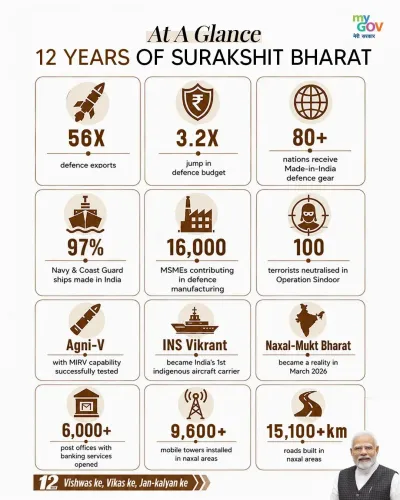
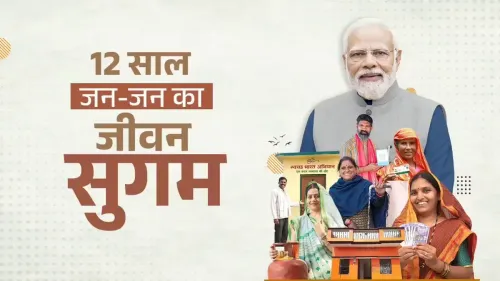
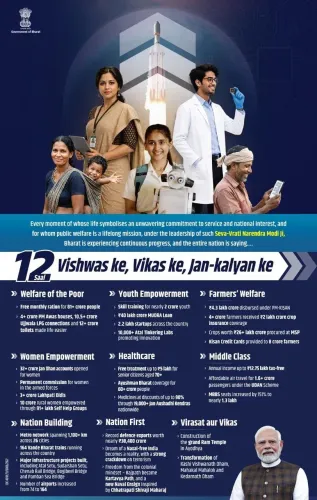
Rijiju cited pucca houses, free ration, health security, LPG connections, and modern infrastructure as key achievements of the 12-year period.
Referenced schemes include PM Awas Yojana (2015) , Ujjwala Yojana (2016) , Ayushman Bharat (2018) , and PM Garib Kalyan Anna Yojana .
Rijiju framed the record as proof that the Viksit Bharat (Developed India) 2047 goal is 'no longer distant.' The post continues the NDA's consistent messaging of simultaneous welfare delivery and infrastructure growth across all three terms.
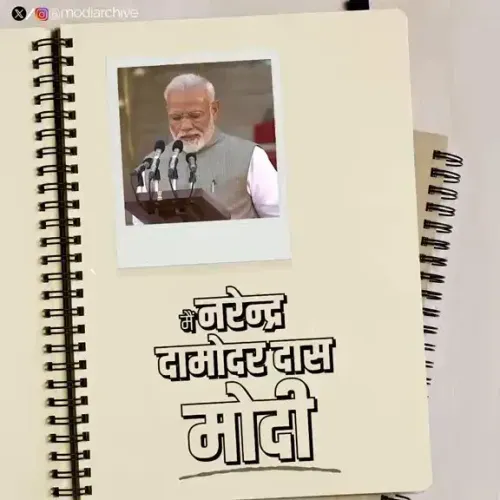
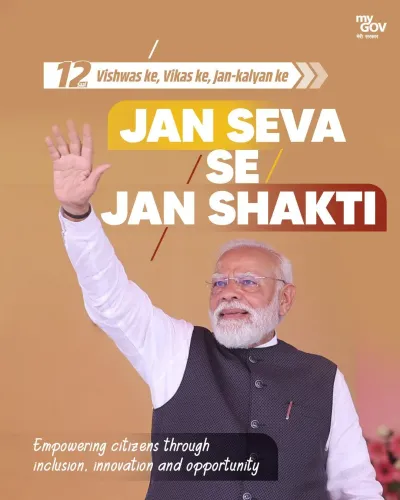
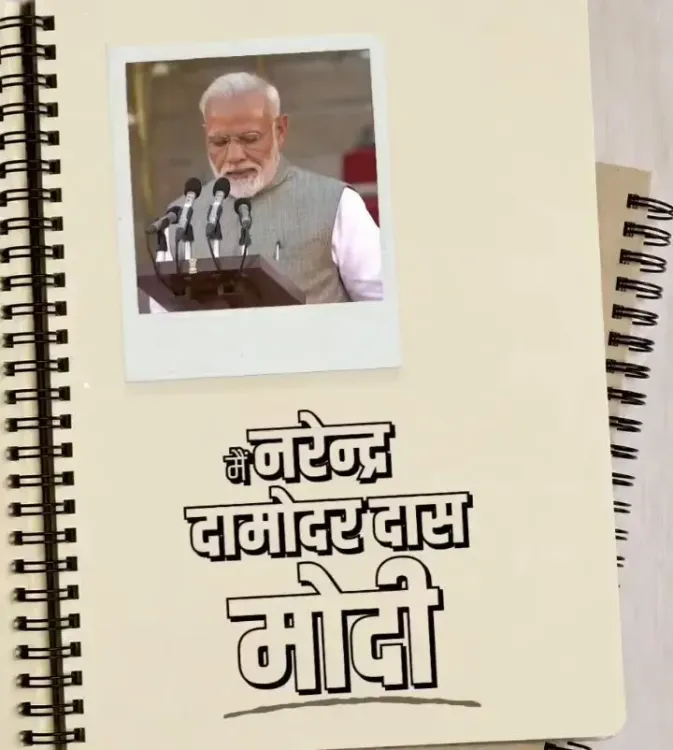
Union Parliamentary Affairs Minister Kiren Rijiju on Tuesday, 9 June 2026 took to X to mark the anniversary of Prime Minister Narendra Modi being sworn in for a third consecutive term, calling it a moment that 'created a new history of public trust.' The post, tagged #12YearsOfSeva, highlighted welfare delivery and infrastructure growth as the defining achievements of the past twelve years of Modi-led governance.
Context
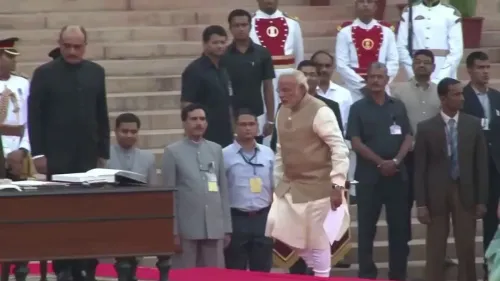
Narendra Modi was first sworn in as Prime Minister on 26 May 2014, leading the National Democratic Alliance to successive majorities in 2014, 2019, and 2024. The third-term oath ceremony in June 2024 was seen as a significant political milestone, making Modi one of the few Indian Prime Ministers to lead three consecutive governments. Rijiju's post commemorates that occasion on its second anniversary.
Writing in Hindi, Rijiju stated: 'आज ही के दिन माननीय श्री नरेंद्र मोदी जी ने लगातार तीसरी बार प्रधानमंत्री पद की शपथ लेकर जनविश्वास का नया इतिहास रचा था' — ('On this very day, the honourable Narendra Modi ji, by taking oath as Prime Minister for a third consecutive time, created a new history of public trust.')
Policy Backdrop
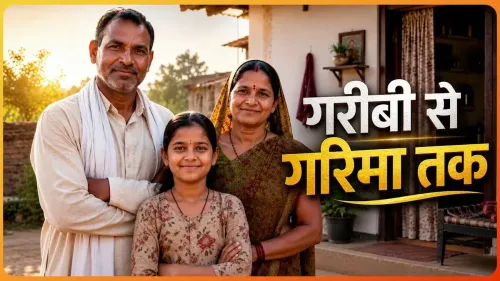
Rijiju's post specifically cited ground-level interventions: pucca (permanent) houses, free ration, health security, gas connections, modern infrastructure, and fast economic growth as the pillars of change for crores of citizens. These references map directly onto flagship central schemes that have defined the NDA government's welfare architecture since 2014.
The Pradhan Mantri Awas Yojana, launched in 2015, targets permanent housing for rural and urban poor households. The Pradhan Mantri Ujjwala Yojana, started on 1 May 2016, extended LPG connections to women from below-poverty-line families. The Ayushman Bharat Pradhan Mantri Jan Arogya Yojana, rolled out in September 2018, provides health cover of up to Rs 5 lakh per family annually. The PM Garib Kalyan Anna Yojana distributes 5 kg of free foodgrain per person per month to eligible ration card holders.
The messaging pattern — presenting simultaneous progress on welfare delivery and physical infrastructure — has been a consistent feature of NDA government communication across all three terms, anchored to the long-term goal of a Viksit Bharat (Developed India) by 2047.
Stakeholders and Impact
The schemes cited by Rijiju primarily target low-income households, rural poor communities, and women beneficiaries across India. The convergence of housing, nutrition, health, and energy access under a single governance narrative has been central to the BJP's political outreach in both rural and semi-urban constituencies.
Rijiju concluded his post with a pointed assertion: 'यह सुबूत है कि यदि साफ नीयत और राष्ट्रहित सर्वोपरि की भावना से अथक परिश्रम किया जाये तो विकसित भारत का लक्ष्य अब दूर नहीं है' — ('This is proof that if tireless work is done with clean intent and the nation's interest as the supreme priority, the goal of a developed India is no longer distant.')
What's Next
With Parliament's monsoon session approaching, debates over welfare scheme allocations and infrastructure project completion timelines are expected to intensify. The anniversary messaging from senior BJP leaders like Rijiju signals the party's intent to frame the 2024–2029 term as a continuation of a twelve-year developmental arc rather than a fresh mandate.
Periodic reviews of flagship scheme saturation targets and GDP growth projections will remain the key metrics against which the 'Viksit Bharat 2047' goal is measured in parliamentary and public discourse.
Point of View
Using welfare scheme milestones to reinforce the party's core governance narrative ahead of a likely active parliamentary session. By anchoring twelve years of policy delivery to a single date, the messaging attempts to build an unbroken continuity from 2014 through to the Viksit Bharat 2047 horizon. The invocation of 'clean intent' and 'nation first' is also a subtle contrast-draw against opposition narratives on governance quality. For the NDA, these commemorative posts serve a dual purpose: base consolidation and a public accountability ledger rolled into one.
NationPress
24 Oct 2026
Frequently Asked Questions
When did Narendra Modi take oath as Prime Minister for the third time?
Narendra Modi was sworn in as Prime Minister for a third consecutive term in June 2024 , following the NDA's victory in the general elections. He was first sworn in on 26 May 2014 .
What is #12YearsOfSeva?
#12YearsOfSeva is a hashtag used by BJP leaders to mark twelve years of Narendra Modi's Prime Ministership, highlighting welfare and infrastructure achievements from 2014 onwards.
What welfare schemes did Kiren Rijiju reference in his post?
Rijiju referenced permanent housing under PM Awas Yojana , free ration under PM Garib Kalyan Anna Yojana , health cover under Ayushman Bharat , and LPG connections under PM Ujjwala Yojana .
What is Viksit Bharat 2047?
Viksit Bharat (Developed India) 2047 is the NDA government's stated long-term goal of transforming India into a fully developed nation by the centenary of its independence.
Who is Kiren Rijiju?
Kiren Rijiju is a senior BJP leader from Arunachal Pradesh who currently serves as Union Minister of Parliamentary Affairs and Minister of Minority Affairs in the Modi government.