Rijiju Hails 12 Years of Modi Govt Welfare Delivery
Synopsis
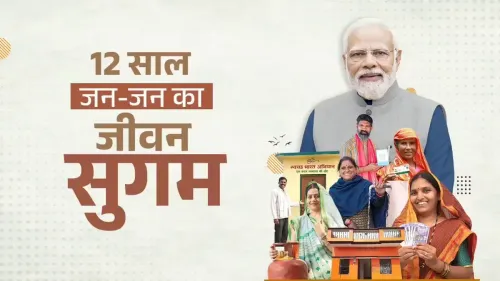
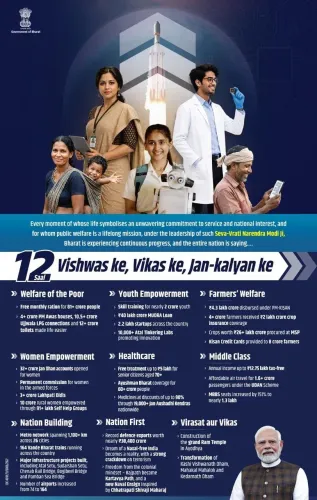
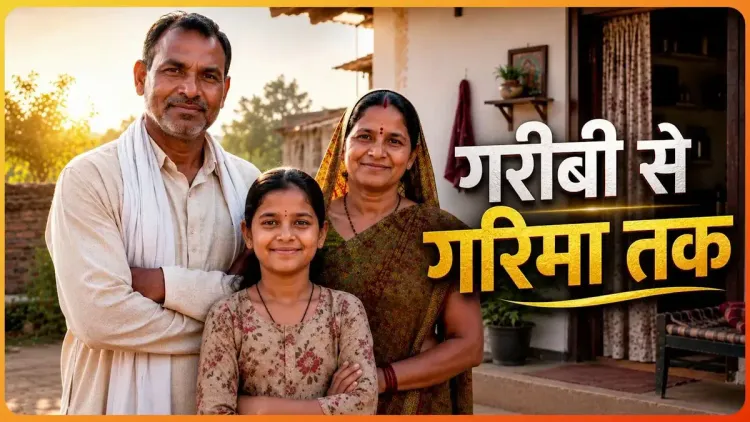
Union Parliamentary Affairs Minister Kiren Rijiju on June 8, 2026, invoked the #12YearsOfGaribKalyan milestone to highlight PM Modi's welfare record, citing delivery of housing, LPG, banking, healthcare, sanitation, free foodgrain, and piped water to crores of poor families through corruption-free, direct-benefit-transfer channels.
Key Takeaways
Union Parliamentary Affairs Minister Kiren Rijiju posted on June 8, 2026 , marking 12 years of PM Modi's government under the hashtag #12YearsOfGaribKalyan .
Rijiju cited delivery of pucca houses, Ujjwala LPG connections, Jan Dhan bank accounts, Ayushman Bharat health cover, Swachh Bharat toilets, free foodgrain, and Jal Jeevan Mission tap water to crores of poor families.
Pradhan Mantri Ujjwala Yojana (2016) and Pradhan Mantri Awas Yojana (2015) are among the flagship schemes highlighted in the post.
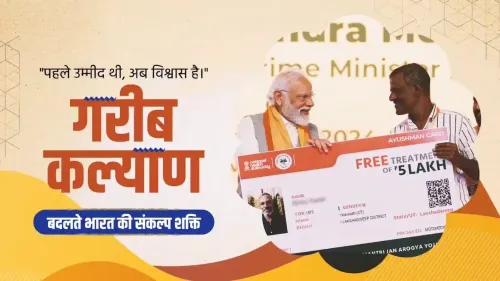
Ayushman Bharat offers up to Rs 5 lakh health insurance coverage per family; PM Garib Kalyan Anna Yojana has provided free foodgrain since 2020 .
The minister emphasised elimination of corruption and middlemen through the Direct Benefit Transfer architecture as key to last-mile delivery.
The post signals that welfare governance will be a central theme in BJP political messaging ahead of the monsoon session of Parliament and the next Union Budget .
Union Parliamentary Affairs Minister Kiren Rijiju on Monday, June 8, 2026, praised the 12-year welfare record of Prime Minister Narendra Modi's government, asserting that poverty-alleviation efforts have produced visible, ground-level results across India. Rijiju's post, tagged #12YearsOfGaribKalyan, cited the delivery of housing, cooking gas, banking access, healthcare, sanitation, food, and piped water to crores of poor families.
Context
Rijiju wrote in Hindi: 'अब केवल बातें नहीं होतीं, काम भी होता है' ('Now it is not just talk — work gets done too'). He credited PM Modi's leadership over the past 12 years with making poverty-reduction efforts 'clearly visible at the grassroots level.' The post was accompanied by a video and carries the hashtag #12YearsOfGaribKalyan, marking what the ruling Bharatiya Janata Party is framing as a governance anniversary milestone.
Rijiju specifically highlighted freedom from corruption and middlemen as an enabling condition, arguing that direct delivery has ensured that benefits reach intended beneficiaries without leakage. The messaging reflects the government's broader emphasis on Direct Benefit Transfer (DBT) architecture, which was scaled up after 2014 using Aadhaar-seeded accounts.
Policy Backdrop
The schemes referenced in the post span more than a decade of central government programming. Pradhan Mantri Awas Yojana, launched in 2015, targets pucca house construction for rural and urban poor households. Pradhan Mantri Ujjwala Yojana, started in 2016, extended LPG connections to below-poverty-line families to replace traditional cooking fuels.
Pradhan Mantri Jan Dhan Yojana, launched in August 2014, opened zero-balance bank accounts to enable direct transfers. Swachh Bharat Mission, begun in October 2014, drove household toilet construction to achieve open-defecation-free status. Jal Jeevan Mission, launched in 2019, aims to provide functional tap water connections to rural households. Ayushman Bharat, rolled out in 2018, provides health insurance coverage of up to Rs 5 lakh per family for secondary and tertiary care. PM Garib Kalyan Anna Yojana, first announced in 2020, has provided free foodgrain to eligible households and been extended in subsequent years.
Together, these programmes form what the government describes as a saturation-model approach — combining infrastructure creation with consumption support under a unified poverty-alleviation framework.
Stakeholders and Impact
The primary beneficiaries cited are crores of poor and rural households across India. The DBT-enabled delivery model, underpinned by Aadhaar linkages, was designed to reduce intermediary leakages that historically diverted subsidies before they reached intended recipients. Rijiju described these programmes not merely as schemes but as 'a strong foundation for the dignity, empowerment, and better future of crores of poor families.'
Opposition parties have previously contested the scale and quality of on-ground delivery, pointing to gaps in implementation and exclusions in beneficiary lists. The government has maintained that independent surveys and administrative data show substantial improvements in multidimensional poverty indicators since 2014.
What's Next
The #12YearsOfGaribKalyan campaign signals that welfare delivery will remain a central plank of the BJP's political messaging in the months ahead. Analysts will watch for any fresh announcements on scheme extensions — particularly PM Garib Kalyan Anna Yojana — in the upcoming monsoon session of Parliament or the next Union Budget. Official data from statistical agencies on multidimensional poverty reduction will be closely scrutinised as the government seeks to validate the narrative of transformative welfare delivery over 12 years.
Point of View
Framing 12 years of welfare delivery as a governance achievement rather than a partisan claim — a distinction the BJP has consistently sought to draw since 2014. By anchoring the message in named, operational schemes rather than aggregate statistics, the communication sidesteps the contested terrain of poverty-headcount data while still projecting scale. The #12YearsOfGaribKalyan hashtag suggests a coordinated anniversary campaign that will likely be amplified across the party's ministerial and organisational network. For the opposition, the challenge remains offering a credible counter-narrative to a welfare architecture that has become deeply embedded in the daily lives of rural and semi-urban voters.
NationPress
20 Sept 2026
Frequently Asked Questions
What is #12YearsOfGaribKalyan?
#12YearsOfGaribKalyan is a hashtag campaign marking 12 years of the Narendra Modi government's welfare and poverty-alleviation programmes since it came to power in May 2014, highlighting schemes such as PM Awas Yojana, Ujjwala, Jan Dhan, Ayushman Bharat, and Jal Jeevan Mission.
What did Kiren Rijiju say about Modi government welfare schemes?
Kiren Rijiju said that over the past 12 years, poverty-alleviation efforts under PM Modi's leadership are 'clearly visible at the grassroots level,' with crores of poor families receiving pucca houses, LPG connections, bank accounts, free healthcare, toilets, free foodgrain, and piped water — free from corruption and middlemen.
What is Pradhan Mantri Ujjwala Yojana?
Pradhan Mantri Ujjwala Yojana, launched in 2016, is a central government scheme that provides LPG cooking-gas connections to below-poverty-line households, aiming to replace traditional and polluting cooking fuels with cleaner alternatives.
What is Jal Jeevan Mission?
Jal Jeevan Mission is a central scheme launched in 2019 with the goal of providing functional household tap-water connections to every rural home in India, improving access to safe drinking water at the household level.
How does Ayushman Bharat help poor families in India?
Ayushman Bharat, rolled out in 2018, provides health insurance coverage of up to Rs 5 lakh per family per year for secondary and tertiary hospitalisation, targeting poor and vulnerable households identified through socio-economic criteria.