Kishan Reddy Marks 12 Years of Modi Welfare Push
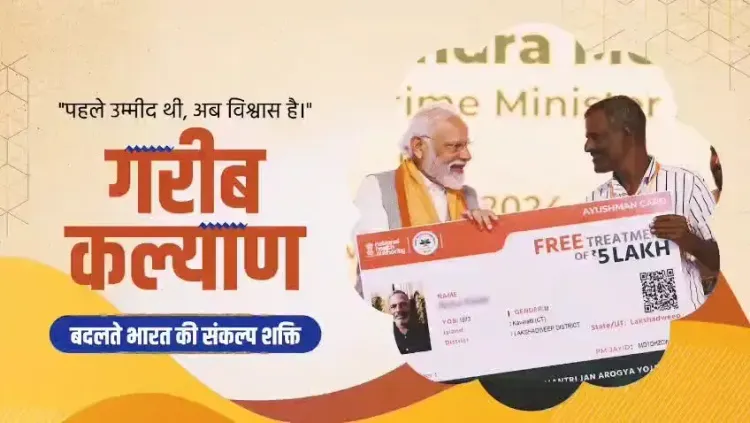
Synopsis
Union Minister G. Kishan Reddy marks twelve years of Modi government welfare delivery on June 8, 2026, highlighting gains across financial inclusion, housing, sanitation, clean cooking fuel, and tap water under the #12YearsOfGaribKalyan banner.
Key Takeaways
Kishan Reddy , Union Coal and Mines Minister and BJP Telangana president, posted on June 8, 2026 under #12YearsOfGaribKalyan to mark a decade-plus of BJP-led welfare delivery.
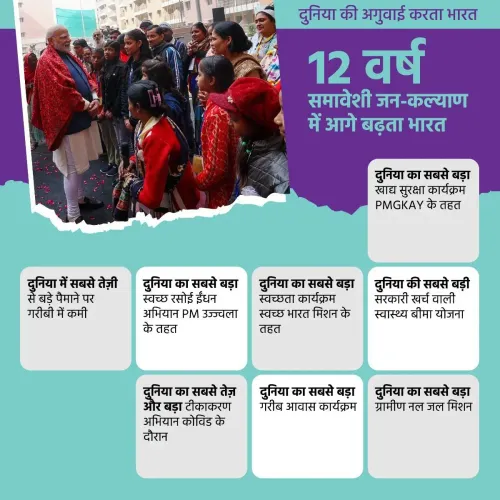
The post highlights six welfare pillars: financial inclusion, Direct Benefit Transfers , housing, sanitation, tap water, and clean cooking fuel.
Pradhan Mantri Jan Dhan Yojana (2014) and the DBT scale-up from 2013–14 form the financial inclusion backbone cited in the post.
Pradhan Mantri Ujjwala Yojana (2016) extended LPG connections to BPL households, particularly women, replacing solid fuels.
Jal Jeevan Mission (2019) and Pradhan Mantri Awas Yojana (2015) address tap water and housing respectively as part of the same policy arc.
Independent verification of poverty and income improvement figures cited in the post awaits the next National Family Health Survey or multidimensional poverty index update.
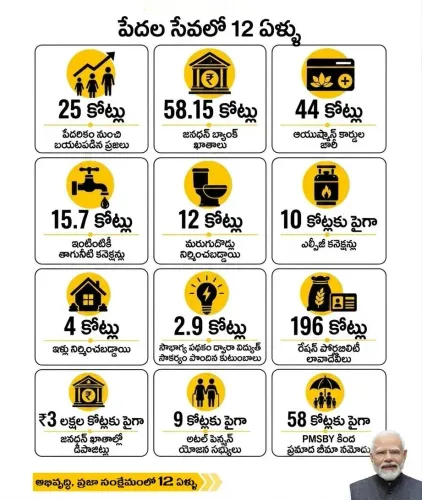
Union Coal and Mines Minister G. Kishan Reddy on Monday, June 8, 2026, invoked the #12YearsOfGaribKalyan hashtag to highlight a decade-plus of welfare expansion under Prime Minister Narendra Modi, citing gains in financial inclusion, housing, sanitation, tap water, social security, and clean cooking fuel as evidence of development 'at an unprecedented scale.'
Context
Reddy's post marks twelve years since the BJP-led National Democratic Alliance came to power in May 2014, a milestone the party has framed around the theme of welfare delivery to the poor — Garib Kalyan, or 'welfare of the poor.' The minister described the period as one where 'millions of families have gained access to opportunities that improve everyday life,' pointing to rising incomes and reduced poverty as visible outcomes.
The #12YearsOfGaribKalyan campaign reflects a coordinated BJP communication effort to consolidate the government's welfare narrative ahead of what is expected to be a politically active period. Reddy, who also serves as BJP Telangana state president, is among the senior ministers amplifying the message.
Policy Backdrop
The welfare architecture referenced in the post spans several flagship schemes. The Pradhan Mantri Jan Dhan Yojana, launched in 2014, opened bank accounts for previously unbanked households and laid the foundation for Direct Benefit Transfers (DBT), which route subsidies and pensions directly into beneficiary accounts, reducing leakage.
The Pradhan Mantri Ujjwala Yojana, rolled out in 2016, extended LPG connections to below-poverty-line households — primarily women — replacing solid cooking fuels. The Swachh Bharat Mission (2014) targeted toilet construction and the elimination of open defecation, while the Pradhan Mantri Awas Yojana (2015) aimed to provide pucca houses with basic amenities to eligible rural and urban poor families.
On drinking water, the Jal Jeevan Mission, announced in 2019, built on earlier rural water programmes with a goal of delivering functional household tap connections across rural India. Together, these schemes represent a policy preference for technology-enabled, saturation-based service delivery measured through household-level coverage dashboards.
Stakeholders and Impact
The primary beneficiaries across these programmes are rural households, below-poverty-line families, and BPL women — the last group being a specific target of Ujjwala Yojana and the financial inclusion drive. The DBT mechanism, scaled up progressively from 2013–14 onward, has been credited with reducing intermediary diversion of welfare funds, though independent assessments of its full impact continue.
State governments run parallel welfare programmes, and the central schemes operate in conjunction with these, creating a layered delivery structure. Periodic parliamentary committee reviews and survey-based indices are the principal instruments for tracking scheme outcomes.
What's Next
The next release of a comprehensive National Family Health Survey or an updated multidimensional poverty index will be closely watched as an independent measure of how far the welfare indicators cited by the minister have moved. Parliamentary committee reviews of scheme budgets in the forthcoming session are also expected to provide granular data on coverage and expenditure. The political salience of the Garib Kalyan framing suggests it will remain a central pillar of the BJP's outreach in Telangana and nationally as electoral cycles continue.
Point of View
Deploying welfare delivery as a political asset. The breadth of schemes cited — spanning banking, cooking fuel, water, housing, and sanitation — reflects the party's strategy of aggregating diverse beneficiary groups into a single electoral coalition. For Reddy specifically, amplifying this message in his capacity as Telangana BJP president signals an effort to counter opposition narratives in a state where the BJP is seeking to expand its footprint. The durability of this framing will ultimately depend on how independent surveys and parliamentary oversight assess on-the-ground outcomes over the coming months.
NationPress
25 Sept 2026
Frequently Asked Questions
What is #12YearsOfGaribKalyan?
#12YearsOfGaribKalyan is a BJP campaign hashtag marking twelve years since the Modi government took office in May 2014, used to highlight welfare schemes targeting poor and rural households across India.
What schemes did Kishan Reddy refer to in his post?
While Reddy did not name specific schemes, his references to financial inclusion, direct benefit transfers, housing, sanitation, tap water, and clean cooking fuel correspond to Jan Dhan Yojana, DBT, Pradhan Mantri Awas Yojana, Swachh Bharat Mission, Jal Jeevan Mission, and Ujjwala Yojana respectively.
What is the Pradhan Mantri Ujjwala Yojana?
Pradhan Mantri Ujjwala Yojana, launched in 2016, provides free or subsidised LPG connections to below-poverty-line households, primarily targeting women, to replace solid cooking fuels and reduce indoor air pollution.
What is the Jal Jeevan Mission?
The Jal Jeevan Mission, announced in 2019, is a central government scheme aimed at providing functional household tap water connections to every rural home in India, building on earlier rural water supply programmes.
Who is G. Kishan Reddy?
G. Kishan Reddy is the Union Minister of Coal and Mines in the Modi government and also serves as the president of the BJP's Telangana state unit, making him a key figure in both central policy and the party's southern expansion strategy.