Kishan Reddy Hails 12 Years of Modi Welfare Schemes
Synopsis
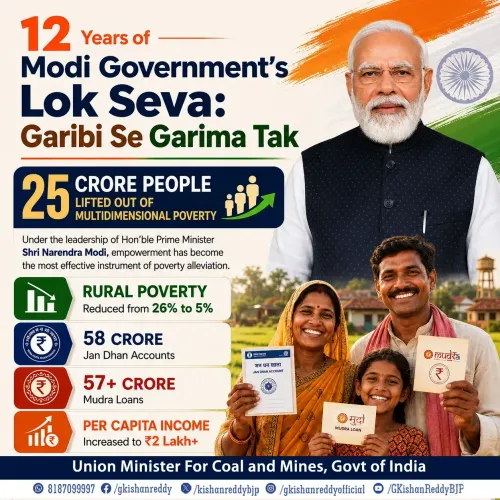
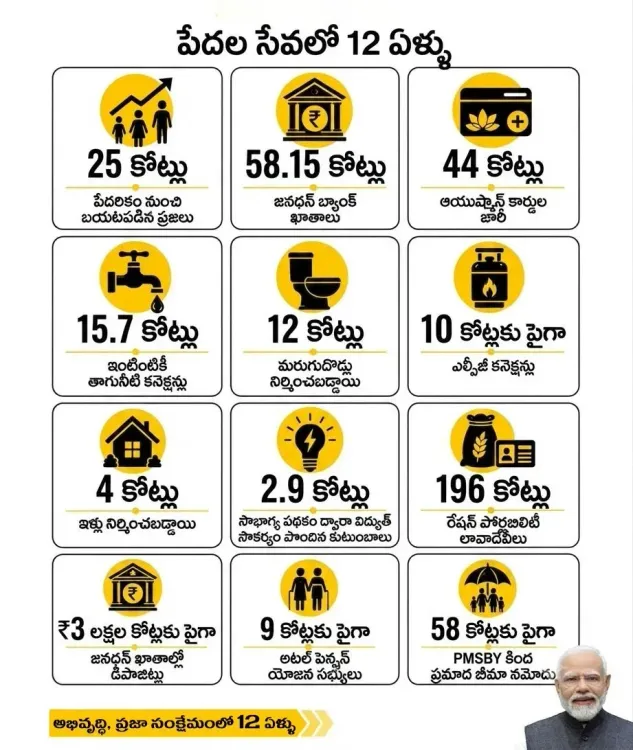
Union Minister G. Kishan Reddy marked twelve years of the Modi government by highlighting transformative welfare schemes — Jan Dhan, Ujjwala, Swachh Bharat, Jal Jeevan and Ayushman Bharat — crediting the 'Antyodaya' spirit and the Viksit Bharat vision for reshaping welfare delivery for crores of Indians.
Key Takeaways
Kishan Reddy , Union Coal and Mines Minister and BJP Telangana president, posted on June 8, 2026 under #12YearsOfGaribKalyan .
Pradhan Mantri Jan Dhan Yojana (launched August 2014 ) enabled banking access and underpins the Direct Benefit Transfer system.
Pradhan Mantri Ujjwala Yojana (launched May 2016 ) provided free LPG connections to women from below-poverty-line families.
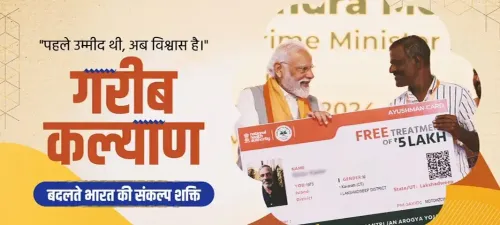
Ayushman Bharat (announced February 2018 ) offers up to Rs 5 lakh annual health cover per poor family.
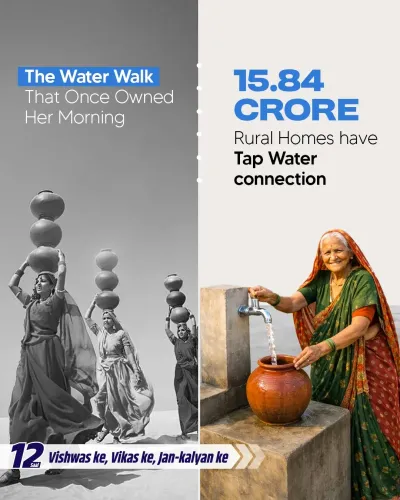
Jal Jeevan Mission (announced 2019 ) targets functional household tap connections for safe drinking water in rural India.
The post frames Viksit Bharat as the overarching goal, with welfare of the poor described as the government's 'highest purpose'.
Union Coal and Mines Minister G. Kishan Reddy on Monday, June 8, 2026, credited Prime Minister Narendra Modi's twelve years in office with bringing 'revolutionary changes' to India's welfare landscape, citing flagship schemes that have extended banking, cooking fuel, sanitation, drinking water and housing access to crores of citizens.
Context
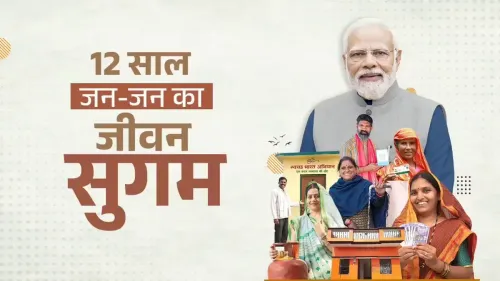
Posting under the hashtag #12YearsOfGaribKalyan, Reddy wrote in Telugu that the government had worked with the spirit of Antyodaya — 'serving the last person in the queue' — to transform welfare delivery. He specifically named Jan Dhan, Ujjwala, Swachh Bharat, Jal Jeevan Mission and PM Awas Yojana as schemes that had put banking services, free cooking gas, toilets, safe drinking water and permanent homes within reach of millions. 'Today, with Viksit Bharat [Developed India] as the goal, the Modi government continuously strives with the welfare of the poor as its highest purpose,' he wrote.
Reddy, who also serves as BJP Telangana state president, framed the post as a milestone communication marking a dozen years since the current central government took office in May 2014.
Policy Backdrop
Pradhan Mantri Jan Dhan Yojana, launched in August 2014, was designed to open bank accounts for unbanked households and lay the infrastructure for Direct Benefit Transfers. The Direct Benefit Transfer (DBT) mechanism — scaled significantly from 2013-14 onward — routes subsidies and cash directly into beneficiary accounts, reducing leakages in the delivery chain.
Pradhan Mantri Ujjwala Yojana, announced in May 2016, provided free LPG connections to women from below-poverty-line families, replacing solid cooking fuels. Ayushman Bharat, unveiled in the February 2018 budget, offers up to Rs 5 lakh annual health insurance coverage per poor family for secondary and tertiary hospital care. SVAMITVA (Survey of Villages and Mapping with Improvised Technology in Village Areas) has worked to provide rural households with formal property rights documentation.
Taken together, these initiatives represent a shift from earlier fragmented, state-level programmes toward centrally sponsored, Aadhaar-seeded interventions with household-level coverage targets.
Stakeholders and Impact
The primary beneficiaries of the schemes cited by Reddy are poor rural households, unbanked populations and women — particularly those who previously cooked on wood or coal and lacked access to formal financial services. The Jal Jeevan Mission, announced in 2019, specifically targets functional household tap connections for safe drinking water in rural areas, a programme whose coverage progress remains a key metric watched by policy observers.
Communications of this kind, timed to anniversaries of the 2014 government formation, are part of a broader pattern in which senior BJP leaders use social media to consolidate the party's welfare-delivery narrative ahead of state and national electoral cycles.
What's Next
Observers will watch whether the anniversary messaging is followed by announcements of scheme expansions or fresh funding allocations in the next Union Budget. Progress on Jal Jeevan Mission household tap-connection targets and any revisions to Ayushman Bharat coverage limits are among the specific deliverables that will test the claims embedded in the #12YearsOfGaribKalyan campaign. For Telangana, where Reddy leads the state BJP unit, the welfare narrative also feeds into the party's efforts to reclaim ground in a state currently governed by a rival party.
Point of View
Using Telugu-language outreach to reinforce the BJP's Garib Kalyan brand in a state where the party is in opposition. By listing tangible household-level schemes — gas cylinders, tap water, bank accounts, health cover — rather than macro-economic figures, the messaging sidesteps contested GDP or poverty-rate debates and grounds the claim in everyday lived experience. The invocation of 'Antyodaya,' a concept rooted in the philosophy of serving the most marginalised, signals an attempt to pre-empt opposition narratives on inequality. As the BJP builds toward future electoral contests in Telangana, welfare delivery credentials are likely to remain a central plank of its communication strategy.
NationPress
22 Sept 2026
Frequently Asked Questions
What is the #12YearsOfGaribKalyan campaign about?
The #12YearsOfGaribKalyan hashtag marks twelve years of the Narendra Modi government's welfare programmes, highlighting schemes like Jan Dhan, Ujjwala, Jal Jeevan Mission and Ayushman Bharat that have targeted poor and rural households since 2014 .
What is Pradhan Mantri Jan Dhan Yojana?
Pradhan Mantri Jan Dhan Yojana , launched in August 2014 , is a financial inclusion programme that opened bank accounts for previously unbanked households and enabled the government's Direct Benefit Transfer system to send subsidies directly to beneficiaries.
What does Ayushman Bharat offer to poor families?
Ayushman Bharat , announced in the February 2018 Union Budget, provides health insurance cover of up to Rs 5 lakh per year per family for secondary and tertiary hospital care, targeting poor and vulnerable households.
Who is G. Kishan Reddy?
G. Kishan Reddy is the Union Minister of Coal and Mines in the Narendra Modi government and also serves as the BJP Telangana state president , making him one of the senior BJP leaders responsible for the party's outreach in Telangana.
What is Jal Jeevan Mission?
Jal Jeevan Mission , announced in 2019 , is a central government programme aimed at providing functional household tap connections for safe drinking water to every rural home in India, with household-level coverage as its primary target.