Karnataka CMO salutes Shravanabelagola, Jain heritage jewel
Synopsis
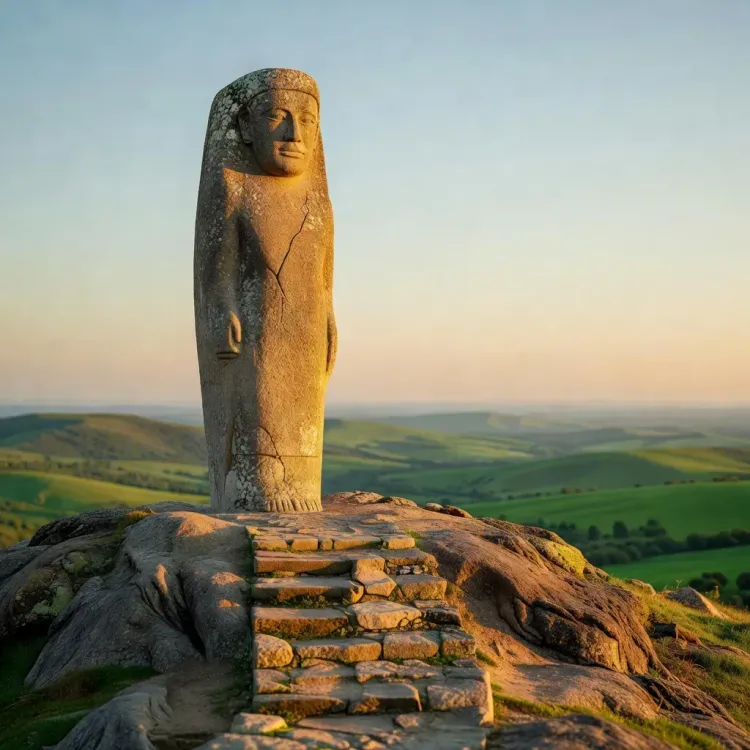
The Chief Minister's Office of Karnataka paid tribute to Shravanabelagola in Hassan district, calling it the state's cultural pride and describing the 57-foot monolithic Gommateshwara Bahubali statue as the sacred heart of the Jain tradition rooted in sacrifice and non-violence.
Key Takeaways
The CMO of Karnataka posted a cultural tribute to Shravanabelagola on 6 November 2026 .
The site in Hassan district is home to the 57-foot monolithic Gommateshwara Bahubali statue , carved from a single granite rock around 981 CE .
The post celebrated Karnataka as a land of sacrifice ( tyaga ) and non-violence ( ahimsa ), core Jain values.
The Mahamastakabhisheka anointing ceremony is held every 12 years ; the 2018 edition drew hundreds of thousands of pilgrims with active state involvement.
Karnataka governments have regularly used official channels to highlight Jain heritage as part of the state's cultural and tourism identity.
A sky-touching monolith. A land that has enshrined sacrifice and non-violence for over a millennium. The Chief Minister's Office of Karnataka turned its official X account toward one of the subcontinent's most awe-inspiring sacred sites on Friday, 6 November 2026, paying tribute to Shravanabelagola in Hassan district as the cultural pride of Karnataka.
Posting in Kannada, the CMO wrote: 'ತ್ಯಾಗದ ಶಿಖರ, ಶಾಂತಿಯ ನೆಲೆ' — 'The pinnacle of sacrifice, the abode of peace' — describing Karnataka as a land rooted in renunciation and non-violence, and calling Shravanabelagola the radiant sacred heart of the Jain tradition and the cultural pride of the Kannada nation.
The monolith that stops time in Hassan
Sitting on Vindhyagiri Hill in Hassan district, the Gommateshwara Bahubali statue is among the most remarkable works of human devotion on earth. Carved from a single granite rock and standing 57 feet tall, the colossus dates to around 981 CE and depicts the Jain ideal of complete detachment — the figure stands utterly still, creepers winding up its legs, serene in the face of the world. No mortar, no scaffolding in its making; just one rock and one vision. It remains the tallest free-standing monolithic statue in India.Twelve years, one sacred anointing
What makes Shravanabelagola more than a heritage postcard is the living ritual that pulses through it. Every twelve years, the site hosts the Mahamastakabhisheka — a grand head-anointing ceremony in which the statue is bathed in cascades of milk, saffron, sandalwood paste, gold coins, and precious gems from scaffolding that temporarily dwarfs even the colossus. The 2018 edition drew hundreds of thousands of Jain pilgrims from across India and the world, with the Karnataka government playing an active role in logistics and security. The next cycle positions the state to mobilise again on a scale few cultural events in the country can match.Official heritage pride as a living policy signal
Karnataka governments have consistently used official channels to spotlight Jain and other religious heritage sites — framing them not merely as tourist attractions but as living proof of the state's pluralist identity. The CMO's post fits that established pattern: a deliberate act of cultural assertion that reminds citizens and visitors alike that the land of the Kannada people carries within it some of the world's oldest experiments in peaceful coexistence. For heritage tourism strategists, every such post is a nudge toward the question of infrastructure, conservation, and the accommodation capacity that Shravanabelagola will need as the next Mahamastakabhisheka approaches. Shravanabelagola has stood for over a thousand years as proof that stone, faith, and stillness can outlast every era of noise — and Karnataka is making sure the world keeps looking.Point of View
Spotlighting a globally recognised Jain site reinforces Karnataka's pluralist credentials and signals administrative attention to a constituency — Jain pilgrims and heritage tourists — that generates significant footfall and economic activity. The post also carries an implicit forward signal: with the next Mahamastakabhisheka cycle on the horizon, official enthusiasm now translates into political and logistical preparedness later. It is ceremonial in tone but strategic in function.
NationPress
6 Nov 2026
Frequently Asked Questions
Where is Shravanabelagola located?
Shravanabelagola is located in Hassan district in the state of Karnataka, India, situated on and around Vindhyagiri Hill.
How tall is the Gommateshwara Bahubali statue at Shravanabelagola?
The Gommateshwara Bahubali statue stands 57 feet tall and is carved from a single granite rock, making it the tallest free-standing monolithic statue in India.
What is the Mahamastakabhisheka ceremony?
The Mahamastakabhisheka is a grand head-anointing ritual held every 12 years at Shravanabelagola, during which the Gommateshwara statue is bathed in milk, saffron, sandalwood, gold coins, and precious gems. The last edition was held in 2018 .
Why is Shravanabelagola important to Jains?
Shravanabelagola is one of the most sacred Jain pilgrimage sites in the world, representing the ideals of complete renunciation and non-violence embodied by the figure of Bahubali , carved around 981 CE .
Why did the Karnataka CMO post about Shravanabelagola?
The Chief Minister's Office of Karnataka regularly uses its official social media to celebrate the state's religious and cultural heritage, promoting sites like Shravanabelagola as symbols of Karnataka's identity and supporting heritage tourism.