CM Sarma frames Assam's shift: insurgency to infrastructure
Synopsis
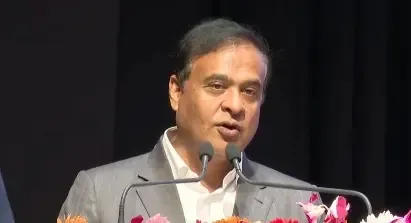
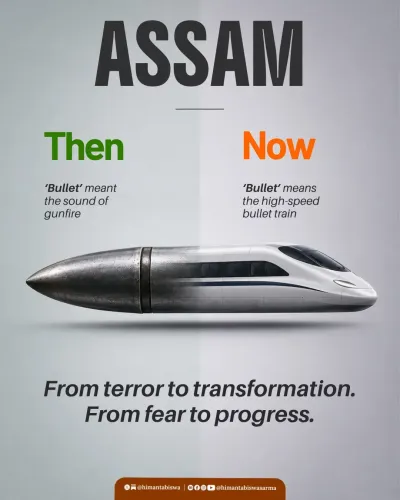
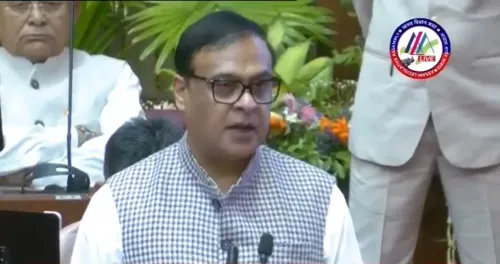
The Chief Minister's Office of Assam shared CM Himanta Biswa Sarma's framing of the state's transformation — from decades of armed insurgency to an accelerating push for rail and road connectivity — under the headline 'from gun bullets to bullet trains.'
Key Takeaways
CM Himanta Biswa Sarma articulated Assam's development journey as a shift 'from gun bullets to bullet trains' in a post shared on 6 November 2026 .
Assam was long beset by insurgencies including ULFA and NDFB ; the decline of these groups opened space for infrastructure investment.
India's Act East Policy , sharpened in 2014 , placed Northeast rail and road connectivity at the centre of regional integration strategy.
Sarma has governed Assam since May 2021 , positioning his tenure around the peace-dividend-to-development narrative.
Progress on Northeast rail corridors and state budget allocations for connectivity remain the key benchmarks to watch.
Assam residents and Northeast businesses are the primary stakeholders in whether the connectivity promises translate into measurable economic gains.
From a state once defined by the rattle of gunfire and the shadow of separatist violence, Assam is now being defined by railway tracks and connectivity corridors — and Chief Minister Himanta Biswa Sarma wants the country to notice. On Friday, 6 November 2026, the Chief Minister's Office of Assam shared a pointed headline capturing Sarma's framing of his state's journey: 'From gun bullets to bullet trains.'
A slogan that doubles as a development argument
The phrase is blunt by design. For decades, Assam and much of the Northeast lived under the long shadow of militant groups — the United Liberation Front of Asom (ULFA), the National Democratic Front of Bodoland, and a roster of smaller insurgencies that made the region synonymous with conflict in the national imagination. Infrastructure investment followed security, not the other way around. Roads stalled. Rail lines ended at the region's edges. The Northeast remained physically distant from the Indian mainstream.
That equation has been visibly shifting. After the decline and fragmentation of major insurgent groups through a combination of peace talks and military pressure, both the state government under Sarma — who took charge in May 2021 — and the central government accelerated physical connectivity as the next chapter of the Northeast's integration story.
The Act East spine and the rail connectivity push
India's Act East Policy, sharpened in 2014, made rail and road connectivity to the Northeast a strategic and economic priority. The policy explicitly framed connectivity not just as infrastructure but as the instrument for integrating a long-neglected frontier into the national economy. Assam, as the region's largest state and its gateway, sits at the centre of that logic.
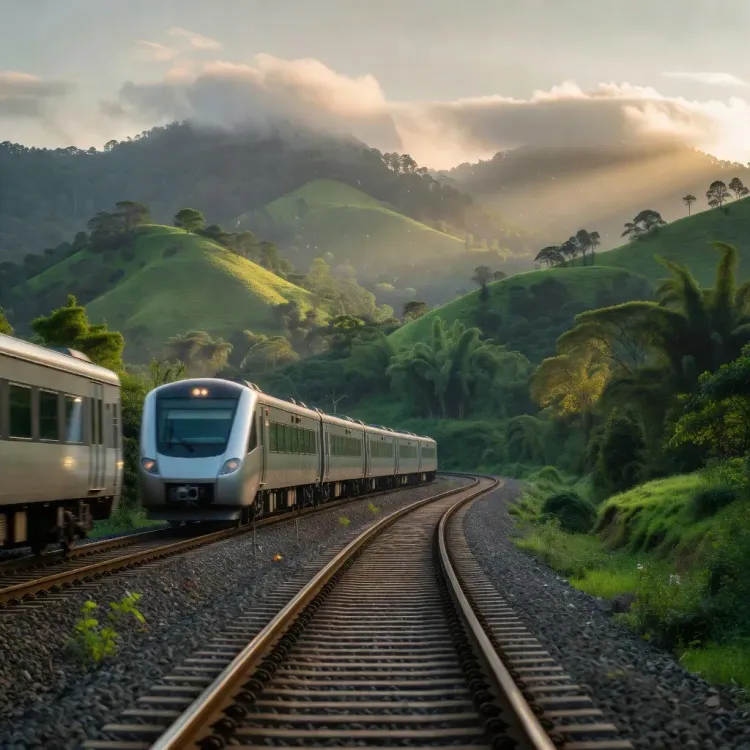
Progress on Northeast rail corridors — including projects linking Assam to Arunachal Pradesh, Meghalaya, and Mizoram — has become a recurring benchmark for how seriously the central government treats the region's development promises. State budget allocations for connectivity have also climbed, with Sarma's administration positioning infrastructure spending as the tangible dividend of peace.
Why the framing matters politically
Sarma's 'gun bullets to bullet trains' narrative does double work. It credits the peace process — implicitly, his government's handling of the insurgency file — while projecting forward momentum on development. For a Chief Minister governing a state that the rest of India still often pictures through the lens of conflict, rebranding Assam as a connectivity hub carries real electoral and investment-attraction logic.
Residents of the Brahmaputra valley and the Barak region, long accustomed to watching infrastructure promises stall, will measure the slogan against train schedules and travel times — the only audit that ultimately counts.
Point of View
Giving the Centre and the state government a shared credit structure. The real test, however, is whether rail and road milestones land fast enough to sustain the story ahead of the next electoral cycle. If connectivity timelines slip, the slogan risks becoming a hostage to its own ambition.
NationPress
6 Nov 2026
Frequently Asked Questions
What does 'from gun bullets to bullet trains' mean for Assam?
It is a phrase used by Chief Minister Himanta Biswa Sarma to describe Assam's shift from decades of armed insurgency to a focus on modern infrastructure, particularly rail connectivity, as the state integrates more fully with the Indian economy.
What is the Act East Policy and how does it affect Assam?
India's Act East Policy, sharpened in 2014, prioritises rail, road, and economic connectivity between mainland India and the Northeast states. Assam, as the region's largest state and its gateway, is central to this strategy.
Which insurgent groups previously operated in Assam?
Major groups included the United Liberation Front of Asom (ULFA) and the National Democratic Front of Bodoland (NDFB), both of which have significantly declined after a combination of peace talks and security operations.
When did Himanta Biswa Sarma become Chief Minister of Assam?
Himanta Biswa Sarma became Chief Minister of Assam in May 2021.
What rail connectivity projects are underway in Northeast India?
Several Northeast rail corridor projects are under various stages of planning and construction, aiming to link Assam with Arunachal Pradesh, Meghalaya, and Mizoram, though specific timelines and completion dates are subject to ongoing progress reviews.