South Korea KOSPI halted as AI panic triggers 8% crash, more steps planned
Synopsis
South Korea's KOSPI shed over 8% in a single session, briefly breaching 5,000, as fears over AI regulation and a Wall Street tech rout sparked a circuit-breaker halt — the first in 16 sessions. With Finance Minister Lee Hyoung-il promising more stabilisation steps and collateral rules being lifted for three months, Seoul is in full damage-control mode as global AI sentiment turns.
Key Takeaways
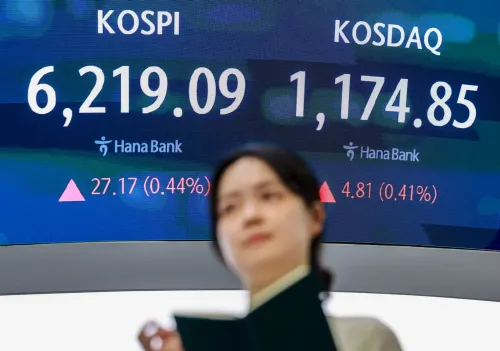
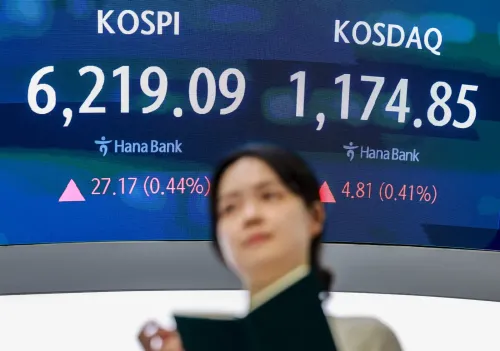
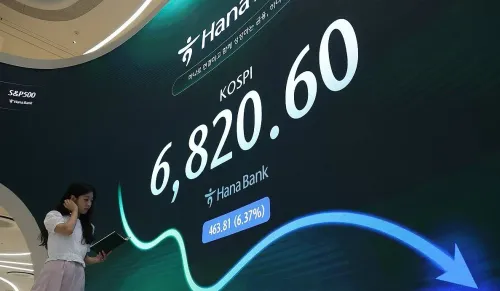
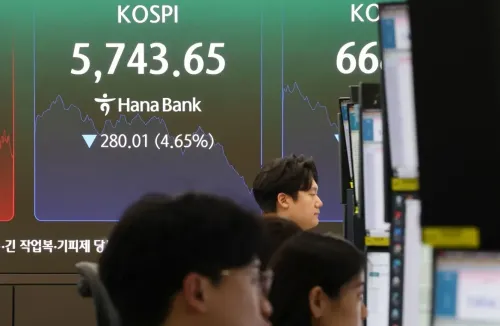
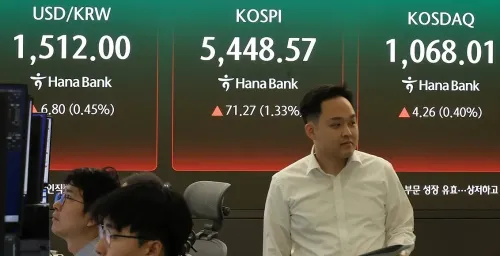
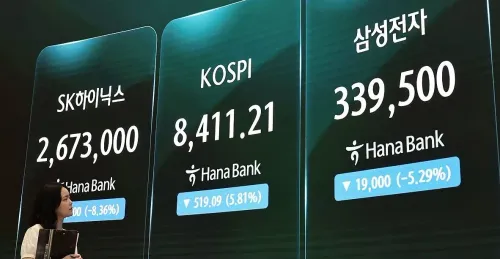
The KOSPI plunged more than 8 percent on 6 November , briefly falling below 5,000 points before recovering to 5,186.68 , down 191.22 points or 3.55 percent .
A 20-minute trading halt (circuit breaker) was triggered — the first in 16 trading sessions .
Finance Minister Lee Hyoung-il pledged additional market stabilisation measures following an emergency meeting of regulators and the central bank.
Collateral regulation on stock-purchase loans will be fully lifted for three months starting later in November.
The sell-off was driven by fears of slower memory chip demand due to AI sector regulation and concerns over US political outcomes affecting data centre investment.
South Korea's Finance Minister Lee Hyoung-il on Friday, 6 November signalled that financial authorities are prepared to roll out additional market stabilisation measures after an AI-driven panic sent the country's benchmark stock index into a sharp spiral, triggering an emergency circuit breaker. The announcement came hours after the Korea Composite Stock Price Index (KOSPI) plummeted more than 8 percent, briefly sinking below the psychologically significant 5,000-point level.
Emergency Response by Authorities
Following an emergency meeting of senior officials from the Financial Services Commission, the Financial Supervisory Service, and the Bank of Korea, Minister Lee sought to calm fraying nerves. "The authorities are closely monitoring excessive anxiety and one-sided movement. We are ready to take additional actions should market volatility accelerate," Lee said. He emphasised that South Korea's economic fundamentals remain solid and urged investors not to remain "excessively anxious and skeptical."
As a concrete first step, the financial authorities announced that collateral regulation on loans extended to buy stocks will be fully lifted for three months starting later this month, a move aimed directly at reducing margin-call pressure and easing market volatility.
Circuit Breaker Activated, KOSPI Swings Wildly
Shortly after the opening bell on Friday, trading of KOSPI-listed shares was suspended for 20 minutes after the benchmark index plunged by more than 8 percent — the first such trading halt in 16 trading sessions. The circuit breaker mechanism, designed to prevent panic-driven free falls, was triggered amid a wave of tech sell-offs. At 11:59 a.m., the KOSPI stood at 5,186.68, down 3.55 percent or 191.22 points, after touching a session low of 4,911.28.
AI Fears and Wall Street Spillover
The immediate trigger for the rout, according to reports, was a combination of two concerns: fears that demand for memory chips will slow due to tighter regulations on AI-related sectors, and anxiety that a Democratic Party victory in the US midterm elections could reduce the pace of data centre construction for artificial intelligence. Taking a direct cue from a tech sell-off on Wall Street overnight, the KOSPI's steep decline underscored South Korea's heavy structural exposure to global AI investment cycles. Notably, the country's semiconductor and memory chip makers — among the world's largest — have become a proxy for global AI sentiment.
This comes amid a broader global reckoning over whether the AI-driven capital expenditure boom of the past two years is sustainable in the face of regulatory headwinds and shifting political winds in the United States.
What Comes Next
Market participants and analysts will be watching closely for specific details of the additional stabilisation measures hinted at by Minister Lee. The three-month collateral regulation lift is a temporary buffer, but investors are looking for clarity on whether authorities will deploy broader tools — including potential stock-buyback facilitation or expanded liquidity injections. The speed of recovery in Wall Street tech stocks and any formal US policy signals on AI regulation will likely determine how long Seoul's volatility persists.
Point of View
Seoul bears an outsized share of the pain. Finance Minister Lee's pledge of 'additional actions' and the collateral-rule suspension are credible short-term shock absorbers, but they do not address the deeper concentration risk. If US policy pivots against aggressive AI infrastructure spending, South Korea's chipmakers face a demand cliff that no emergency meeting can paper over.
NationPress
6 Nov 2026
Frequently Asked Questions
Why did the South Korea KOSPI crash on 6 November 2026?
The KOSPI plunged more than 8 percent on 6 November due to fears that tighter AI-sector regulations could slow demand for memory chips, compounded by concerns that a Democratic Party win in the US midterm elections might reduce the pace of AI-related data centre construction. The sell-off followed a tech rout on Wall Street overnight.
What is a KOSPI circuit breaker and was it triggered?
A circuit breaker temporarily halts trading when a market index falls sharply, giving investors time to reassess. On 6 November, the KOSPI's 20-minute trading suspension was triggered after the index dropped more than 8 percent — the first such halt in 16 trading sessions.
What stabilisation steps has the South Korean government announced?
Finance Minister Lee Hyoung-il announced that collateral regulations on loans taken to buy stocks will be fully lifted for three months starting later in November. He also signalled that additional measures are ready to be deployed if market volatility worsens.
How low did the KOSPI fall on 6 November?
The KOSPI touched a session low of 4,911.28, briefly breaching the 5,000-point level, before recovering to 5,186.68 — still down 191.22 points or 3.55 percent — by late morning trading.
How is AI regulation linked to South Korea's stock market?
South Korea is home to some of the world's largest memory chip and semiconductor manufacturers, whose revenues are heavily tied to global AI infrastructure spending. Any signal of tighter AI regulation or reduced data centre investment in the US directly threatens chip demand, making the KOSPI highly sensitive to shifts in AI policy sentiment.