KOSPI tanks 8.59% as Seoul tech stocks crash on AI spending fears
Synopsis
South Korea's KOSPI didn't just fall — it triggered a circuit breaker for the seventh time this year as AI spending scepticism wiped out billions in market value. With Samsung down nearly 10% and SK Hynix off nearly 12%, Seoul's crash is the sharpest signal yet that global markets are losing faith in the AI capital expenditure supercycle.
Key Takeaways
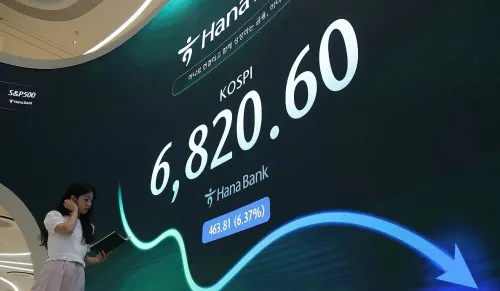
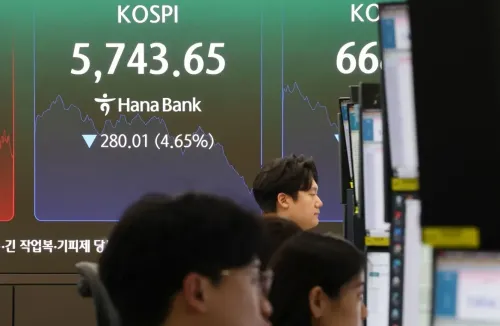
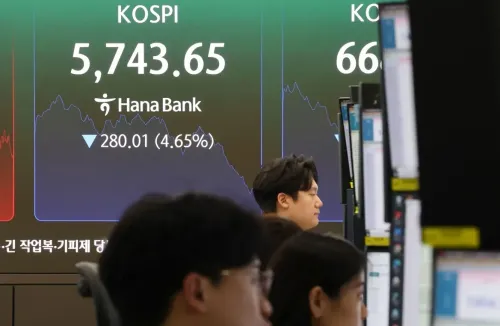
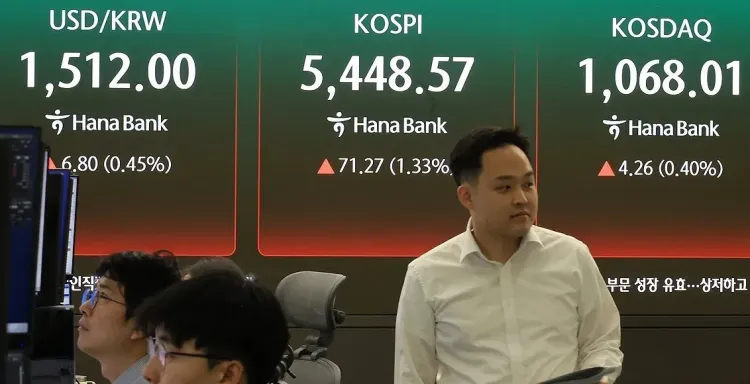
The KOSPI fell 580.04 points (8.59%) to 6,175.71 as of 11:20 am on 28 July .
The Korea Exchange (KRX) triggered a market-wide circuit breaker at 10:14 am , halting trading for 20 minutes — the seventh such activation this year.
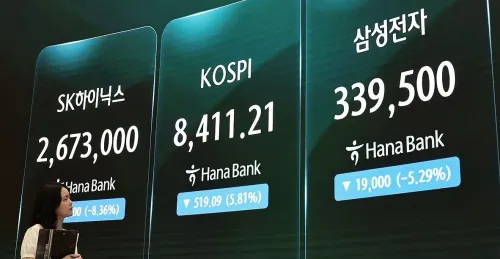
Samsung Electronics fell 9.84% ; SK Hynix dived 11.67% ; Samsung Electro-Mechanics plummeted 15.47% .
SK Telecom nose-dived 16.04% ; LG Electronics sank 7.43% ; Naver fell 4% .
The selloff was driven by Wall Street's overnight decline on scepticism over AI spending; the PHLX Semiconductor Index fell 2.2% .
The Korean won weakened to 1,466.3 per US dollar , down 0.3 won from the previous close.
South Korea's benchmark Korea Composite Stock Price Index (KOSPI) crashed 580.04 points, or 8.59 percent, to 6,175.71 as of 11:20 am local time on Tuesday, 28 July, as investors aggressively dumped technology shares amid deepening scepticism over artificial intelligence (AI) spending by global tech giants. The index had already opened 5.26 percent lower before extending its losses through the morning session.
Circuit Breaker Triggered
The Korea Exchange (KRX) activated a market-wide circuit breaker at 10:14 am after the KOSPI plunged more than 8 percent from the previous session's close, halting trading of KOSPI-listed shares for 20 minutes. This marked the seventh time this year that the KRX has triggered the emergency mechanism — a frequency that underscores the extreme volatility gripping South Korean equities in 2025.
Tech Giants Lead the Carnage
Market bellwether Samsung Electronics plunged 9.84 percent, while memory chipmaker SK Hynix dived 11.67 percent. Electronic components affiliate Samsung Electro-Mechanics suffered the steepest fall among the majors, plummeting 15.47 percent. LG Electronics sank 7.43 percent, internet giant Naver fell 4 percent, and leading mobile carrier SK Telecom nose-dived 16.04 percent. Most shares on the bourse traded in negative territory by mid-morning.
Wall Street Selloff Sets the Tone
The Seoul rout was triggered by an overnight selloff on Wall Street, where investors remained deeply sceptical about the scale of AI infrastructure spending by major US technology companies. The PHLX Semiconductor Index — a key gauge of US chipmaker performance — extended its recent decline, falling 2.2 percent, directly pressuring South Korea's semiconductor-heavy equity market. This comes amid a broader global reassessment of whether AI capital expenditure will translate into near-term returns.
Currency Under Pressure
The Korean won weakened alongside equities, trading at 1,466.3 won against the US dollar as of 11:20 am, down 0.3 won from the previous session's close. While the currency move was relatively contained, sustained equity outflows could intensify pressure on the won in subsequent sessions.
What Comes Next
With the circuit breaker deployed for the seventh time this year and major chip stocks in freefall, analysts will be watching whether Wall Street stabilises ahead of key US earnings and Federal Reserve commentary. South Korea's tech sector — a global bellwether for semiconductor demand — may face continued headwinds if AI spending optimism does not recover quickly.
Point of View
Seoul's next session could face similar pressure — and the KRX may be reaching the limits of what circuit breakers can absorb.
NationPress
26 Oct 2026
Frequently Asked Questions
Why did the KOSPI crash on 28 July 2025?
The KOSPI fell 8.59% to 6,175.71 on 28 July 2025 as investors sold off technology and semiconductor shares amid growing scepticism about heavy AI infrastructure spending by global tech companies. The selloff followed an overnight decline on Wall Street, where the PHLX Semiconductor Index fell 2.2%.
What is a circuit breaker and why did KRX trigger one?
A circuit breaker is an emergency mechanism that halts trading temporarily when a market index falls beyond a set threshold. The Korea Exchange triggered the KOSPI circuit breaker at 10:14 am on 28 July after the index dropped more than 8%, suspending trading for 20 minutes. It was the seventh such activation this year.
Which South Korean stocks fell the most?
Samsung Electro-Mechanics was the hardest hit, plummeting 15.47%. SK Telecom fell 16.04%, SK Hynix dived 11.67%, Samsung Electronics dropped 9.84%, LG Electronics sank 7.43%, and Naver fell 4%.
How did the Korean won perform during the crash?
The Korean won weakened to 1,466.3 per US dollar as of 11:20 am on 28 July, down 0.3 won from the previous session's close. The currency impact was modest compared to the equity selloff.
What does the KOSPI crash mean for global AI investment sentiment?
The crash signals that global markets are reassessing the near-term return on AI capital expenditure. South Korea's semiconductor sector is a key indicator of global chip demand, and its sharp decline reflects broader investor doubt about whether AI spending by major US tech firms will deliver expected returns.