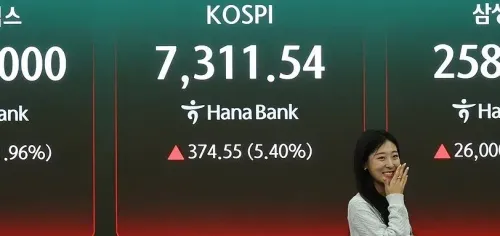
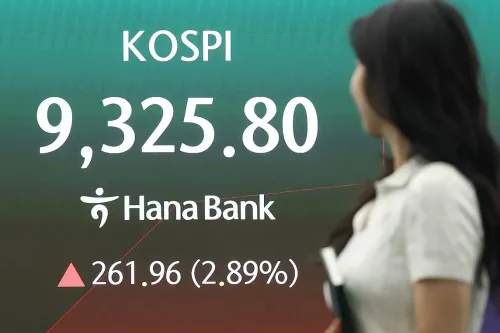
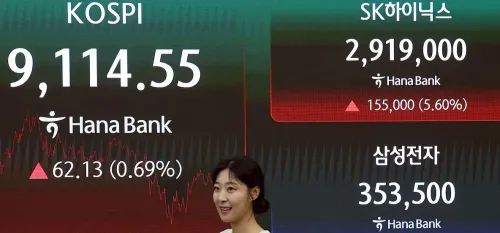
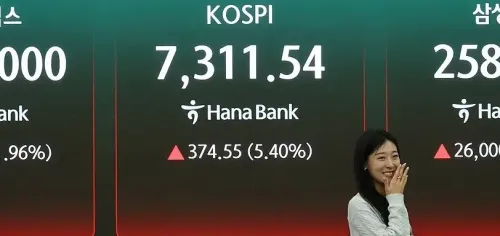
KOSPI plunges 406 points, nearly 6% on Middle East tension spike
Synopsis
South Korea's KOSPI suffered one of its sharpest single-day falls in recent memory — nearly 6% — as Trump's Iran threat collided with a Morgan Stanley warning on semiconductors. With Samsung Electronics and SK Hynix each shedding more than 7-8%, the session exposed just how exposed Seoul's tech-heavy index is to both geopolitical shock and the chip cycle's turning tide.
Key Takeaways
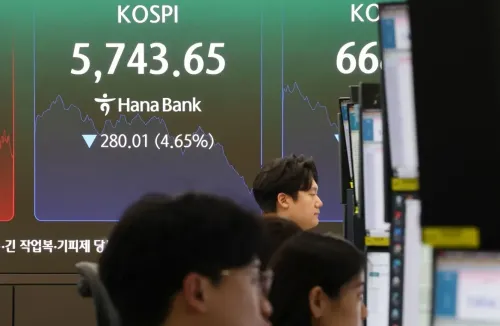
The KOSPI fell 406.27 points (5.72%) to 6,690.62 on 24 July , snapping a three-day winning streak.
Programme trading was suspended for five minutes after the early-session sell-off breached circuit-breaker thresholds.
Foreign and institutional investors were net sellers of a combined 5.2 trillion won ; retail investors absorbed 5.18 trillion won .
Samsung Electronics fell 7.59% and SK Hynix dropped 8.34% , leading tech-sector losses.
Samsung Biologics bucked the trend, surging 10.08% on strong earnings results.
Triggers included US President Trump's threat of a 'massive attack' on Iran and a bearish chip-sector note from Morgan Stanley .
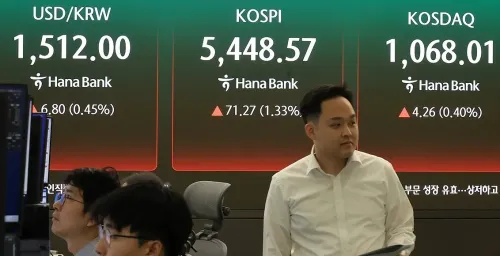
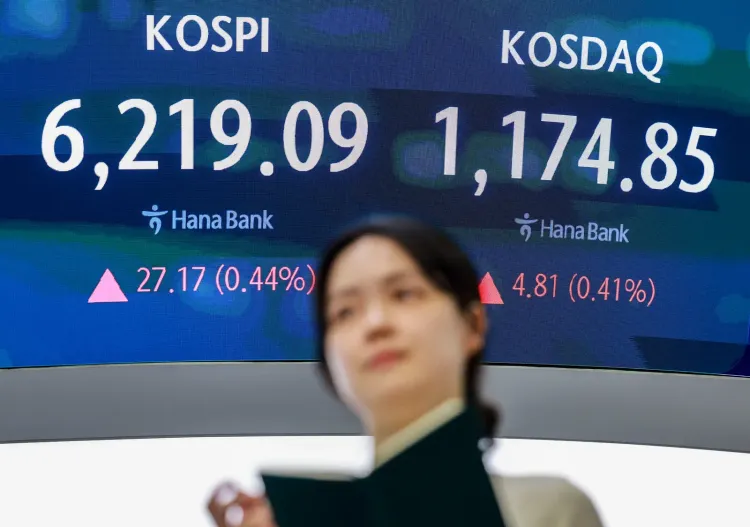
South Korea's benchmark Korea Composite Stock Price Index (KOSPI) crashed 406.27 points, or 5.72%, to close at 6,690.62 on Friday, 24 July, snapping a three-day winning streak as escalating Middle East tensions drained global risk appetite. The index touched an intraday low of 6,650.41 before recovering marginally, while the Korean won edged higher against the US dollar.
Circuit Breaker Triggered
The severity of the early sell-off prompted South Korea's bourse operator to suspend programme trading for five minutes in early trading — a rare circuit-breaker measure deployed when automated selling accelerates losses beyond a threshold. Trade volume was moderate at 395.1 million shares valued at 30.9 trillion won (approximately US$21.1 billion). Losers outnumbered gainers 582 to 301.
What Drove the Selloff
Foreign and institutional investors were net sellers, offloading a combined 5.2 trillion won worth of shares. Retail investors moved in the opposite direction, absorbing 5.18 trillion won in equities.
'Risk appetite retreated amid escalating tensions in the Middle East. The brakes have failed and the local stock market is continuing volatile trading,' said Lee Kyoung-min, an analyst at Daishin Securities.
The geopolitical trigger was US President Donald Trump's threat to launch a 'massive attack' on Iran that could be 'bigger than ever before,' deepening an already fraught standoff with Tehran. Compounding the pressure, a bearish outlook on the global chip sector from Morgan Stanley stoked fears that the semiconductor super cycle may have passed its peak — a particularly damaging signal for South Korea's tech-heavy index.
Heavyweights Hit Hard
Most large-cap stocks closed sharply lower. Samsung Electronics, the index's top constituent, tumbled 7.59% to 249,500 won, while memory-chip rival SK Hynix shed 8.34% to 1,759,000 won. Carmaker Hyundai Motor slid 7.18% to 401,000 won, financial group KB Financial fell 2.72% to 171,500 won, and shipbuilder HD Hyundai Heavy Industries retreated 2.51% to 485,500 won.
Bio Stocks Buck the Trend
In a notable divergence, bio and consumer products stocks closed in positive territory. Samsung Biologics surged 10.08% to 1,518,000 won after reporting robust earnings, lifting sentiment across the broader healthcare sector. Celltrion advanced 3.14% to 177,600 won.
Currency and Bond Market Moves
The Korean won was quoted at 1,466.6 won per US dollar as of 3:30 pm local time, up 0.2 won from the previous session. Bond prices fell, pushing yields higher: the three-year Treasury yield rose 4.2 basis points to 3.959%, while the five-year government bond yield climbed 5 basis points to 4.214%.
With Middle East tensions showing no signs of abating and semiconductor headwinds building, South Korean markets face continued volatility in the sessions ahead.
Point of View
Layered onto Trump's Iran escalation rhetoric, was enough to overwhelm three days of gains in a single session. The retail investor surge absorbing nearly the entire institutional outflow is striking but not reassuring — it suggests domestic retail is playing catch-a-falling-knife, a pattern that historically precedes further downside when global sentiment stays risk-off.
NationPress
22 Oct 2026
Frequently Asked Questions
Why did the KOSPI fall nearly 6% on 24 July?
The KOSPI fell 406.27 points, or 5.72%, on 24 July due to a combination of escalating Middle East tensions — triggered by US President Donald Trump's threat of a 'massive attack' on Iran — and a bearish semiconductor outlook from Morgan Stanley. The dual shock drained risk appetite and hit South Korea's tech-heavy index particularly hard.
Which stocks were worst affected in the KOSPI crash?
Samsung Electronics and SK Hynix led losses, falling 7.59% and 8.34% respectively. Hyundai Motor dropped 7.18%, while KB Financial and HD Hyundai Heavy Industries also closed sharply lower.
Was there any stock that gained during the KOSPI selloff?
Yes. Samsung Biologics surged 10.08% after reporting robust earnings, lifting the broader bio sector. Celltrion also advanced 3.14%, as healthcare stocks bucked the wider market decline.
What is a programme trading suspension and why was it triggered?
A programme trading suspension is a circuit-breaker measure that halts automated trading for a set period when rapid selling threatens to amplify losses beyond normal market function. South Korea's bourse operator activated the five-minute halt on 24 July after the early-session drop accelerated sharply.
How did foreign investors behave during the KOSPI selloff?
Foreign and institutional investors were net sellers, offloading a combined 5.2 trillion won in shares. Retail investors moved in the opposite direction, buying up 5.18 trillion won — effectively absorbing almost the entire institutional outflow.