KOSPI surges 3.32% to 8,476 as Samsung, SK hynix lead bargain rebound
Synopsis
Seoul's KOSPI bounced 3.32% to 8,476 on Wednesday as bargain hunters snapped up Samsung Electronics — up 7.26% — just hours after a Wall Street-led AI sell-off. The same session brought a fresh MSCI blow: South Korea stays in the emerging-market category, with the index provider citing the won's limited offshore convertibility. Seoul's 2027 developed-market ambition is alive, but on a tighter clock.
Key Takeaways
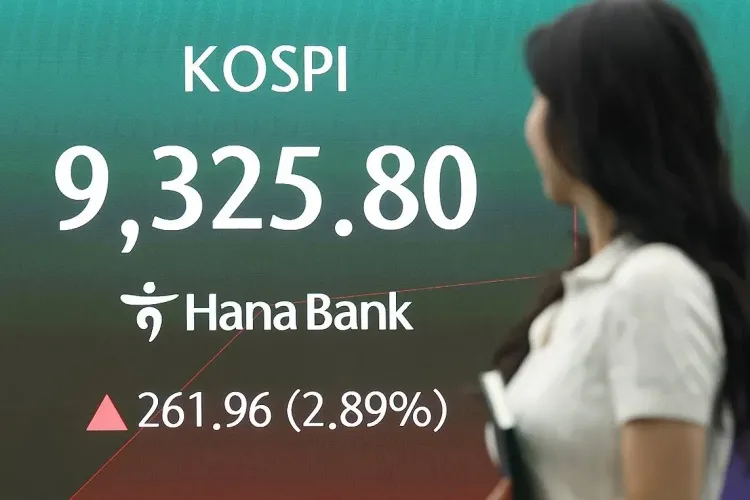
The KOSPI gained 272.43 points (3.32%) to 8,476.27 as of 11:20 am on 24 June .
Samsung Electronics surged 7.26% ; SK hynix rose 2.43% in the rebound.
Hyundai Motor gained 0.59% and Kia advanced 2.4% , broadening the rally beyond tech.
MSCI kept South Korea in its emerging-market category, citing limited won convertibility offshore.
South Korea targets MSCI developed-market inclusion by 2027 , with 28 of 39 reform tasks due by end of June 2025 .
The Korean won firmed to 1,536.7 per US dollar, up 2.4 won on the session.
South Korea's benchmark Korea Composite Stock Price Index (KOSPI) surged 272.43 points, or 3.32 percent, to 8,476.27 as of 11:20 am local time on Wednesday, 24 June, as individual investors moved aggressively to buy the dip following the previous session's steep technology sell-off. The index had opened 1.86 percent higher, with momentum building through the morning.
Technology Heavyweights Lead the Recovery
Semiconductor majors anchored the rebound. Samsung Electronics climbed 7.26 percent, while memory chip rival SK hynix gained 2.43 percent — a sharp reversal after both stocks were caught in the overnight Wall Street rout driven by concerns over the artificial intelligence sector. Samsung Electro-Mechanics, an electronic components affiliate of Samsung Electronics, also rose 2.06 percent.
This comes amid a broader reassessment of AI-linked valuations globally, with investors in Seoul apparently viewing the prior session's losses as an overreaction. Notably, blue-chip technology counters across the board traded in positive territory by mid-morning.
Automobile Sector Joins the Rally
Gains were not confined to technology. Automobile stocks also moved higher, with industry leader Hyundai Motor advancing 0.59 percent and its affiliate Kia climbing 2.4 percent. The breadth of the recovery across sectors suggested the bargain-hunting was not limited to a single industry segment.
Korean Won Firms Slightly
On the currency front, the Korean won was trading at 1,536.7 won against the US dollar as of 11:20 am, firming 2.4 won from the previous session. A stable currency environment supported investor confidence alongside the equity recovery.
MSCI Keeps South Korea in Emerging-Market Category
MSCI on Tuesday night announced it would keep South Korea in its emerging-market category, declining to place the country on the watch list for developed-market inclusion. The index provider cited the limited convertibility of the Korean won in offshore currency markets as a key constraint.
South Korea's Ministry of Finance and Economy responded with a statement acknowledging the decision while reaffirming its reform agenda. 'MSCI acknowledged the government's efforts to advance the foreign exchange and capital markets, but for some of the remaining tasks, efforts to improve the system are still under way,' the ministry said.
The ministry added that the market also needed time to 'fully reflect the impact of the completed reforms,' and expressed confidence that continued implementation would eventually secure developed-market status. 'If we continue to implement reforms in the foreign exchange and capital markets on our own schedule, we believe we can be included among advanced economies,' it said.
South Korea has been targeting MSCI developed-market inclusion by 2027, with 39 key tasks identified to meet that goal — of which 28 were planned for completion by the end of June 2025. The government said it would continue engaging with major overseas investors and incorporate their feedback into policy design.
With the MSCI setback absorbed and domestic equities rebounding sharply, the next test for Seoul markets will be how Wall Street's AI-sector repricing evolves — and whether South Korea's reform timeline can satisfy MSCI's convertibility concerns ahead of the 2027 review.
Point of View
But the real story on Wednesday is the MSCI rejection — South Korea's third in recent memory. The won's offshore convertibility problem is structural, not cosmetic, and Seoul's reform checklist alone will not resolve it without deeper market-microstructure changes. The 2027 target is ambitious; if MSCI sees the same convertibility gap next year, the government's credibility on capital-market reform will take a harder hit than any single session's equity losses.
NationPress
22 Sept 2026
Frequently Asked Questions
Why did the KOSPI rise sharply on 24 June 2025?
The KOSPI gained 3.32% to 8,476.27 as individual investors bought technology and automobile stocks at lower prices following the previous session's steep sell-off. Samsung Electronics alone surged 7.26%, anchoring the broader recovery.
What did MSCI decide about South Korea's market classification?
MSCI announced it would keep South Korea in its emerging-market category, declining to place the country on the watch list for developed-market inclusion. The provider cited limited convertibility of the Korean won in offshore currency markets as the primary reason.
What is South Korea's plan for MSCI developed-market inclusion?
South Korea is targeting MSCI developed-market status by 2027 and has identified 39 key reform tasks to achieve that goal, with 28 of them planned for completion by end of June 2025. The finance ministry said it will continue engaging overseas investors and refining policies based on their feedback.
Which stocks led the KOSPI rebound on Wednesday?
Samsung Electronics led with a 7.26% gain, followed by SK hynix up 2.43% and Samsung Electro-Mechanics up 2.06%. In the automobile sector, Kia rose 2.4% and Hyundai Motor advanced 0.59%.
How did the Korean won perform on 24 June?
The Korean won firmed slightly to 1,536.7 per US dollar as of 11:20 am, gaining 2.4 won from the previous session, providing a stable currency backdrop for the equity rally.