KOSPI falls 2.19% as US-Iran Strait of Hormuz clash rattles Seoul markets
Synopsis
South Korea's KOSPI erased nearly all of a historic 1,000-point rally in a single session after US and Iranian forces reportedly exchanged fire in the Strait of Hormuz. With peace talks in doubt and Wall Street already lower, Seoul's market rout — led by Samsung, SK Hynix, and Doosan Enerbility — signals how quickly geopolitical flashpoints can unwind weeks of gains.
Key Takeaways
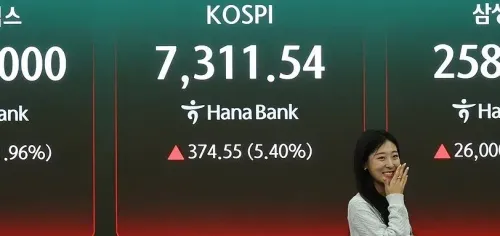
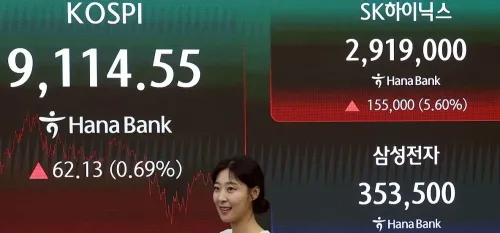
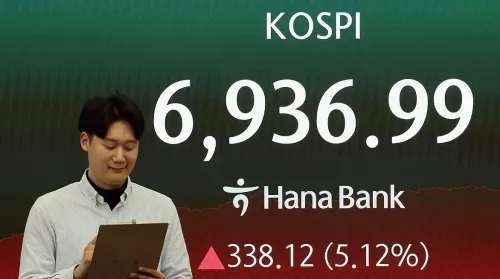
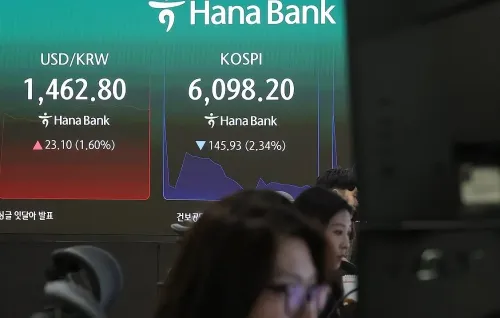
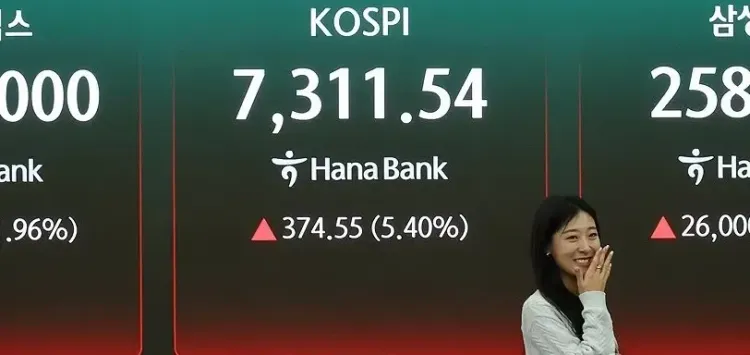
KOSPI fell 163.99 points or 2.19% to 7,326.06 on 8 May , reversing a record three-session rally of nearly 1,000 points .
US and Iranian forces reportedly clashed in the Strait of Hormuz , putting Washington-Tehran peace talks in doubt.
Samsung Electronics sank 3.5% ; Doosan Enerbility tumbled 5.28% ; HD Hyundai Heavy Industries lost 4.33% .
The Korean won weakened to 1,461.15 per US dollar, down 7.15 won from the previous session.
Wall Street closed lower overnight — Dow down 0.63% , S&P 500 down 0.38% , Nasdaq down 0.13% .
South Korea froze fuel price ceilings for the third consecutive time , keeping gasoline at 1,934 won per litre for the next two weeks.
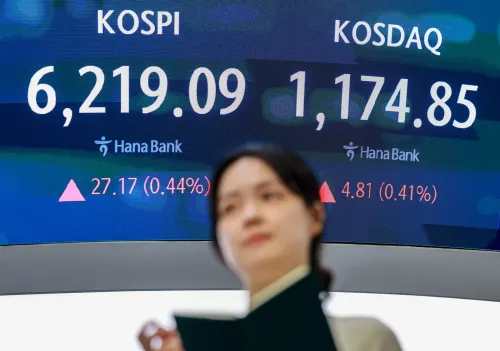
South Korea's benchmark Korea Composite Stock Price Index (KOSPI) opened sharply lower on Friday, 8 May, shedding 163.99 points, or 2.19%, to trade at 7,326.06 as of 9:15 am IST, according to Yonhap News Agency. The dual pressure of profit-taking after a record-breaking rally and a fresh US-Iran military confrontation in the Strait of Hormuz drove investors to the sidelines.
The Trigger: US-Iran Clash in the Strait of Hormuz
Overnight, US and Iranian forces reportedly exchanged fire in the Strait of Hormuz, one of the world's most strategically critical oil shipping lanes. Iran claimed that US forces targeted Iranian vessels entering the strait, while the US military stated it acted in self-defence after Iranian forces attacked American navy destroyers transiting the waterway. The incident has cast serious doubt over ongoing Washington-Tehran peace negotiations, which had been making tentative progress in recent weeks.
KOSPI's Sharp Reversal After Record Highs
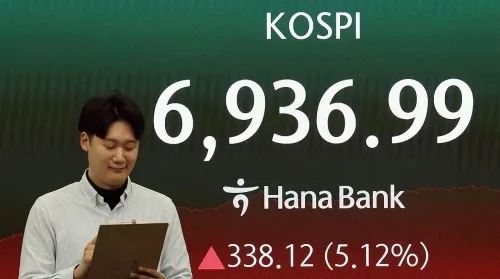
The sell-off comes on the heels of an exceptional bull run. The KOSPI had surged nearly 1,000 points across three consecutive record-setting sessions beginning Monday, closing at a fresh all-time high of 7,490.05 on Thursday. Friday's decline, therefore, represents both a geopolitical reaction and a technical correction as investors locked in gains. This is the index's steepest single-session drop since the current rally began.
Key Stocks Hit Hard
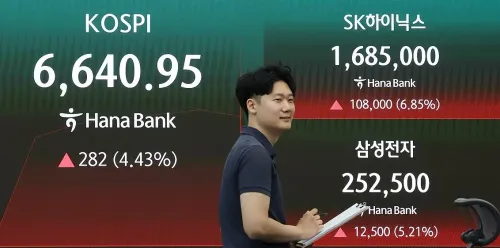
Market bellwether Samsung Electronics sank 3.5%, while chip giant SK Hynix dipped 2.72%. Leading battery maker LG Energy Solution declined 1.66%, and energy company Doosan Enerbility tumbled 5.28%. Major shipyard HD Hyundai Heavy Industries lost 4.33%, and defence conglomerate Hanwha Aerospace slipped 1.97%. The broad-based losses indicate that the risk-off sentiment was not confined to any single sector.
Wall Street Closed Lower; Won Weakens
Overnight weakness on Wall Street added to the bearish mood in Seoul. The Dow Jones Industrial Average declined 0.63%, the S&P 500 fell 0.38%, and the tech-heavy Nasdaq Composite shed 0.13%. The Korean won was trading at 1,461.15 won per US dollar as of 9:15 am, down 7.15 won from the previous session, reflecting broader risk aversion.
South Korea Freezes Fuel Price Ceilings for Third Time
Separately, the South Korean government on Thursday froze fuel price ceilings for the third consecutive time, amid continued volatility in global energy markets. According to the Ministry of Trade, Industry and Resources, maximum prices for regular gasoline, diesel, and kerosene supplied to petrol stations by local refineries will remain at 1,934 won (US$1.33), 1,923 won, and 1,530 won per litre, respectively, for the next two weeks. The price cap system, introduced in mid-March, is reviewed every two weeks and is aimed at stabilising domestic fuel costs and easing living expenses for ordinary citizens.
With the Strait of Hormuz situation still fluid and peace talks between Washington and Tehran in jeopardy, market participants will be watching for any diplomatic developments that could either deepen the sell-off or trigger a recovery in Seoul and across Asian markets.
Point of View
Given the Strait of Hormuz's role in global oil flows. What is notable here is the breadth of the sell-off — defence, energy, semiconductors, and shipbuilding all fell simultaneously, suggesting this is not sector-specific anxiety but a broad repricing of geopolitical risk. The Washington-Tehran peace process, if derailed, could sustain oil price volatility and keep energy-sensitive stocks under pressure for weeks. Seoul's fuel price freeze is a sensible short-term buffer, but it cannot insulate ordinary consumers indefinitely if global crude prices spike on a prolonged confrontation.
NationPress
24 Sept 2026
Frequently Asked Questions
Why did the KOSPI fall on 8 May 2025?
The KOSPI fell 2.19% to 7,326.06 on 8 May due to a combination of profit-taking after a record three-session rally and renewed geopolitical tensions following a reported military clash between US and Iranian forces in the Strait of Hormuz. The incident also dragged Wall Street lower overnight, adding to selling pressure in Seoul.
What happened between the US and Iran in the Strait of Hormuz?
US and Iranian forces reportedly exchanged fire in the Strait of Hormuz overnight. Iran claimed US forces targeted Iranian ships entering the strait, while the US military said it acted in self-defence after Iranian vessels attacked American navy destroyers transiting the waterway. The incident has cast doubt over ongoing Washington-Tehran peace negotiations.
Which South Korean stocks were hit hardest?
Doosan Enerbility tumbled the most at 5.28%, followed by HD Hyundai Heavy Industries at 4.33% and Samsung Electronics at 3.5%. SK Hynix, LG Energy Solution, and Hanwha Aerospace also posted significant losses.
What is South Korea's fuel price cap and why was it frozen again?
South Korea's fuel price cap system, introduced in mid-March, sets maximum prices for gasoline, diesel, and kerosene every two weeks to stabilise domestic energy costs. The government froze the ceilings for the third consecutive time on Thursday, keeping regular gasoline at 1,934 won per litre, amid continued global energy price volatility.
How had the KOSPI been performing before Friday's drop?
The KOSPI had been on an exceptional bull run, gaining nearly 1,000 points across three consecutive record-setting sessions from Monday to Thursday, closing at an all-time high of 7,490.05 on Thursday before Friday's sharp reversal.