South Korea's Defence Stocks Surge Amid Declining Auto and Shipbuilding Shares
Synopsis
As global tensions rise, South Korea's defence stocks are seeing a notable uptick, contrasting sharply with declines in the automobile and shipbuilding sectors. This shift highlights the market's reaction to the ongoing geopolitical landscape, particularly following recent military actions in the Middle East.
Key Takeaways
Defence stocks in South Korea are rising amid global tensions.
Automobile and shipbuilding sectors are experiencing declines.
Samsung Electronics remains the top company by market cap.
Investor sentiment is highly influenced by geopolitical events.
The KOSPI has shown volatility in recent trading sessions.
Seoul, March 29 (NationPress) The market capitalisation of defence stocks has seen an increase, while shares in the automobile and shipbuilding sectors experienced a decline on the benchmark Korea Composite Stock Price Index (KOSPI), approximately one month following the U.S.-Israeli air strikes on Iran, as indicated by bourse data released on Sunday.
According to information from the Korea Exchange (KRX), Samsung Electronics Co. continues to lead in market capitalisation, valued at 1,063.8 trillion won (US$705 billion) as of Friday. SK hynix Inc. follows in second place, with a market cap of 657.1 trillion won, as reported by Yonhap news agency.
The leading car manufacturer, Hyundai Motor Co., holds the third position, but its market value has plummeted by 26.6 percent to 101.3 trillion won from Feb. 27, just prior to the onset of military conflict in the Middle East. This decline is attributed to ongoing regional tensions that have disrupted global supply chains and driven oil prices higher.
Meanwhile, Kia, Hyundai's affiliate, has fallen two ranks to ninth, witnessing a significant market cap drop of 24.2 percent during the same timeframe.
In the shipbuilding sector, HD Hyundai Heavy Industries Co. experienced a 17.3 percent decrease in market value, dropping from ninth to eleventh place.
Conversely, Hanwha Aerospace, a major player in the defence industry, reported an 11.7 percent increase in market capitalisation, rising to 68.8 trillion won from 61.6 trillion won, and climbing three places to seventh.
Additionally, LIG Nex1 Co. saw its market value soar by 44.4 percent, while Hanwha Systems Co. increased by 9.2 percent.
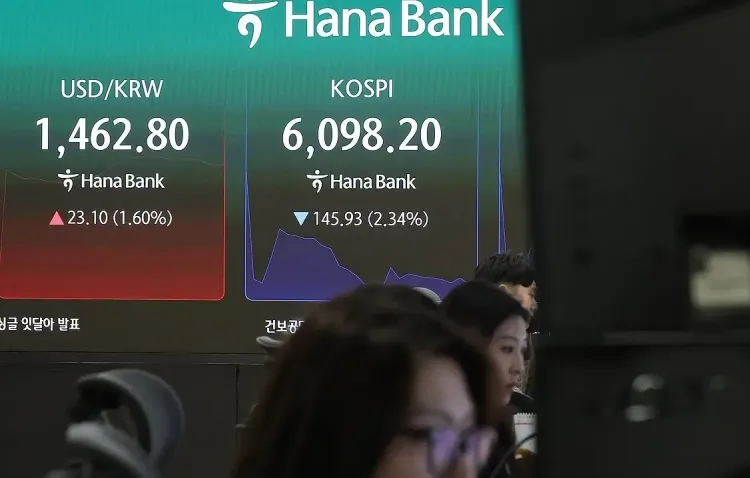
On the broader market, South Korean stocks closed slightly lower on Friday after recovering from most of their earlier losses. This movement was influenced by mixed signals from the United States regarding its military actions against Iran, alongside reduced concerns in the chipmaking industry. The local currency depreciated against the U.S. dollar.
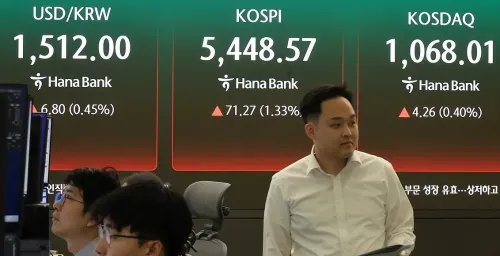
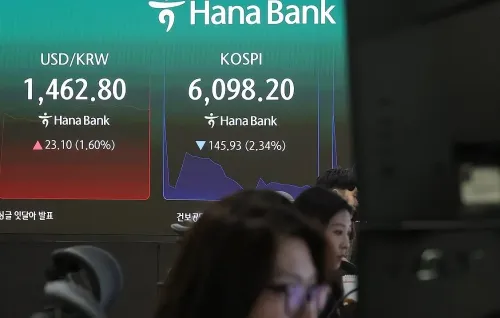
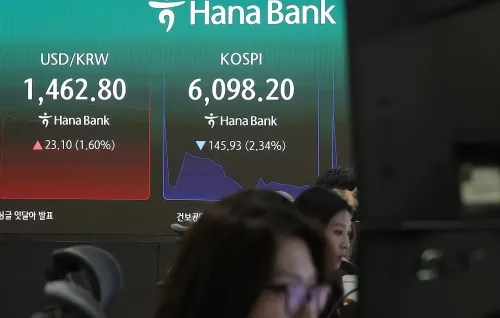
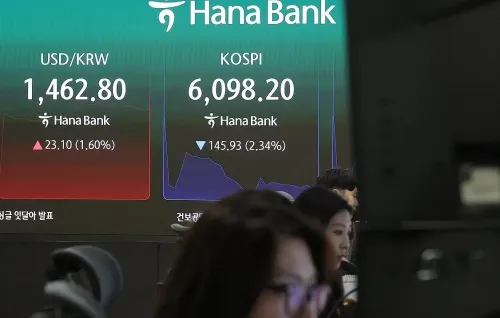
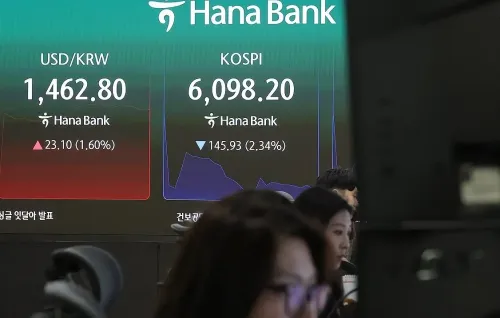
After opening 2.93 percent lower, the KOSPI fell by 21.59 points, or 0.4 percent, finishing at 5,438.87, having reached a low of 5,220.10 during trading.
Trading volume was moderate, with 889.8 million shares exchanged, valued at 23 trillion won (US$15.3 billion), with nearly equal numbers of gainers and losers at 441 to 436.
Point of View
It's essential to recognize the dynamic shifts within the South Korean stock market amidst heightened global tensions. The increase in defence stocks juxtaposed with declines in other sectors signals a significant response to geopolitical events, underscoring the need for investors to remain vigilant and informed.
NationPress
21 Sept 2026
Frequently Asked Questions
What caused the rise in defence stocks in South Korea?
The rise in defence stocks is attributed to increased geopolitical tensions, particularly following the U.S.-Israeli air strikes on Iran, which have shifted investor sentiment towards the defence sector.
How have automobile and shipbuilding stocks performed recently?
Automobile and shipbuilding stocks in South Korea have seen significant declines, with Hyundai and Kia experiencing notable drops in market value due to disrupted supply chains and rising oil prices.
Which company currently leads the South Korean stock market?
Samsung Electronics Co. continues to lead the South Korean stock market in terms of market capitalisation, valued at 1,063.8 trillion won.
What impact do geopolitical events have on stock markets?
Geopolitical events can significantly influence stock markets by altering investor sentiment, affecting supply chains, and causing fluctuations in commodity prices, such as oil.
How did the KOSPI perform recently?
The KOSPI closed slightly lower on Friday, down 0.4 percent, following mixed signals regarding the U.S. military's stance on Iran.