South Korean Stocks Decline as Middle East Tensions Escalate
Synopsis
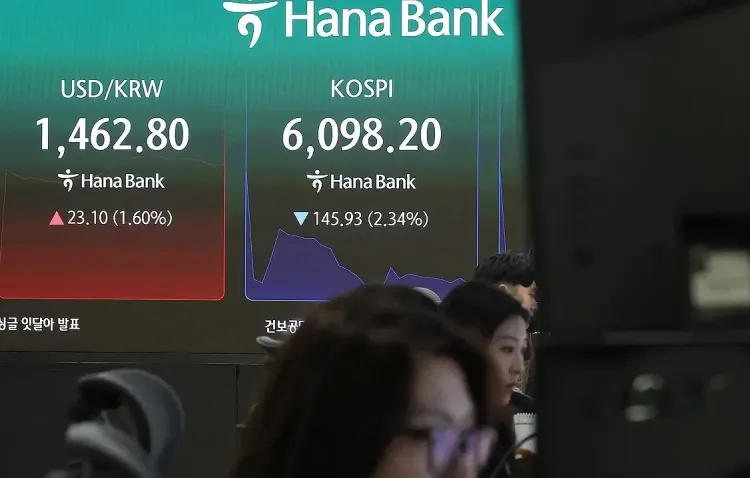
South Korean stocks dipped significantly on Tuesday amid fears of escalating Middle Eastern conflicts impacting global oil supplies. As foreign investors sold off assets, the KOSPI index fell sharply. Key players like Samsung and Hyundai reported losses, while concerns about geopolitical stability loom.
Key Takeaways
South Korean stocks fell significantly due to foreign sell-offs.
KOSPI index decreased by 1.69 percent.
Escalating Middle East conflict raised global oil supply concerns.
Major firms like Samsung and Hyundai reported declines.
Oil prices surged past $100 per barrel for the first time since July 2022.
Seoul, March 31 (NationPress) - South Korean equities were seen declining late Tuesday morning, primarily due to significant foreign sell-offs, as the intensifying turmoil in the Middle East raised alarms over global oil availability and its broader economic ramifications.
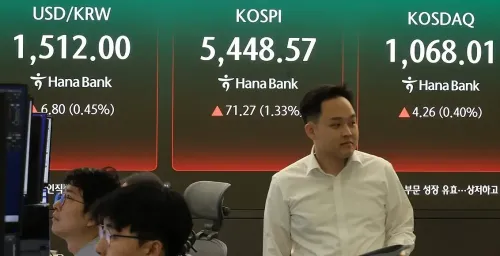
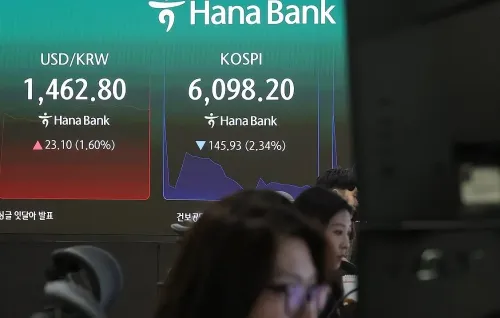
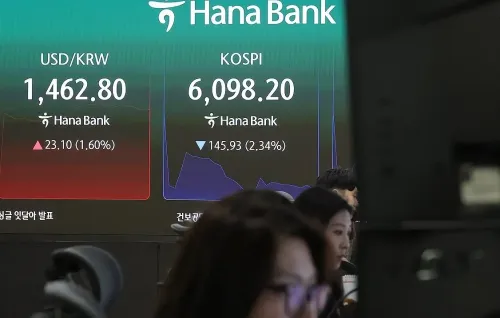
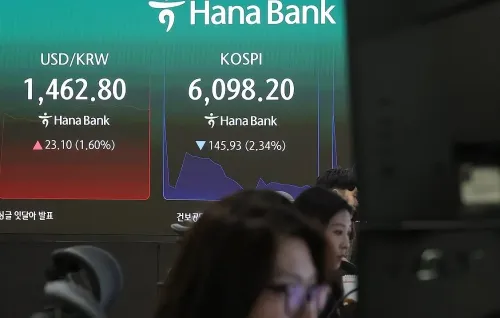
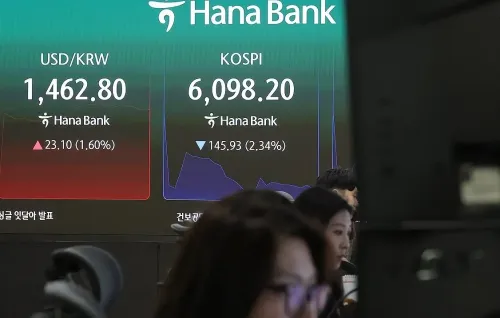
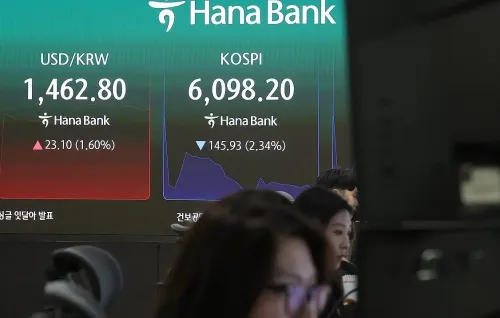
The Korea Composite Stock Price Index (KOSPI) decreased by 89.14 points, equating to a fall of 1.69 percent, settling at 5,188.16 by 11:20 a.m.
The index commenced trading approximately 3 percent lower and faced continued downward pressure, although some early losses were mitigated, according to reports from Yonhap news agency.
U.S. President Donald Trump issued a stark warning to Iran, threatening to “completely obliterate” Kharg Island, a crucial oil hub, along with its power plants and oil wells, unless a peace agreement with the U.S. is achieved “shortly.”
In contrast, Tehran dismissed these peace proposals as “unrealistic, illogical, and excessive,” while a parliamentary security committee endorsed a draft bill to implement a toll system for the Strait of Hormuz, as reported by foreign media.
This expanding conflict has led to an increase in global oil prices. U.S. West Texas Intermediate (WTI) crude futures for May delivery surged by 3.25 percent to reach US$102.88 per barrel, marking a close above the $100 threshold for the first time since July 2022.
Most major stocks experienced declines, with market leader Samsung Electronics dropping 2.1 percent, and chip manufacturer SK hynix plummeting 4.24 percent.
Leading automaker Hyundai Motor saw a decrease of 2.45 percent, while its sibling company Kia fell by 2.51 percent.
Key battery manufacturer LG Energy Solution lost 1.83 percent, and AI investment firm SK Square declined by 5.98 percent.
Defense contractor Hanwha Aerospace fell by 4.59 percent, and major financial institution KB Financial dropped 1.85 percent. Additionally, shipbuilder HD Hyundai Heavy decreased by 0.52 percent.
In the biotech sector, shares performed unevenly. Samsung Biologics, a bio giant, rose by 3.14 percent, while Celltrion remained stable.
Among the gainers, nuclear plant builder Doosan Enerbility increased by 1.27 percent, and prominent shipbuilder Hanwha Ocean surged by 5.08 percent.
The local currency was trading at 1,525.2 won against the U.S. dollar at 11:20 a.m., representing a drop of 9.5 won from the previous session.
Point of View
It's crucial to recognize the impact of global events on local markets. The ongoing Middle East crisis not only affects oil prices but also instills uncertainty in investor sentiment. This situation warrants close monitoring as developments unfold.
NationPress
2 Oct 2026
Frequently Asked Questions
What is causing the decline in South Korean stocks?
The decline is primarily driven by heavy foreign sell-offs amidst escalating tensions in the Middle East, raising concerns over global oil supplies.
How much did the KOSPI index fall?
The KOSPI index fell by 89.14 points, or 1.69 percent, reaching 5,188.16.
What are the implications of the Middle East crisis on oil prices?
The crisis has contributed to a rise in global oil prices, with U.S. WTI crude futures increasing by 3.25 percent to $102.88 per barrel.
Which major companies reported stock declines?
Major companies such as Samsung Electronics, SK hynix, and Hyundai Motor reported significant stock declines.
How did the local currency perform?
The local currency traded at 1,525.2 won against the U.S. dollar, down 9.5 won from the previous session.