South Korea's Stock Market Plummets Amid Rising Middle East Tensions
Synopsis
On March 27, South Korean stocks fell sharply, driven by heightened concerns over Middle East tensions. The KOSPI index plummeted, reflecting a global risk-off sentiment influenced by U.S. political developments.
Key Takeaways
South Korean stocks opened significantly lower due to geopolitical tensions.
KOSPI index fell by 3.74%, reflecting a risk-averse market sentiment.
U.S. markets also saw declines amid mixed signals from the Trump administration regarding Iran.
Major corporations in South Korea experienced sharp declines.
Industry Minister calls for collaboration to stabilize supply chains.
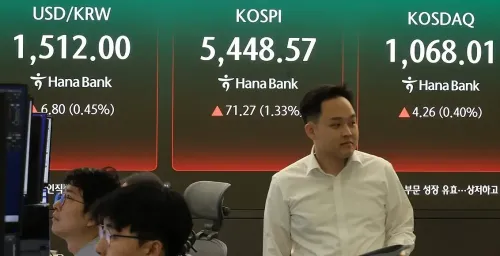
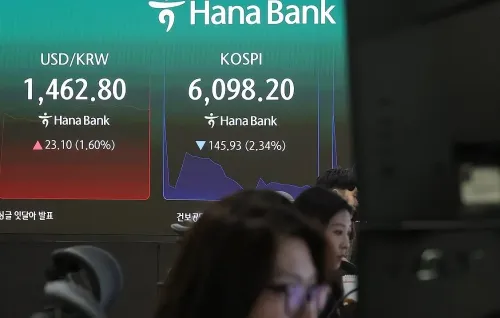
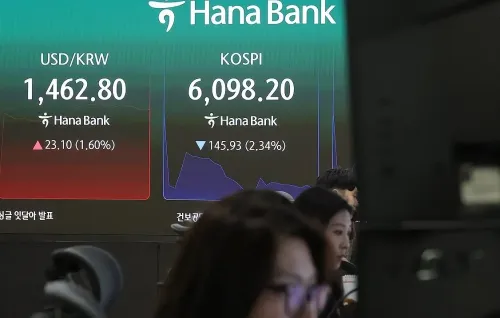
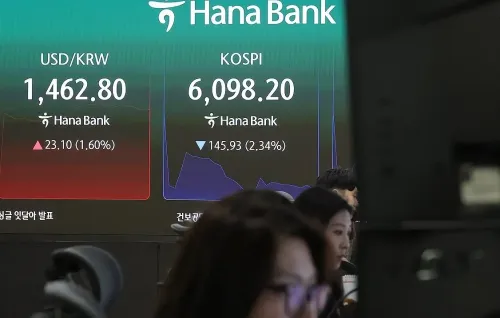
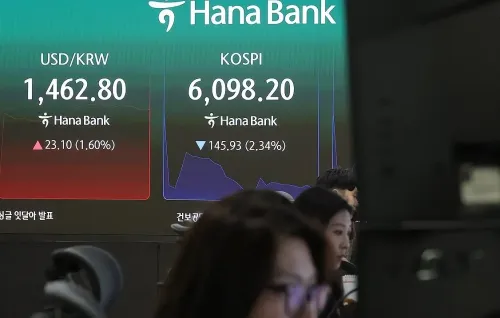
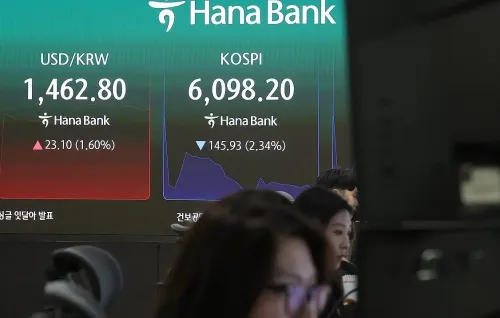
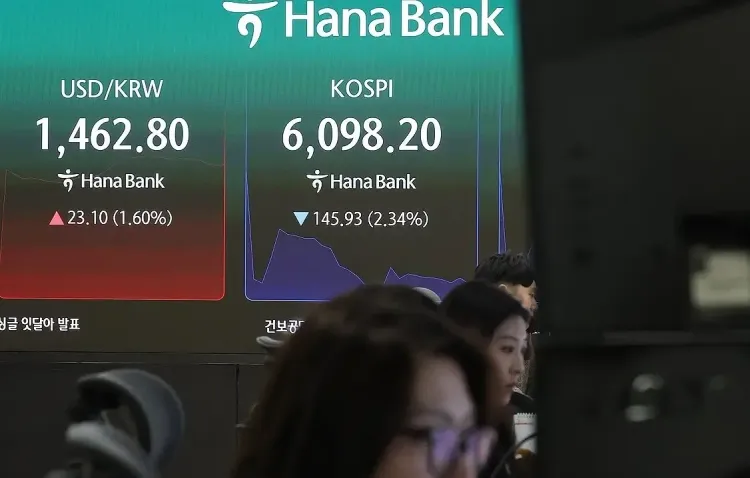
Seoul, March 27 (NationPress) - The South Korean stock market experienced a significant decline on Friday as investor sentiment turned risk-averse due to escalating tensions in the Middle East. Opening at 2.93 percent lower, the Korea Composite Stock Price Index (KOSPI) plummeted by 204 points, or 3.74 percent, reaching 5,256.46 within the first 20 minutes of trading, as reported by the Yonhap news agency.
In the preceding night, U.S. stock markets faced a sharp downturn after President Donald Trump provided ambiguous updates regarding negotiations with Iran. Trump cautioned Iranian negotiators on Thursday that they "better get serious soon, before it is too late," yet later indicated that the U.S. and Iran are engaged in "very substantial talks."
The White House also disclosed that a pause on attacks against Iranian power plants and energy infrastructure would be extended until April 6.
The S&P500 index dropped by 1.74 percent, while the tech-heavy Nasdaq saw a retreat of 2.38 percent. In Seoul, major corporations saw declines across the board, with Samsung Electronics falling by 3.72 percent and SK hynix declining 4.82 percent.
Hyundai Motor, the leading automobile manufacturer, decreased by 3.98 percent, defense giant Hanwha Aerospace saw a slide of 4.38 percent, and KB Financial, a major financial group, dropped 3.35 percent.
The Korean won was trading at 1,511.5 won against the U.S. dollar, reflecting a decrease of 4.5 won from the previous session as of 9:20 a.m.
On the same day, Industry Minister Kim Jung-kwan emphasized the need for private sector collaboration to stabilize industrial supply chains and address energy demands in light of the ongoing turmoil in the Middle East, according to his office. In a session with key business associations, Kim urged companies to enhance their efforts in securing alternative supply lines and to avoid disruptive behaviors such as collusion and hoarding, as stated by the Ministry of Trade, Industry, and Resources.
The meeting included senior officials from six business associations, including the Korea Chamber of Commerce and Industry and the Federation of Middle Market Enterprises of Korea. Furthermore, Kim called for voluntary participation by private firms in a five-day vehicle rotation system and other energy conservation initiatives.
Point of View
It's crucial to highlight the implications of external geopolitical factors on national markets. The current decline in the KOSPI reflects broader global uncertainties, particularly those stemming from the Middle East, emphasizing the interconnectedness of financial systems.
NationPress
24 Sept 2026
Frequently Asked Questions
Why did South Korean stocks fall sharply?
The decline was triggered by increased risk-off sentiment due to renewed tensions in the Middle East, particularly influenced by mixed signals from U.S. President Donald Trump regarding negotiations with Iran.
How did U.S. markets react to these tensions?
U.S. markets experienced a significant drop, with the S&P500 falling by 1.74% and the Nasdaq retreating by 2.38%.
What actions are being taken to stabilize supply chains?
Industry Minister Kim Jung-kwan has called for private sector cooperation to secure alternative supply sources and stabilize industrial supply chains amidst ongoing geopolitical tensions.
What was the exchange rate of the Korean won against the U.S. dollar?
As of 9:20 a.m., the Korean won was trading at 1,511.5 won against the U.S. dollar.