South Korean Stocks Tumble Amid Middle East Tensions
Synopsis
On March 3, South Korean stocks witnessed a sharp decline of nearly 5% due to escalating tensions in the Middle East. The KRX halted trading as market fears intensified over economic repercussions from U.S. airstrikes on Iran, affecting major corporations significantly.
Key Takeaways
South Korean stocks plummeted nearly 5% due to Middle East conflict concerns.
KRX halted trading following a significant drop in the KOSPI 200 Futures index.
Major companies like Samsung Electronics and SK Hynix experienced substantial losses.
Conversely, S-Oil and Hanwha Aerospace saw impressive gains.
The Korean won weakened against the U.S. dollar.
Seoul, March 3 (NationPress) - The South Korean stock market experienced a significant drop of nearly 5 percent late Tuesday morning due to rising fears regarding the potential economic repercussions of the escalating Middle East conflict.
The Korea Exchange (KRX), South Korea's primary stock market operator, implemented a sell-side circuit breaker, temporarily suspending trading after the market experienced a drastic downturn following concerns over U.S. airstrikes targeting Iran.
At 12:05 p.m., trading of the KOSPI 200 Futures index was halted for five minutes, as reported by KRX.
The index decreased by 47.75 points, or 5.09 percent, reaching 890.05 at that time, marking the first sell-side circuit breaker since January 6.
A sell-side sidecar is activated when the KOSPI 200 Futures index declines by 5 percent or more for a minimum duration of one minute.
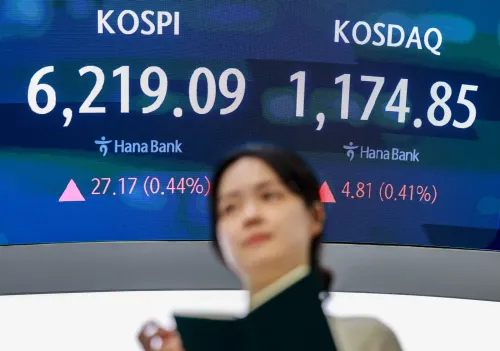
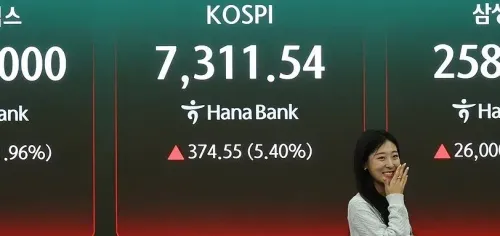
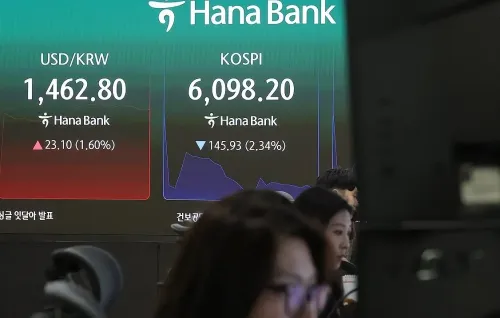
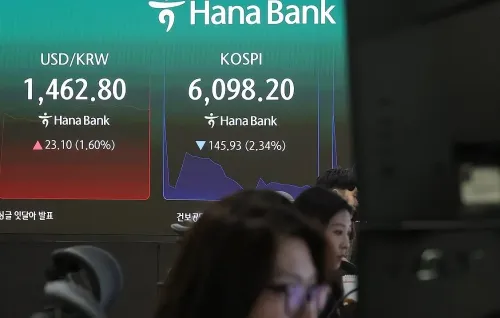
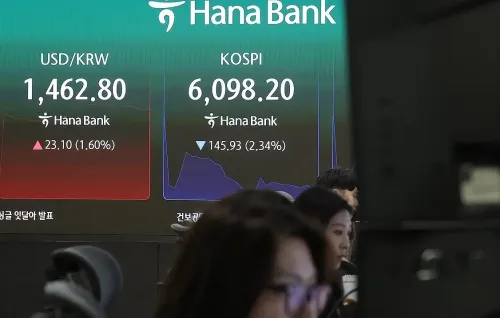
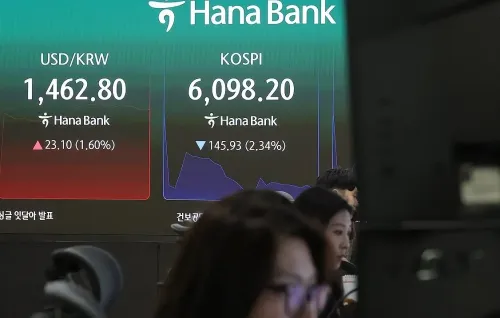
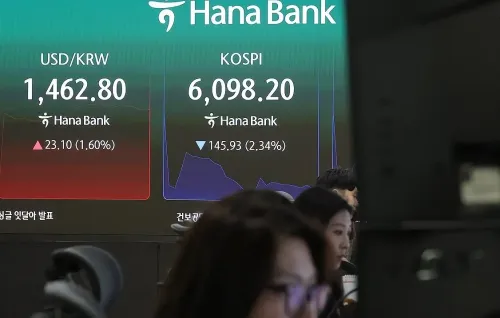
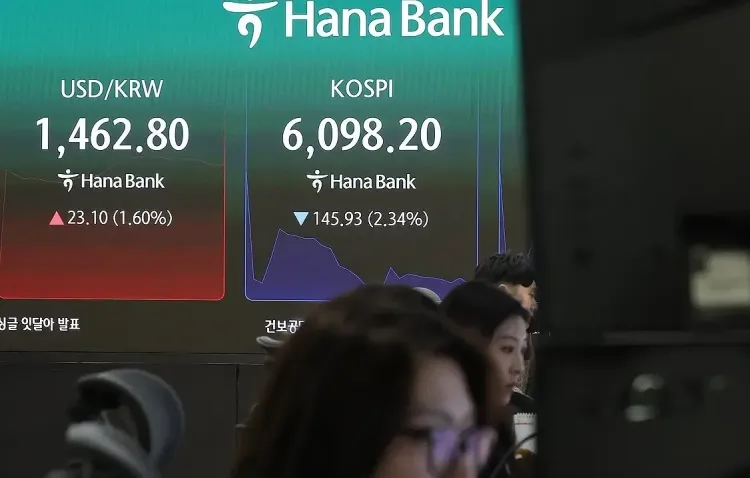
Opening 1.26 percent lower, the benchmark Korea Composite Stock Price Index (KOSPI) fell by 246.98 points, equating to 3.96 percent, settling at 5,997.15 as of 11:20 a.m. in the first trading session post-U.S.-led assaults on Iran, according to Yonhap news agency.
The South Korean financial markets were closed on Monday in observance of the March 1 Independence Movement Day holiday.
On the previous night, U.S. stock markets ended mixed as investors processed the implications of the U.S. airstrikes on Iran. The Dow Jones Industrial Average decreased by 0.15 percent, while the Nasdaq Composite saw a rise of 0.36 percent.
In Seoul, key stocks were predominantly in decline.
Market leader Samsung Electronics fell by 5.2 percent, with its competitor SK Hynix dropping 5.66 percent.
Samsung Biologics, a major player in the pharmaceutical sector, decreased by 3.77 percent, while national airline Korean Air saw a substantial drop of 8.99 percent.
Conversely, S-Oil, an oil refining company with Saudi Arabia's Aramco as its largest stakeholder, surged 16.45 percent, and defense heavyweight Hanwha Aerospace climbed 11.72 percent.
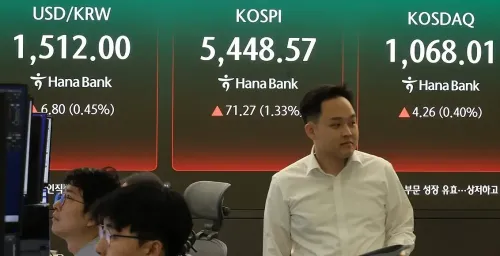
As of 11:20 a.m., the Korean won was trading at 1,467.3 won per U.S. dollar, reflecting a decrease of 27.6 won from the previous trading session.
Point of View
It is crucial to highlight the economic ramifications of geopolitical conflicts, particularly how they affect local markets and investor sentiments. The recent events surrounding the Middle East conflict underline the interconnectedness of global economies and the immediate impacts they can have on national financial landscapes.
NationPress
19 Sept 2026
Frequently Asked Questions
Why did South Korean stocks drop sharply?
The decline was primarily due to rising concerns over the potential economic impacts of ongoing tensions in the Middle East, particularly following U.S. airstrikes on Iran.
What is a sell-side circuit breaker?
A sell-side circuit breaker is a mechanism used to temporarily halt trading when a stock index falls by a certain percentage, in this case, 5 percent or more for at least one minute.
How did major companies in South Korea perform during this drop?
Major companies like Samsung Electronics and SK Hynix saw significant declines of 5.2% and 5.66%, respectively, while S-Oil and Hanwha Aerospace experienced gains.
What was the trading status of the Korean won?
As of the latest updates, the Korean won was trading at 1,467.3 won against the U.S. dollar, down by 27.6 won from the previous session.
What impact do geopolitical events have on stock markets?
Geopolitical events can lead to uncertainty and volatility in financial markets, as investors react to potential economic consequences stemming from such conflicts.