Seoul Stock Market Faces Historic Decline Amid Middle East Crisis
Synopsis
Seoul's stock market suffered a historic drop of over 12% on March 4, 2020, driven by fears surrounding the escalating conflict in the Middle East and its economic implications. This decline, the steepest since 2001, has left investors rattled and the Korean won weakened against the dollar.
Key Takeaways
Seoul's stock market dropped over 12% , the steepest decline since September 2001.
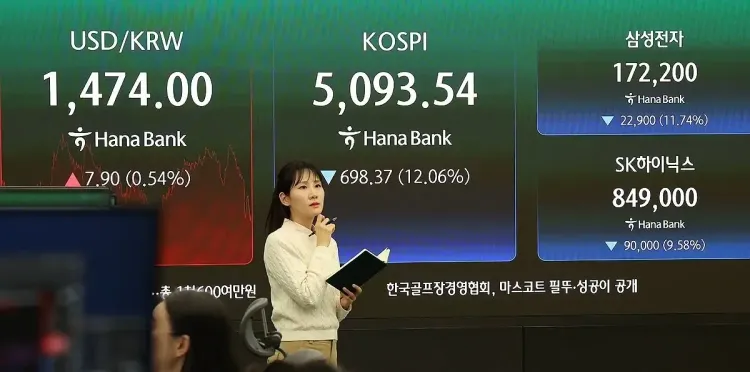
The KOSPI index fell to 5,093.54.
Investor sentiment was impacted by the escalating Middle East conflict.
Heavy trading volume reached 1.6 billion shares.
Institutional investors sold a net 579.4 billion won worth of stocks.
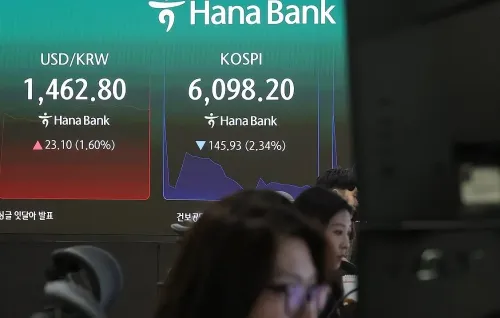
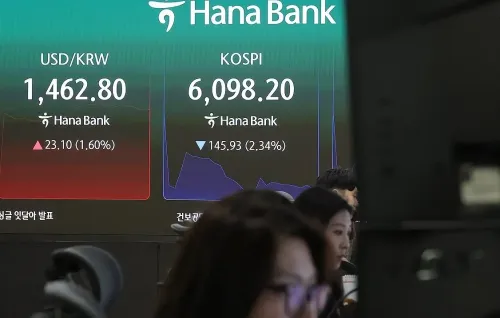
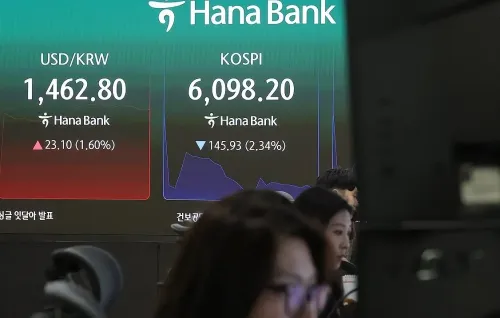
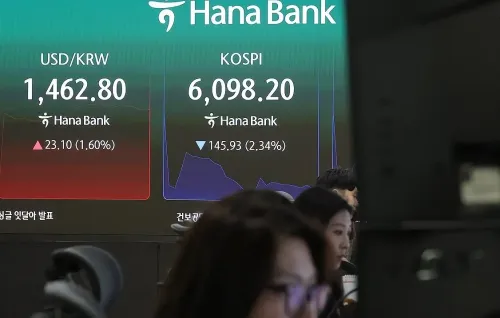
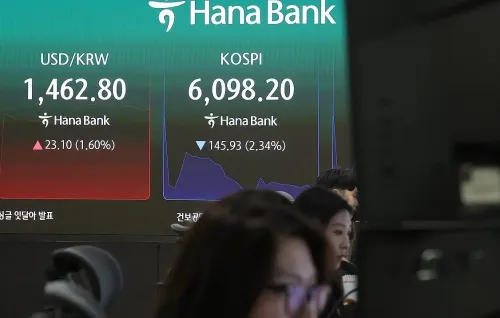
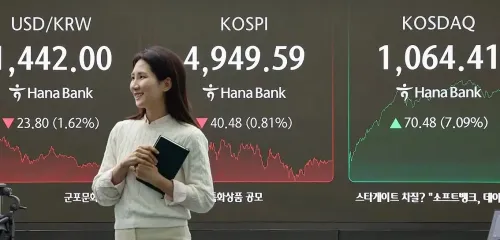
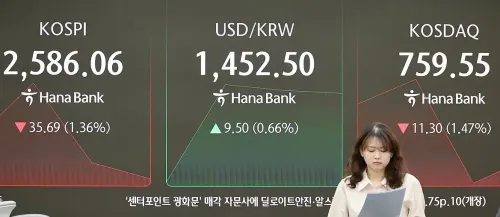
New Delhi, March 4 (NationPress) The stock market in Seoul experienced a dramatic decline, plummeting over 12 percent on Wednesday and finishing beneath the 5,100-point threshold. This downturn was largely driven by escalating worries regarding the economic impact of the intensifying conflict in the Middle East, which severely affected investor confidence. Additionally, the Korean won depreciated significantly against the US dollar.
The Korea Composite Stock Price Index (KOSPI) dropped by 698.37 points, or 12.06 percent, concluding at 5,093.54. This decline followed a prior 7.24 percent fall in the preceding session, as reported by Yonhap news agency.
This 12.06 percent plunge represents the steepest single-day decline since September 12, 2001, which occurred in the wake of the September 11 terrorist attacks in the United States.
Trading activity was substantial, with a volume of 1.6 billion shares valued at 62.6 trillion won (approximately $42.5 billion). The number of stocks that fell far exceeded those that gained, with 908 losing stocks compared to only 12 gaining.
The Korea Exchange (KRX) implemented circuit breakers shortly after the KOSPI index fell more than 8 percent due to increased geopolitical tensions.
At the start of the session, the KRX initiated a five-minute sell-side sidecar immediately after the market opened, temporarily suspending program-driven sell orders in KOSPI futures. A similar measure was enacted on the tech-oriented KOSDAQ market.
In a coordinated military action over the weekend, the US and Israel struck Iran, resulting in the death of Iran's Supreme Leader Ayatollah Ali Khamenei. U.S. President Donald Trump indicated the potential for an extended military operation.
In overnight trading, the Dow Jones Industrial Average dropped by 0.83 percent, while the tech-heavy Nasdaq composite fell by 1.02 percent.
Institutions sold stocks worth a net 579.4 billion won, which counterbalanced the purchases made by foreign and individual investors, who bought stocks worth 228.78 billion won and 72.9 billion won, respectively.
According to Kang Jin-hyeok, an analyst at Shinhan Securities Co., "Institutional investors continued to sell off stocks for a second consecutive session amid the escalating tensions in the Middle East, pushing the index below the 6,000-point level."
In Seoul, the majority of large-cap stocks ended significantly lower.
Market leader Samsung Electronics dropped by 11.74 percent to 172,200 won, while its competitor SK hynix fell by 9.58 percent to 849,000 won.
Hyundai Motor, the top automotive manufacturer, saw a decrease of 15.8 percent, closing at 501,000 won, and its affiliate Kia fell by 14.04 percent to 156,700 won.
Defense giant Hanwha Aerospace fell by 7.61 percent to 1,323,000 won, while leading refiner SK Innovation saw a drop of 16.73 percent to 109,000 won.
Flag carrier Korean Air decreased by 7.94 percent to 23,200 won, and major shipping company HMM plummeted 16.33 percent to 20,500 won.
The Korean won was trading at 1,476.20 against the US dollar at 3:30 p.m., down 10.1 won from the previous day's close.
Bond prices, which move inversely to yields, declined. The yield on three-year Treasuries increased by 4.3 basis points to 3.223 percent, and the yield on benchmark five-year government bonds rose by 5.3 basis points to 3.477 percent.
Point of View
It’s crucial to report on the significant decline in the South Korean market, reflecting the broader economic concerns stemming from international conflicts. This situation not only impacts investors but also signals potential long-term effects on the economy, requiring vigilant monitoring.
NationPress
22 Sept 2026
Frequently Asked Questions
What caused the drop in the South Korean stock market?
The decline was primarily driven by concerns over the economic fallout from the escalating conflict in the Middle East, leading to a loss of investor confidence.
How much did the KOSPI index fall?
The KOSPI index fell by 698.37 points, marking a 12.06% decrease, which is the steepest drop since 2001.
What actions were taken by the Korea Exchange during this situation?
The Korea Exchange triggered circuit breakers shortly after the KOSPI fell more than 8%, and implemented temporary measures to halt program-driven sell orders.
How did other international markets react?
Overnight, the Dow Jones Industrial Average fell by 0.83%, and the tech-heavy Nasdaq composite lost 1.02%.
What impact did this decline have on the Korean won?
The Korean won fell sharply against the US dollar, trading at 1,476.20 won.